
Desserts
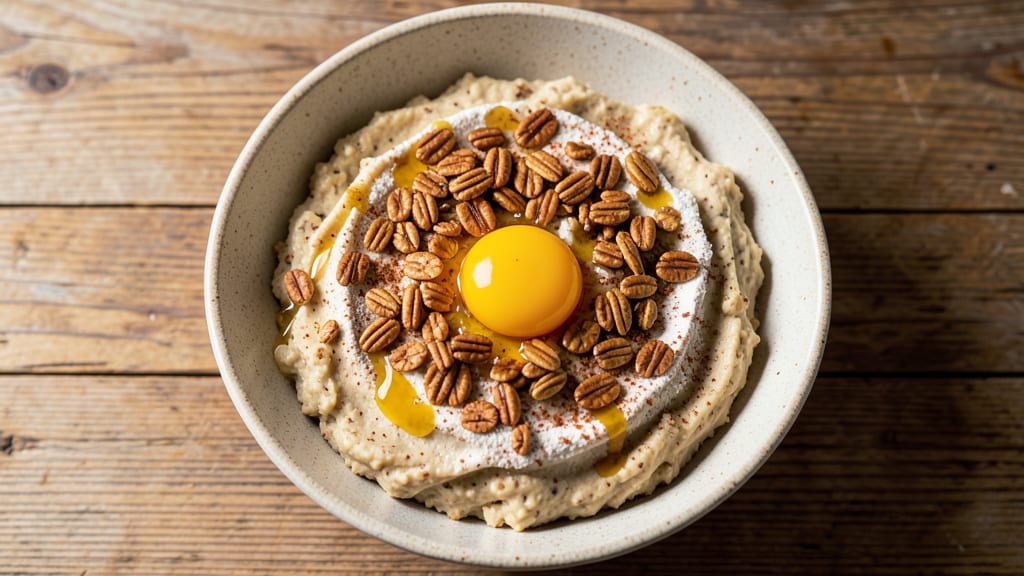
This 1 cup oatmeal cookie recipe delivers the perfect balance of chewy texture and caramelized sweetness—no fancy equipment or complicated steps required. The secret lies in brown sugar caramelization during baking, which creates that signature tender yet slightly crispy edge.
I developed this recipe after years of testing variations, and it consistently produces cookies that taste homemade yet require minimal effort.
With just 5 simple ingredients—oats, flour, butter, brown sugar, and spices—you'll achieve restaurant-quality results in 12 minutes of active prep and 10-12 minutes of baking. The brown sugar doesn't just sweeten; it develops deep caramel notes while the oats add hearty texture and fiber.
This recipe is foolproof for beginners but satisfying enough for experienced bakers looking for a streamlined process.
What you'll end up with are cookies that are soft in the center with crisp edges, perfectly chewy without being gummy, and infused with warm cinnamon and nutmeg. The aroma alone will fill your kitchen with comfort, while the flavor delivers that perfect balance of sweetness and spice.
These cookies stay fresh for days, making them ideal for meal prep or gifting.
Whether you're adding chocolate chips for extra indulgence or keeping them classic with a sprinkle of sea salt, this recipe adapts to your preferences while maintaining its core appeal.
The best part? You'll have a batch of cookies ready in under 30 minutes—perfect for satisfying an afternoon craving or impressing guests with minimal effort.
Ingredients for 1 cup oatmeal cookie
Five essential ingredients transform into chewy, caramelized oatmeal cookies with crisp edges—no mixer required.
| Ingredient | Amount | Notes |
|---|---|---|
| Old-Fashioned Rolled Oats 🌾 | 1 cup | Quick or old-fashioned, not instant |
| All-Purpose Flour 🌾 | ½ cup | Sifted for even texture |
| Unsalted Butter 🧈 | ½ cup | Cold, cubed for even melting |
| Packed Light Brown Sugar 🍯 | ½ cup | Turbinado or muscovado for depth |
| Large Egg 🥚 | 1 whole | Room temperature for blending |
| Ground Cinnamon 🌿 | 1 tsp | True Ceylon cinnamon preferred |
| Ground Nutmeg 🌿 | ¼ tsp | Freshly grated for warmth |
| Diamond Crystal Kosher Salt 🧂 | ½ tsp | Fine grain for even distribution |
| Pure Vanilla Extract 🌸 | ½ tsp | Bourbon-infused for complexity |
The brown sugar is non-negotiable here—it caramelizes during baking, creating that signature tender yet crispy edge. Trader Joe's and Whole Foods carry excellent turbinado varieties that add subtle molasses notes. For the oats, stick with old-fashioned or quick—never instant, which can make cookies gummy. The butter should be cold when you measure it; cut it into cubes and let them sit at room temp for 10 minutes before creaming. Plugrá or Land O'Lakes unsalted work perfectly, but avoid salted at all costs.
No vanilla extract? Vanilla bean paste works beautifully, or even a scraped vanilla bean pod. Short on cinnamon? Cardamom at half the amount adds a different but equally warm depth. The nutmeg can be omitted if you're sensitive to its sharpness, but I always include it—it's what gives these cookies that cozy, spiced aroma. For extra indulgence, add ½ cup chocolate chips or chopped walnuts to the dough after mixing, but keep the total volume under 1 cup of oats to maintain the signature texture.
Dough keeps well in the fridge for 5 days wrapped tightly in plastic, or freeze portions for 3 months in airtight containers. Once baked, cookies stay fresh on the counter for 4 days if stored in a sealed container with a slice of bread to absorb moisture. For a restaurant-quality touch, serve warm with a sprinkle of flaky sea salt—it enhances the caramelized sweetness. These cookies reheat beautifully in a 350°F oven for 2-3 minutes to restore that crispy edge.
Why You'll Love This Recipe
- I’ll be real: this recipe won’t break the bank. Rolled oats, flour, and butter are things I already have, and they stretch into so many cookies. Plus, they stay fresh for days, so I’m always covered when cravings hit.
- No Mixer Needed: I swear by this recipe—just smash the butter, fold in the oats, and stir. No electric mixer, no fuss, and the texture comes out just right every time. That brown sugar keeps things tender while the oats add chewy satisfaction.
- Brown Sugar Magic: Honestly, that packed light brown sugar transforms these into something special. It caramelizes just enough to give them a subtle molasses depth, and the butter keeps them rich without being greasy. One bite and you’ll forget they’re "just" oatmeal cookies.
- Bulk-Friendly Bites: Between us, these are my secret weapon for parties, school lunches, or when I need to feed a crowd. Double the batch, freeze half, and you’ve got cookies ready in minutes—no one will guess they’re this easy to prep.
Step-by-step instructions for perfectly chewy oatmeal cookies
Here's how to transform simple pantry staples into cookies with a signature caramelized brown sugar chew.
Toast the Oats for Enhanced Flavor
Preheat your oven to 350°F and spread the 1 cup Old-Fashioned Rolled Oats on a rimmed baking sheet in an even layer. Toast for 8-10 minutes, stirring once halfway, until they develop a golden brown color and release a nutty aroma. This toasting deepens their flavor and prevents them from absorbing too much moisture during baking.
Watch closely after 5 minutes—they'll darken quickly. Remove them immediately when they're fragrant and just beginning to brown. Let them cool completely before using, about 10 minutes. Cool oats mix more evenly into the dough and prevent the butter from melting prematurely.
Cream Butter and Brown Sugar for Maximum Caramelization
In a stand mixer fitted with the paddle attachment, beat the 0.5 cup Unsalted Butter (cold and cubed) and 0.5 cup Packed Light Brown Sugar on medium speed for 3-4 minutes. The mixture should become light and fluffy, nearly doubling in volume, with the sugar crystals breaking down into a smooth paste. This step is crucial for developing that signature chewy texture through proper fat incorporation and sugar caramelization.
Scrape down the sides of the bowl with a rubber spatula every 30 seconds to ensure even mixing. You're looking for the butter to become pale and slightly opaque—this indicates proper emulsification. The sugar should coat the butter completely, creating a smooth, thick base for your cookies.
Build the Dough with Wet and Dry Ingredients
In a separate bowl, whisk together the 0.5 cup All-Purpose Flour, 1 tsp Ground Cinnamon, 0.25 tsp Ground Nutmeg, and 0.5 tsp Diamond Crystal Kosher Salt. With the mixer running on low speed, gradually add the dry ingredients to the butter-sugar mixture, mixing just until combined. Avoid overmixing—you should still see small flour streaks in the dough.
Add the 1 whole Large Egg (room temperature) and 0.5 tsp Pure Vanilla Extract, mixing on low speed for another 30 seconds until just incorporated. Fold in the toasted oats by hand using a silicone spatula until evenly distributed. The dough will be thick and slightly sticky—this is normal. If it seems too dry, add 1 teaspoon of ice water to help bind it together.
Chill the Dough for Better Texture
Divide the dough into 2 equal portions and flatten each into a ½-inch thick disk. Wrap tightly in plastic wrap and refrigerate for at least 1 hour (or up to 24 hours). Chilling is essential—it prevents excessive spreading in the oven and allows the flour to fully hydrate, resulting in cookies with a perfect chewy center and crisp edges.
I like to press the dough disks firmly against the wrap to remove air pockets. This also helps maintain their shape when you roll them out later. The colder the dough, the better the final texture—don't skip this step, even if you're eager to bake!
Bake for Chewy Perfection with Strategic Timing
Preheat your oven to 375°F and line two baking sheets with parchment paper. Working with one disk at a time, roll the chilled dough between two sheets of parchment to ¼-inch thickness. Cut into 2-inch rounds using a cookie cutter or glass, then transfer to the prepared baking sheets, spacing them 2 inches apart.
Bake for 10-12 minutes until the edges are deep golden brown but the centers still appear slightly underdone. The cookies will continue cooking on the hot pan after removal. Let them cool on the baking sheets for 5 minutes before transferring to a wire rack to cool completely. The centers should be soft and slightly gooey when warm, with a crisp perimeter that gives way to chewy goodness.
Pro Tips For Making 1 Cup Oatmeal Cookie
- CHOP THE OATS FIRST: I learned this the hard way—skipping this step means uneven texture. Pulse rolled oats in a food processor for 10 seconds (not a full minute) so they’re broken down but not powdered. This keeps the cookies chewy in the middle with crisp edges, not sandy or mushy.
- MEASURE BROWN SUGAR RIGHT: Pack that brown sugar like you’re stuffing a Thanksgiving turkey—firmly, no air gaps. A loose cup means dry cookies; I’ve ruined batches by eyeballing it. Use a spoon to level it off the measuring cup, then press down with a butter knife. Your cookies will hold together better and taste richer.
- UNDERMIX THE DOUGH: Stop stirring once the wet ingredients and dry ingredients just come together. Overmixing develops gluten, and oatmeal cookies turn out tough instead of tender. Fold in the oats by hand—yes, it looks messy, but it guarantees that chewy, hearty texture you actually want.
- BAKE TWO MINUTES LONGER: The recipe’s baking time is a starting point, not a rule. Pull the tray out when the edges are golden but the centers still look slightly soft. They’ll firm up as they cool—overbaking turns them dry. If you’re nervous, set a timer for the recipe’s time plus two minutes.
Best sauces and condiments for 1 cup oatmeal cookie
Salted Caramel Drizzle
Elevate your oatmeal cookies with a salted caramel drizzle—the perfect balance of sweet and savory. Heat ½ cup heavy cream and ½ cup granulated sugar in a saucepan until sugar dissolves, then simmer until it turns amber.
Whisk in 2 tbsp unsalted butter and ½ tsp flaky sea salt, then drizzle over warm cookies. The caramel softens the edges while the salt cuts through the richness. 🍯
Spiced Honey Glaze
For a lighter, brighter finish, brush warm cookies with a spiced honey glaze made from ¼ cup honey, ½ tsp cinnamon, and a pinch of nutmeg. Heat gently in a small saucepan until smooth, then strain to remove any impurities.
The honey adds moisture while the spices echo the cookie's warm flavors. Let it cool slightly before brushing to avoid melting the edges.
Dark Chocolate Ganache
Add a decadent touch with dark chocolate ganache. Melt ½ cup dark chocolate chips (70% cocoa) and 2 tbsp heavy cream together, then drizzle over cooled cookies. For extra flair, sprinkle with toasted coconut flakes or crushed hazelnuts.
The chocolate provides a deep contrast to the caramelized oatmeal, while the nuts add crunch. Store in an airtight container for up to 5 days.
Lemon Cream Cheese Frosting
Brighten the cookies with a lemon cream cheese frosting—whisk together 4 oz cream cheese (softened), 2 tbsp butter, 1 tbsp powdered sugar, and 1 tsp lemon zest. Spread a thin layer between two cookies for sandwiches, or drizzle over individual cookies.
The tangy lemon cuts through the sweetness, creating a refreshing balance. Chill for 30 minutes before serving to set the frosting.
Maple Butter Swirl
Infuse your cookies with maple butter swirls by mixing 2 tbsp maple syrup into the dough before baking. After baking, brush the tops with melted butter and swirl with a skewer.
The maple adds a subtle earthiness that pairs beautifully with the caramelized brown sugar. For extra indulgence, sprinkle with pepitas while the butter is still warm. 🌰
Nutrition facts
Frequently asked questions
Why do your oatmeal cookies need toasting?
Toasting the oats enhances their nutty flavor and prevents them from absorbing too much moisture during baking, which keeps your cookies chewy rather than gummy. The 8-10 minute toasting also creates a deeper caramelized taste that pairs perfectly with the brown sugar. Skip this step, and your cookies will taste more bland and may spread excessively in the oven.
Can I use instant oats instead of rolled oats?
No—never use instant oats! They contain added gums that make cookies gummy and dense. Stick with old-fashioned or quick oats, which hold their texture and add the perfect hearty bite. If you're short on time, quick oats work in a pinch but toast them for 5 minutes instead of 8-10 minutes to avoid burning.
How do I fix dough that's too sticky?
If your dough feels too sticky, chill it for 30 extra minutes to firm up, or add 1 teaspoon of ice water to help bind it. Avoid adding more flour—it can make cookies dry. The dough should be thick but workable; if it's unmanageable, let it rest in the fridge while you prep your baking sheets.
Why are my cookies spreading too much?
Overmixing the dough or using warm butter causes excessive spreading. Always chill the dough for at least 1 hour and use cold butter. Roll the dough to ¼-inch thickness and bake at 375°F—higher temps prevent spreading. If they still spread, reduce the oven temp to 350°F and bake for 14-16 minutes.
Can I make these gluten-free?
Yes! Replace the all-purpose flour with a 1:1 gluten-free baking flour blend (like Bob's Red Mill) and add ½ teaspoon xanthan gum to mimic gluten's structure. The texture will be slightly denser, but the chewy quality remains. For best results, use a gluten-free oat blend (certified GF oats) to avoid cross-contamination.