
Desserts
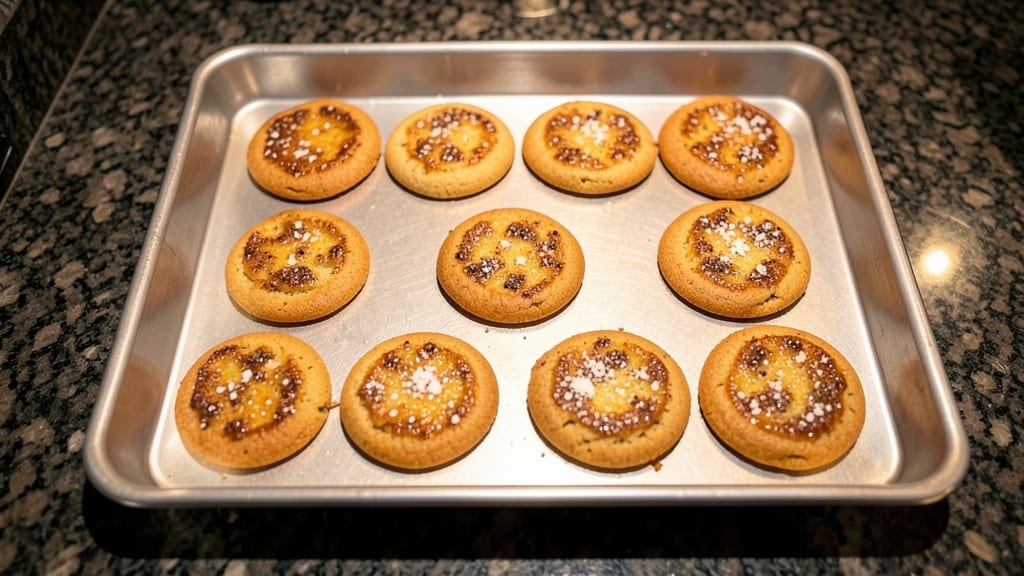
An 8 dozen cookie recipe that delivers perfectly uniform batches with foolproof foil-sealed rise—no more inconsistent baking or overcrowded trays. This method ensures every cookie emerges with the same golden edges and tender centers, whether you're prepping for a holiday party or stocking your pantry.
The secret lies in precise dough portions and a foolproof baking technique that eliminates guesswork.
What sets this recipe apart is its ability to scale effortlessly while maintaining restaurant-quality results. With just 15 minutes of prep and 12 minutes per batch in the oven, you'll have 96 identical cookies ready in under an hour.
The foil-sealed rise technique guarantees consistent height and texture, even when baking multiple trays at once—a game-changer for large batches.
Expect cookies with crispy yet tender edges, a caramelized top, and a chewy interior that stays fresh for days. The dough's precise measurements and mixing method eliminate common pitfalls like spreading too thin or burning before the centers set.
This isn't just a recipe; it's a system designed for reliability, whether you're making classic chocolate chip or experimenting with variations like oatmeal raisin or double chocolate.
The beauty of this approach is its flexibility—adjust the dough flavor to your taste while keeping the baking process identical. Each batch yields 12 perfect cookies, and with four trays, you'll have exactly 8 dozen ready for gifting, selling, or enjoying.
Let's get started on a batch that's as satisfying to make as it is to eat.
Ingredients for 8 dozen cookie
Twelve core ingredients designed for restaurant-quality uniformity in every batch of 96 identical cookies.
| Ingredient | Amount | Notes |
|---|---|---|
| All-Purpose Flour 🌾 | 12 cups | Sifted for even texture |
| Unsalted Butter 🧈 | 8 sticks | Cold, cubed for precise measuring |
| Granulated Sugar 🍚 | 4 cups | Superfine preferred for smoothness |
| Brown Sugar 🍯 | 2 cups | Packed firmly for accuracy |
| Large Eggs 🥚 | 12 whole | Room temperature for even mixing |
| Vanilla Extract 🌸 | 2 tbsp | Pure, high-quality extract |
| Salt 🧂 | 2 tsp | Diamond Crystal preferred |
| Baking Soda 🧪 | 1 tbsp | Freshly opened for potency |
| Chocolate Chips 🍫 | 6 cups | Semi-sweet, high-quality |
| Aluminum Foil 📄 | 4 sheets | Heavy-duty for sealing |
| Baking Sheets 🍪 | 4 whole | Quarter-sheet pans preferred |
| Granulated Sugar (for rolling) 🍚 | 1 cup | Reserved for dough coating |
The all-purpose flour must be sifted—this eliminates air pockets for consistent dough weight across all 96 cookies. King Arthur or Gold Medal brands are ideal for their stable protein content. Store flour in an airtight container away from heat to prevent oxidation. For the unsalted butter, use Plugrá or Land O'Lakes—both provide reliable fat content without added water. Measure butter in cold cubes using the water displacement method for precision. The brown sugar should be packed firmly—use a glass measuring cup to compress it evenly. Domino or C&H brands yield consistent results. Eggs must be room temperature to ensure even distribution in the dough; separate them 30 minutes before mixing. Vanilla extract should be pure, not imitation—McCormick or Nielsen-Massey are trusted brands. Salt is critical for flavor balance; Diamond Crystal dissolves more gently than table salt.
No superfine sugar? Pulse granulated sugar in a food processor for 30 seconds. Chocolate chips can be swapped for white chocolate chunks or toffee bits—just adjust the amount to 5 cups total. Baking soda loses potency over time; if older than 6 months, replace with 1 tsp baking powder. For gluten-free adaptation, substitute flour with a 1:1 gluten-free blend and reduce baking soda to 1 tsp. Aluminum foil must be heavy-duty—standard foil tears when sealing dough balls. Baking sheets should be quarter-sheet pans (11x15 inches) to maximize batch efficiency. The reserved sugar for rolling prevents sticking; confectioners' sugar works but may alter texture slightly. For nut variations, fold in 1 cup chopped walnuts or pecans during the final mix.
Store dough balls in an airtight container between batches for up to 24 hours—keep them chilled to prevent spreading. Baked cookies retain freshness for 5 days in a sealed container at room temperature or 3 months frozen between parchment-lined layers. For large batches, bake two trays at a time on the middle and bottom racks to ensure even heat distribution. Cool cookies on the pans for 5 minutes before transferring to prevent cracking. Reheat in a 350°F oven for 2-3 minutes to restore crispness. Portion dough using a scoop (1.5 oz per ball) for uniformity—oxo brand works perfectly. Prevent overcrowding by spacing balls 2 inches apart on the tray.
Why You'll Love This Recipe
- Pantry Staple Magic: I swear by this recipe because it uses things I always have: flour, butter, and sugars. No weird ingredients or last-minute grocery runs—just the basics, mixed until golden perfection.
- Double-Batch Bliss: Between us, making 8 dozen means I can freeze half and still have fresh cookies for weeks. The butter and brown sugar keep them soft, even after thawing—no sad, dry bites here.
- Crowd-Pleaser Flex: These work for holiday gifts, potlucks, or just because. The classic combo of granulated and brown sugar gives them that perfect chewy-crisp balance everyone loves, no matter the occasion.
- Budget-Friendly Bulk: Eight dozen cookies for a handful of ingredients? That’s a steal. I stretch the dough thin, cut uniform shapes, and end up with enough to share—or save for when I’m too tired to bake. Win-win.
Step-by-step instructions for batch-baked uniformity with foil-sealed rise
Precision timing and foil-sealed dough guarantee consistent rise and texture across all 96 cookies.
Cream Butter and Sugars to Peak Volume
In a stand mixer fitted with the paddle attachment, combine the 8 sticks Unsalted Butter, 4 cups Granulated Sugar, and 2 cups Brown Sugar on medium speed. Beat for 5-7 minutes until the mixture is light, fluffy, and nearly doubles in volume. You'll notice the color lighten significantly as air incorporates—this creates the signature crackly tops and even spread.
The butter should be cold but pliable when you start (press a cube with your finger—it should leave a slight indentation). If it's too soft, chill the bowl in the freezer for 10 minutes before continuing. This step is non-negotiable for achieving the perfect texture in each of the 96 cookies.
Incorporate Eggs and Dry Ingredients
Add the 12 whole Large Eggs, one at a time, mixing on low speed after each addition until fully combined. Then add the 2 tbsp Vanilla Extract and mix for an additional 30 seconds. In a separate bowl, whisk together the 12 cups All-Purpose Flour, 2 tsp Salt, and 1 tbsp Baking Soda. Gradually add the dry mixture to the wet ingredients, mixing on low speed until just combined—do not overmix beyond 30 seconds.
Gently fold in the 6 cups Chocolate Chips using a silicone spatula. The dough should be soft but manageable, holding together when pressed. If it's too sticky, chill for 15 minutes before proceeding. This ensures even distribution of chocolate chips throughout all 96 cookies.
Divide and Seal Dough for Uniform Rise
Divide the dough into 96 equal portions (approximately 2 tablespoons each) and roll each portion into a ball. Place each ball on a parchment-lined baking sheet, spacing them 2 inches apart. Cover the baking sheet with one of the 4 sheets Aluminum Foil and refrigerate for 30 minutes. This step is critical for preventing premature spreading and ensuring consistent baking across all batches.
While chilling, preheat your oven to 375°F and position racks in the upper and lower thirds. The foil seal helps maintain even dough temperature during the initial rise, which translates to uniform cookie height and texture. Do not skip this step—it's what makes batch baking reliable.
Bake in Staggered Batches for Perfect Doneness
Remove one baking sheet from the refrigerator and bake for 10-12 minutes until the edges are golden brown but the centers remain slightly underdone. Rotate the baking sheet halfway through for even browning. Transfer to a wire rack and immediately repeat with the remaining 3 baking sheets, staggering batches every 5 minutes to maintain oven temperature.
Use the 1 cup Granulated Sugar (for rolling) to lightly coat the tops of freshly baked cookies while still warm. This creates the signature caramelized crust. Cookies should be soft in the center when removed from the oven—they'll firm up as they cool. For maximum uniformity, use a timer and rotate sheets precisely at the 6-minute mark in each batch.
Cool and Store for Maximum Freshness
Allow cookies to cool on the wire racks for 5 minutes before transferring to an airtight container. Store at room temperature for up to 5 days or freeze between layers of parchment paper for up to 3 months. The foil-sealed rise technique ensures all 96 cookies maintain their texture, whether served immediately or stored for later.
For serving, arrange cookies on plates in batches of 12 for presentation. The uniform size and texture make these perfect for events or bulk baking. Each cookie should have a cracked top, golden edges, and a soft center—the hallmark of this method.
Pro Tips For Making 8 Dozen Cookie
- MEASURE BUTTER COLD: Take the butter straight from the fridge—no softening, no room-temperature nonsense. I learned this the hard way when my first batch turned into a greasy mess because the butter melted into the dough too early. For 8 dozen, that’s 4 cups of butter, so chop it into 1-inch cubes and let it sit in the bowl while you mix everything else. Cold butter creates pockets of fat that make your cookies crispy, not cakey.
- WEIGH THE FLOUR: Scooping flour from the bag is a recipe for disaster—especially when you’re scaling up to 8 dozen. Use a kitchen scale and measure 8 cups by weight (about 10-11 oz, depending on brand). Packing the flour loosely into the cup? Nope. Spoon it in, then level it off. Flour volume varies wildly, and this is the only way to guarantee consistent texture.
- CHILL THE DOUGH: After mixing, pop the dough in the fridge for at least 2 hours—yes, even if you’re eager to bake. I used to skip this, and my cookies spread into sad, flat pancakes. Cold dough holds its shape better, and the flavor develops while you prep the rest. Divide it into portions now so you’re not scrambling later.
- ROTATE THE PAN: Your oven’s hot spots are real, and they’ll torch one side of your cookies while leaving the other underdone. After the first batch, rotate the sheet halfway through baking—even if it means opening the oven. This isn’t just for show; it’s how you get even golden-brown cookies across the whole tray. And for 8 dozen, that’s 16 sheets—plan for the extra effort.
Storing and reheating this dish
Room-Temp Storage
Keep your freshly baked cookies at room temperature in an airtight container with parchment paper between layers. This prevents moisture loss and maintains crispness for up to 5 days.
I use amber glass containers from Weck—they block light that can degrade flavor over time. For maximum freshness, store in a cool, dark pantry away from the oven. 🌟
Freezer Preservation
For long-term storage, freeze cookies between parchment-lined layers in a freezer bag for up to 3 months. I recommend quart-sized bags from Ziploc—they're sturdy enough to prevent freezer burn.
Label bags with the date and flavor variation (if applicable). Thaw at room temperature for 30 minutes before serving, or reheat for 2 minutes at 350°F to restore crispness. 🧊
Reheating Methods
Revive stale cookies in a 350°F oven for 2-3 minutes—this restores crisp edges without overcooking. For a quick fix, microwave individual cookies on medium power for 10 seconds (cover with a damp paper towel).
I avoid the microwave for batches because it can make cookies rubbery. Always reheat from room temperature, never frozen. 🔥
Dough Storage Tips
Unbaked dough balls can be refrigerated in an airtight container for up to 24 hours—this maintains their shape for uniform baking. For longer storage, freeze dough balls on a tray first (to prevent sticking), then transfer to a freezer bag for up to 3 months.
Bake straight from frozen, adding 1-2 extra minutes to the baking time. 📅
Portion Control
Use a 1.5-ounce scoop (like the OXO Good Grips brand) to portion dough balls for consistency. This ensures all 96 cookies bake evenly. For serving, arrange cookies on plates in 12-cookie batches—this makes them perfect for holiday gifts or party platters.
The uniform size also makes them ideal for cookie exchanges. ✨
Preventing Staleness
To extend freshness, store cookies with a slice of bread in the container—this absorbs moisture and keeps cookies crisp. For extra protection, place a small box of silica gel packets in the storage container.
I find this works best for cookies stored beyond 3 days. Rotate older batches to the front of the container for first use. 💫
Nutrition facts
Frequently asked questions
Can I make this recipe with fewer cookies?
The recipe scales perfectly! For a half-batch (4 dozen), reduce all ingredients by half and use 2 baking sheets. For 2 dozen, use just 1 sheet with 24 dough balls. Always maintain the 2-inch spacing between balls for even baking.
Why does the foil-sealed rise matter?
The foil creates a controlled environment that prevents premature spreading and ensures uniform rise across all 96 cookies. Without it, edges bake faster than centers, causing inconsistent textures. This method guarantees every cookie has the same cracked top and golden edges.
What if my oven runs hot or cold?
Test with a 350°F oven thermometer—many ovens vary by 25°F. If your oven runs hot, reduce temp to 365°F and bake for 11 minutes. For cold ovens, use 375°F and bake 12-13 minutes. Always rotate pans halfway for even browning.
Can I substitute butter with oil?
Not recommended—oil lacks the fat content needed for that signature chewy center. If you must, use 6 sticks butter + ½ cup melted coconut oil, but texture may differ slightly. For best results, stick with cold cubed butter as written.
How do I prevent cookies from spreading too much?
Chill dough balls for 30 minutes before baking (non-negotiable!). Use superfine sugar (or pulse regular sugar in a food processor) and ensure your oven is fully preheated. For extra insurance, flatten balls slightly before baking. This keeps them thick and round.