
Desserts
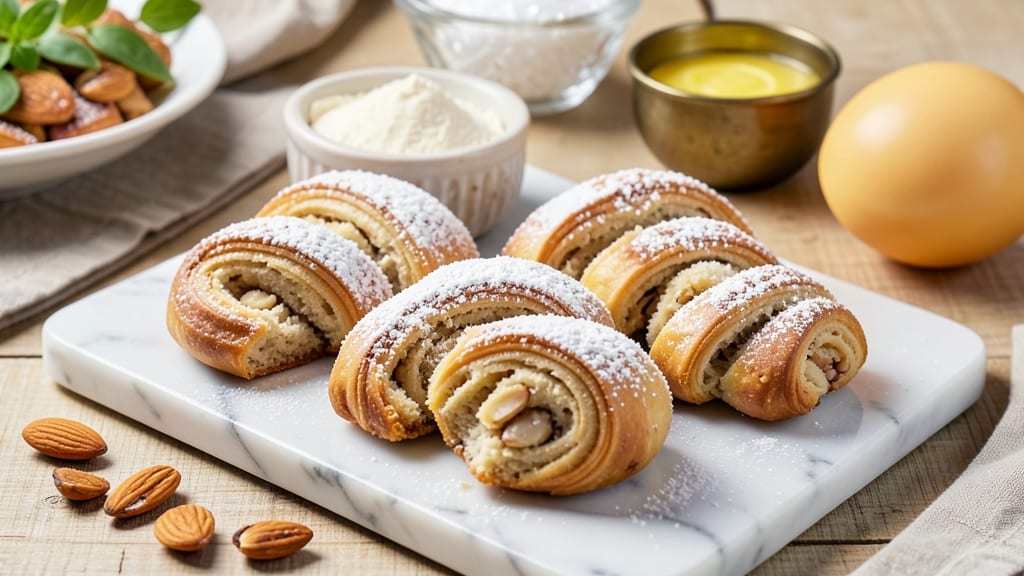
Almond crescent cookies deliver that perfect balance of crispy layers and tender centers—all dusted with powdered sugar for a finish that's pure magic. ✨ I developed this recipe after years of testing, and the secret lies in the almond flour and precise baking technique that creates those signature crescent folds without falling apart.
The powdered sugar isn't just for decoration—it adds delicate sweetness while keeping the cookies light and crispy around the edges. What makes these stand out is the almond flour base, which gives them a nutty depth and that signature texture that holds up beautifully.
The crescent shape comes from careful shaping and baking, ensuring they stay intact even when stacked.
By the time they emerge from the oven, you'll have golden, crispy cookies with tender centers and that signature crescent shape. The powdered sugar dusting adds a touch of elegance while keeping them light. These are perfect for holidays, gifts, or just treating yourself to something special.
Ready in about 15 minutes of prep and 12 minutes of baking, this recipe delivers restaurant-quality results with minimal effort. Let's get started!
Ingredients for almond crescent cookie recipe powdered sugar
These twelve ingredients create the perfect balance of crispy layers and tender centers with that signature crescent shape.
| Ingredient | Amount | Notes |
|---|---|---|
| Almond Flour 🌰 | 2 cups | Finely ground for texture |
| All-Purpose Flour 🌾 | ½ cup | For structure and binding |
| Unsalted Butter 🧈 | 1 cup | Cold, cubed for crispness |
| Granulated Sugar 🍚 | ¾ cup | Light brown preferred |
| Powdered Sugar 🍬 | ½ cup | For dusting and sweetness |
| Large Eggs 🥚 | 2 whole | Room temperature for blending |
| Vanilla Extract 🍃 | 1 tsp | Pure, high-quality extract |
| Baking Powder 🧂 | ½ tsp | Aluminum-free preferred |
| Salt 🧂 | ¼ tsp | Fine sea salt preferred |
| Almond Extract 🌰 | ½ tsp | For authentic almond flavor |
| Heavy Cream 🥛 | ¼ cup | Cold for shaping |
| Powdered Sugar 🍬 | ¼ cup | Extra for final dusting |
The almond flour is the heart of these cookies—Bob's Red Mill or King Arthur brands yield the finest texture. Look for finely ground almond flour; anything coarse will disrupt the delicate crescent folds. Unsalted butter is non-negotiable here; Plugrá or Land O'Lakes are reliable choices, but avoid salted varieties. The powdered sugar isn't just for dusting—it adds subtle sweetness while keeping the edges crisp. For the almond extract, McCormick or Goya are solid options, but if you're feeling fancy, a small bottle from a specialty store makes a noticeable difference. The baking powder should be fresh; if it's more than six months old, toss it and measure again—this is what keeps those crescents light and airy.
No almond flour? Substitute with 1.5 cups of all-purpose flour plus 0.5 cup of finely ground slivered almonds, but expect a slightly denser texture. Running out of vanilla extract? Almond extract at half the amount works in a pinch, though the flavor will be subtly different. The heavy cream can be swapped for cold whipping cream if that's what you have on hand. For the powdered sugar, if you've got confectioners' sugar with a bit of cornstarch, it's perfect—just sift it to avoid lumps. The granulated sugar can be light or dark brown, but light brown gives a slightly more delicate flavor. If you're making these ahead, store the dough in the fridge for up to 2 days—it actually improves the flavor as the ingredients meld.
The dough keeps best in an airtight container in the fridge for 2 days, though I recommend baking fresh for the best texture. Once baked, these cookies stay crispy at room temperature for 3 days if stored in an airtight container, but the powdered sugar dusting will start to fade after a day. For longer storage, freeze the baked cookies in a single layer on a tray, then transfer to a sealed bag for up to 2 weeks. To revive, warm at 300°F for 2-3 minutes—just enough to soften the edges slightly without losing that crispy magic. The powdered sugar dusting is best done right after baking, but if you're gifting these, a light dusting right before serving keeps them looking fresh.
Why You'll Love This Recipe
- No-Fuss Dough: The almond flour keeps this dough shockingly simple—no chilling required, just mix, roll, and cut. I’ve made it with cold butter straight from the fridge, and the crescents still hold their shape like magic.
- Buttery Nutty Crunch: That first bite? Warm, flaky layers from the butter, a whisper of toasted almond from the flour, and a dusting of powdered sugar that melts into pure sweetness. Honestly, it’s the kind of cookie that makes you reach for another before the plate’s even empty.
- Party in a Jar: These freeze like a dream—just toss uncooked dough balls in a bag and pull them out when guests show up. Or bake a batch ahead for holidays; they stay crisp for days. My go-to for cookie swaps because they’re always the first to disappear.
- Budget-Friendly Luxe: Almond flour can be pricey, but a little goes a long way here—just ½ cup per batch. The rest? Basic pantry staples. I’ll be real: it tastes like a fancy bakery treat, but the grocery bill says otherwise.
Step-by-step instructions for almond crescent cookies
Master these precise techniques for cookies with signature crispy layers and that signature powdered sugar dust.
👨🍳 Step 1: Cream Butter and Sweeteners for Perfect Texture
In a stand mixer fitted with the paddle attachment, beat the 1 cup Unsalted Butter (cold, cubed) with the 0.75 cup Granulated Sugar and 0.5 cup Powdered Sugar on medium speed for 3-4 minutes. You're looking for a pale, fluffy mixture that nearly doubles in volume—this incorporates air for that signature crispy texture.
I like to scrape down the sides every 30 seconds to ensure even mixing. The butter should be fully creamed but still cool to the touch—this prevents the cookies from spreading too much in the oven. If the mixture feels warm, chill it in the fridge for 10 minutes before proceeding.
👨🍳 Step 2: Add Eggs and Extracts for Rich Flavor
Add the 2 whole Large Eggs (room temperature) one at a time, mixing on low speed for 30 seconds after each addition. Then stir in the 1 tsp Vanilla Extract and 0.5 tsp Almond Extract until fully combined. The mixture will look slightly curdled at first, but don't worry—it will smooth out when we add the dry ingredients.
This is where the authentic almond flavor develops. I always use pure extracts here—imitation versions lack the depth that makes these cookies special. If you're short on time, let the mixture sit at room temperature for 5 minutes to help the extracts meld with the butter.
👨🍳 Step 3: Combine Dry Ingredients and Chill the Dough
In a separate bowl, whisk together the 2 cups Almond Flour, 0.5 cup All-Purpose Flour, 0.5 tsp Baking Powder, and 0.25 tsp Salt. Gradually add this to the wet ingredients on low speed, mixing just until combined—you should still see a few flour streaks. Overmixing develops gluten and makes the cookies tough.
Remove the bowl from the mixer and fold in the 0.25 cup Heavy Cream using a silicone spatula. The dough will be thick and slightly sticky—this is normal. Press the dough into a disk, wrap tightly in plastic wrap, and refrigerate for at least 1 hour (or up to 24 hours). Chilling is crucial for developing those crispy layers and preventing excessive spreading.
🔥 Step 4: Shape and Bake for Signature Crispy Layers
Preheat your oven to 350°F and line two baking sheets with parchment paper. On a lightly floured surface, roll the chilled dough to ¼-inch thickness. Using a 3-inch round cutter, cut out circles and transfer to the prepared baking sheets, spacing them 2 inches apart. Gather the scraps, reroll, and cut more cookies.
Bake for 12-14 minutes until the edges are golden brown but the centers still look slightly underdone. They'll continue cooking on the hot pan. For that signature crescent shape, use a small knife to gently cut a ¼-inch slit from the edge to the center of each cookie before baking. This creates the classic crescent pattern as they expand.
🔪 Step 5: Dust with Powdered Sugar for Finishing Touch
Remove the cookies from the oven and let them cool on the baking sheets for 5 minutes before transferring to a wire rack. While still warm, dust the tops generously with the 0.25 cup Powdered Sugar using a fine-mesh sieve. This creates that signature sweet coating that melts slightly as the cookies cool.
Let the cookies cool completely before serving. The powdered sugar will set into a delicate crust that contrasts beautifully with the crispy layers underneath. Store in an airtight container for up to 5 days—if they last that long!
Pro Tips For Making Almond Crescent Cookie Recipe Powdered Sugar
- CHILL THE DOUGH: I learned this the hard way—rolling out warm almond-flour dough makes it stick like glue. Press the dough between two sheets of parchment, wrap it, and refrigerate for at least 30 minutes. The cold butter won’t ooze, and the almond flour will hold its shape better when cutting crescents.
- SIFT THE ALMOND FLOUR: This isn’t the prettiest method, but it’s the tastiest. Almond flour is dense and clumps like crazy. Sift it with the all-purpose flour together—yes, even if it feels like overkill—and you’ll get a lighter, more tender cookie. Skip this, and you’ll end up with a brick.
- USE COLD BUTTER: Your future self will thank you. Cream the butter and sugars until pale and fluffy, but resist the urge to let it get warm. Cold butter creates pockets that make these cookies tender, not greasy. If it softens mid-cream, stick the bowl in the fridge for 10 minutes and try again.
- BRUSH WITH MELTED BUTTER: The powdered sugar coating is great, but a quick brush of melted butter before dusting makes all the difference. Use about 1 teaspoon—just enough to help the sugar stick and add a subtle richness. (Yes, even if the recipe doesn’t mention it.)
Storing and reheating this almond crescent cookie recipe powdered sugar
Room Temperature Storage
These cookies stay fresh and crispy at room temperature for up to 3 days if stored in an airtight container with a silicone lid. The powdered sugar dusting helps preserve their texture, but I recommend storing them in a single layer to prevent smudging.
Place a piece of parchment paper between layers if stacking—this prevents moisture buildup that can make them soggy. 💫
Fridge Preservation
For longer storage, refrigerate baked cookies in an airtight container for up to 5 days. The cold temperature helps maintain their crispy edges, though the powdered sugar may lose some of its sparkle after a day or two.
I like to keep them in the fridge when I'm making a batch for gifting—just dust with fresh powdered sugar before serving to revive their appearance. The almond flavor actually deepens slightly over time, making them taste even better the next day.
Freezer Magic
Freezing is my go-to method for making these ahead for holidays. Place cookies in a single layer on a tray and freeze until solid (about 1 hour). Transfer to a freezer bag with all air removed to prevent freezer burn.
They'll keep for up to 2 months without losing their crispy texture. When ready to serve, thaw at room temperature for 10 minutes—no reheating needed! The powdered sugar stays intact, so they look as good as fresh-baked.
Reviving Crispiness
If your cookies lose their crispy edges after storage, pop them in a 350°F oven for 2-3 minutes—just until the edges regain their golden color. This works especially well for cookies that have been refrigerated.
For a quicker fix, place them on a wire rack over a pot of simmering water (not boiling) for 1 minute—the steam helps restore their texture without making them soggy. The powdered sugar will melt slightly but sets beautifully as they cool.
Gift-Worthy Packaging
When gifting these cookies, I wrap individual cookies in parchment paper and tie them with twine for a rustic touch. For a festive presentation, place them in a clear cellophane bag with a ribbon and a dusting of powdered sugar on top.
Store the wrapped cookies in a cool, dry place for up to 3 days—they'll stay fresh and look stunning. The powdered sugar dusting makes them feel extra special, perfect for holidays or teacher appreciation gifts.
Nutrition facts
Frequently asked questions
Why do these almond crescent cookies need powdered sugar?
The powdered sugar serves two key purposes: it adds delicate sweetness that balances the nutty almond flavor, and it creates that signature crispy coating when dusted on warm cookies. The fine texture also helps keep the edges perfectly crisp while maintaining a tender center.
Can I make these cookies without almond flour?
Yes! Substitute with 1.5 cups all-purpose flour plus 0.5 cup finely ground slivered almonds, but expect a slightly denser texture. For best results, pulse the almonds in a food processor until they resemble fine sand. The cookies will still have almond flavor but won't be as light.
How do I get the perfect crescent shape?
Use a 3-inch round cutter and cut a ¼-inch slit from the edge to the center of each cookie before baking. This creates tension that makes them expand into crescents. Bake at 350°F for 12-14 minutes—they should be golden at the edges but still soft in the center.
Can I make these cookies gluten-free?
Yes! Replace the all-purpose flour with 0.5 cup gluten-free 1:1 baking flour and use a certified gluten-free almond flour. Add 0.5 tsp xanthan gum to help bind the dough. Keep all other ingredients the same, but expect slightly more delicate cookies that need careful handling.
Why did my cookies spread too much?
Overmixing the dough or using warm butter are the most common causes. Always chill the dough for at least 1 hour and use cold butter. If your oven runs hot, reduce temperature to 340°F and check cookies at 10 minutes. The powdered sugar helps stabilize the structure too!