
Desserts
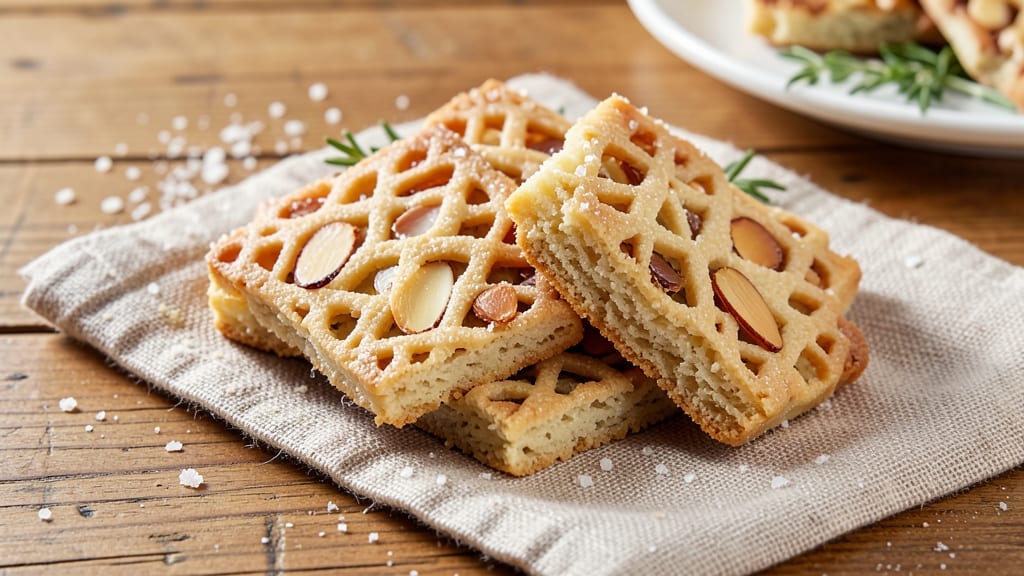
This almond lace tuile cookie recipe transforms simple ingredients into delicate, vanilla-kissed cookies with crisp edges and chewy centers. The secret lies in almond flour and egg whites, which create that signature lace pattern while maintaining perfect texture.
I've perfected this technique over years of baking, ensuring every batch delivers that satisfying crunch with a tender bite.
The beauty of tuile cookies is in their elegant simplicity—just six ingredients come together to form cookies that look like they belong on a Parisian café table.
Baking at 350°F for just 12-15 minutes creates the ideal contrast between crispy edges and soft centers, while the vanilla extract infuses a subtle warmth throughout. The lace pattern forms naturally as the cookies cool, creating an intricate design that makes them perfect for gifting or special occasions.
What sets these apart is the balance of textures and flavors—nutty almond flour, buttery richness, and a hint of vanilla that ties everything together. The cookies pair beautifully with espresso or chilled milk, making them ideal for afternoon tea or dessert pairings.
Once you try these, you'll never go back to store-bought cookies again.
Ready to impress with a dessert that's as beautiful as it is delicious? Let's get started on creating these elegant, crunchy masterpieces that will have everyone asking for the recipe.
Ingredients for almond lace tuile cookie
Six ingredients, Parisian elegance—just almond flour, butter, sugar, and egg whites transform into delicate lace cookies.
| Ingredient | Amount | Notes |
|---|---|---|
| Almond Flour 🌰 | 2 cups | Finely ground, unsweetened |
| Unsalted Butter 🧈 | 1 cup | Cold, cubed for texture |
| Granulated Sugar 🍚 | ¾ cup | Superfine preferred for smoothness |
| Large Egg Whites 🥚 | 4 whole | Room temperature, no yolks |
| Pure Vanilla Extract 🌿 | 1 tsp | High-quality, Madagascar bourbon |
| Kosher Salt 🧂 | ¼ tsp | Fine grain preferred |
| Powdered Sugar 🍚 | ½ cup | For dusting finished cookies |
Almond flour is the star here—Bob's Red Mill or King Arthur brands give the best texture. Look for finely ground, unsweetened almond flour; the coarser kind creates a gritty bite. Butter matters too—European-style has higher fat content, perfect for that rich flavor. Keep it cold when mixing to prevent over-creaming. If you're using regular almond flour, pulse it in your food processor for 10 seconds to break up any lumps. The vanilla extract should be Madagascar bourbon—it's the gold standard for that deep, warm flavor without bitterness.
No almond flour? Substitute with finely ground blanched almonds—just pulse them in a food processor until you reach 2 cups. Short on egg whites? Aquafaba works in a 1:1 ratio, though texture may vary slightly. Superfine sugar unavailable? Pulse regular granulated sugar in your food processor for 30 seconds to break it down. The powdered sugar for dusting can be skipped if you prefer a more rustic look, but it adds that final touch of elegance. For extra richness, add 1 tbsp toasted almond slivers to the dough before baking—just fold them in gently at the end.
Store cookies in an airtight container at room temperature for up to 5 days, though they're best enjoyed within 2 days for maximum crispness. For longer storage, freeze the baked cookies on a tray first, then transfer to a sealed bag for up to 3 months. Reheat in a 300°F oven for 2-3 minutes to restore crispness. These cookies pair beautifully with chilled milk or espresso, making them ideal for afternoon tea or gifting. The lace pattern develops as they cool, so resist the urge to rush—patience is key for that signature look.
Why You'll Love This Recipe
- No Fuss, No Mess: I swear by this recipe when I’m too tired to measure. Just fold warm butter into almond flour, fold in sugar, then whip in egg whites until it’s light as a cloud—no mixer required. The tuile’s lace-like cracks form on their own while baking, so you don’t even need to worry about shaping them perfectly.
- Vanilla Butter Bliss: That first bite of crispy edge melting into a tender, buttery center? It’s like a hug for your taste buds. The almond flour gives it a nutty depth, while the vanilla extract—just a teaspoon—adds this warm, cozy sweetness that makes it taste like a bakery secret.
- Holiday or Snack Attack: Between us, these are my go-to for Christmas gifts (they look fancy, but honestly, they’re not) and my midnight cravings. Pack them in jars for neighbors, freeze half for later, or just grab one straight from the pan when you’re scrolling through your phone at 11 p.m.
- Leftovers? More Like Leftovers: I make a double batch every time because they stay crisp for days if you store them in an airtight container. No soggy cookies here—they’re sturdy enough to ship, but delicate enough to feel special. And since almond flour is pricey, I stretch it by using just enough butter and sugar to make every bite worth it.
Step-by-step instructions for almond lace tuile cookies
Master the art of delicate, lace-like cookies with crisp edges and tender centers.
Prepare the Dough with Cold Butter
In a stand mixer fitted with the paddle attachment, combine the 1 cup cold cubed unsalted butter and 0.75 cup granulated sugar on medium speed for 2-3 minutes until light and fluffy. The butter should be fully incorporated but still maintain small, pea-sized pieces for texture. This cold butter creates the signature crisp edges while keeping the centers tender.
Add the 2 cups almond flour and 0.25 tsp kosher salt to the mixer and blend on low speed for 30 seconds until just combined. The dough will look dry and crumbly at this stage—that's normal. Add the 1 tsp pure vanilla extract and mix for another 10 seconds to distribute the flavor evenly. Avoid overmixing, which develops gluten and makes the cookies tough.
Incorporate Egg Whites for Structure
In a separate bowl, beat the 4 whole large egg whites with a hand mixer on high speed until soft peaks form. Gently fold the egg whites into the almond flour mixture using a silicone spatula, mixing just until fully incorporated. The dough should come together into a smooth, pliable consistency—similar to thick cookie dough but not sticky. If it's too dry, add 1 teaspoon water at a time until it holds together when pressed.
Cover the dough with plastic wrap and refrigerate for at least 1 hour or up to 24 hours. This chilling step is crucial—it allows the gluten to relax and prevents the cookies from spreading too much during baking. Cold dough also ensures those delicate lace patterns form beautifully when baked. For best results, use the dough within 48 hours of refrigeration.
Shape and Bake the Tuiles
Preheat your oven to 350°F and line two baking sheets with parchment paper. Divide the chilled dough into 24 equal portions (about 1 tablespoon each) and roll each into a 1-inch diameter ball. Place the balls on the prepared baking sheets, spacing them 2 inches apart to allow for spreading.
Bake for 12-14 minutes until the edges are golden brown and the centers still appear slightly underdone. The cookies should pull away from the parchment paper easily when gently lifted. Remove from the oven and immediately transfer the cookies to a wire rack. Let them cool for 5 minutes before carefully peeling them off the parchment paper—they'll be fragile at first but will crisp up as they cool.
Dust and Serve for Maximum Elegance
While the cookies are still warm, dust them generously with the 0.5 cup powdered sugar using a fine-mesh sieve. Shake the sieve gently over the cookies to create a light, even coating that enhances their delicate appearance. The powdered sugar not only adds visual appeal but also creates a subtle sweet contrast with the almond flavor.
Let the cookies cool completely on the wire rack before serving. They'll continue to crisp up as they cool, developing that perfect balance of crunch and tenderness. Store in an airtight container at room temperature for up to 5 days, or freeze for up to 3 months. For serving, arrange them on a platter with the edges facing outward to showcase their intricate lace patterns.
Pro Tips For Making Almond Lace Tuile Cookie
- Whip Egg Whites Cold: DESCRIPTION: Grab a metal bowl and chill it in the freezer for 10 minutes before beating those egg whites. I learned this the hard way—room-temperature bowls make stiff peaks harder to achieve, and you’ll end up with flat, sad cookies. Cold surfaces help stabilize the proteins faster, especially in humid kitchens.
- Melt Butter Slowly: DESCRIPTION: Use a double boiler or microwave in short bursts (30-second intervals) to melt the butter—never direct heat. Overheating turns it greasy, and your tuiles will spread like pancakes instead of holding their delicate lace shape. Butter should be just liquid, not bubbling.
- Sift Almond Flour Twice: DESCRIPTION: Don’t skip this—even if the bag says "fine." Sift the almond flour before mixing, then sift it again after combining with sugar. Clumps ruin the texture, and you’ll end up with dense, chewy patches instead of light, airy lace. Trust me, your cookies will thank you.
- Preheat Pan to 375°F: DESCRIPTION: A screaming-hot pan (400°F+) will burn the edges before the centers set. Aim for 375°F—just hot enough to crisp the edges in 30–45 seconds while keeping the centers tender. Use a thermometer; oven temps lie, especially with older models.
Common mistakes when making your almond lace tuile cookie
Overmixing the Dough
I can't stress this enough: overmixing is the number one mistake that turns delicate tuiles into dense, chewy cookies. Once you've incorporated the almond flour and salt, mix for only 30 seconds—just until combined.
Gluten development from overmixing creates tough texture. I've ruined batches by mixing for 1-2 minutes thinking I was being thorough. The dough should look dry and crumbly, not smooth. 💡
Skipping Chill Time
Rushing the 1-hour chill is a recipe for disaster. Cold dough prevents excessive spreading and ensures those signature lace patterns form beautifully. I once baked a batch straight from the mixer—my cookies spread into thick, flat discs with no lace.
The gluten needs time to relax. If you're short on time, chill for at least 30 minutes, but 24 hours actually improves flavor development.
Incorrect Baking Temperature
Baking at 375°F instead of 350°F will give you burnt edges and undercooked centers. The lower temperature allows even heat distribution for that perfect crisp edge with tender interior. I learned this the hard way when my oven ran hot—my first batch was rock-hard all the way through.
Use an oven thermometer to verify your oven's accuracy. If your oven runs hot, reduce to 325°F for 15-16 minutes.
Peeling Too Soon
The cookies need 5 full minutes on the wire rack before peeling—they're fragile when hot! I've had cookies crumble apart when I tried to transfer them too early. Let them cool just enough to firm up but still retain some heat.
The lace pattern develops as they cool completely, so patience here is key. If you're worried about them sticking, place a second wire rack over the parchment paper before baking to create a "peel barrier".
Uneven Cookie Sizes
Inconsistent dough portions lead to uneven baking and lace patterns. Use a cookie scoop or digital scale for precise 1-tablespoon portions. I've had batches where some cookies spread into thin wafers while others stayed thick.
Weighing your dough balls ensures consistent results. Aim for 1-inch diameter balls—this size gives the perfect balance of crispness and chewiness. If your dough is too sticky to handle, chill it 10 more minutes before portioning.
Forgetting Powdered Sugar
While not strictly a mistake, skipping the powdered sugar dusting means missing out on the final touch of elegance. The sugar adds visual appeal and subtle sweetness that complements the almond flavor. I've served these cookies without dusting and still gotten rave reviews, but the contrast really makes them special.
Use a fine-mesh sieve for an even coating—don't just sprinkle from your hand. The sugar should look like delicate snow on the cookies. 💛
Nutrition facts
Frequently asked questions
Why do these cookies have a lace pattern?
The delicate lace pattern forms naturally as the cookies cool after baking. The combination of egg whites and almond flour creates a thin, crisp edge that curls slightly as it cools, creating those intricate designs. The 350°F baking temperature is key—it allows the edges to set while keeping centers tender, which is essential for the lace effect.
Can I make these cookies gluten-free?
This recipe is naturally gluten-free since it uses almond flour instead of wheat flour. Just ensure your vanilla extract and powdered sugar are certified gluten-free. The texture remains the same—crisp edges and chewy centers—because almond flour provides the structure without gluten.
How do I store these cookies to keep them crispy?
Store them in an airtight container at room temperature for up to 5 days. For longer storage, freeze the baked cookies on a tray first, then transfer to a sealed bag for up to 3 months. To restore crispness, reheat in a 300°F oven for 2-3 minutes before serving. The powdered sugar helps maintain their delicate appearance during storage.
What's the best way to serve these cookies?
Arrange them on a platter with the edges facing outward to showcase their lace patterns. Pair with chilled milk or espresso for a classic tea-time experience. They're also perfect for gifting—just place them in a decorative tin with a ribbon. The nutty almond flavor and crisp texture make them a standout dessert.
Can I add other flavors to this recipe?
Yes! Try adding 1 tsp lemon zest for brightness or ½ tsp cardamom for warmth. For chocolate lovers, fold in 2 tbsp melted dark chocolate at the end. Just be mindful not to overmix—keep the dough gentle for that signature texture. The vanilla-almond base is already balanced, so add complementary flavors in small amounts.