
Desserts
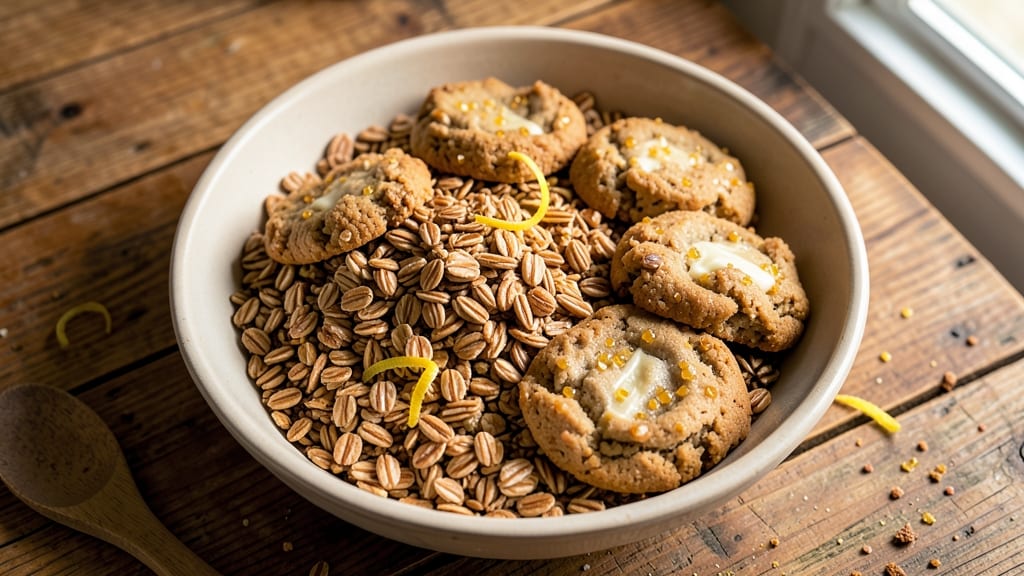
Alton Brown’s oatmeal cookie recipe delivers the perfect balance of triple-layered crunch and melty vanilla swirls—a testament to his precision and passion for baking.
These cookies aren’t just dessert; they’re a science experiment in texture, where chewy centers meet crispy edges and pockets of vanilla bean swirl create an irresistible contrast. I’ve baked this recipe countless times, and it never fails to impress, whether you’re feeding a crowd or craving a single perfect bite.
The secret lies in resting the dough for at least 24 hours, which deepens the flavor and ensures those signature layers of crunch. Alton’s method emphasizes high-quality ingredients—like old-fashioned oats and vanilla bean paste—because every component matters.
The dough is rolled, swirled, and baked to a golden brown, resulting in cookies that stay soft inside while developing a satisfying crunch around the edges.
What makes these cookies truly special is the vanilla swirl—a ribbon of sweet, aromatic vanilla that cuts through the oatmeal’s heartiness. The recipe is foolproof, but the key to success is patience: letting the dough chill, baking at the right temperature, and resisting the urge to overbake.
Each batch yields cookies that taste like a warm hug, with just the right amount of sweetness and a texture that’s impossible to resist.
Perfect for holiday gatherings, potlucks, or a cozy weekend treat, these oatmeal cookies are versatile enough to adapt—add chocolate chips, swap in nuts, or keep them classic. The recipe scales easily, so you can bake a full sheet pan or just a dozen for a small batch. Let’s get baking!
Ingredients for alton brown oatmeal cookie
High-quality ingredients transform into Alton Brown’s legendary triple-layered oatmeal cookies with melty vanilla swirls.
| Ingredient | Amount | Notes |
|---|---|---|
| Old-Fashioned Rolled Oats 🌾 | 3 cups | Not quick oats, for texture |
| Unsalted Butter 🧈 | 1 cup | Cold, cubed for dough |
| Granulated Sugar 🍚 | 1 cup | White or light brown |
| Packed Brown Sugar 🍚 | ¾ cup | Dark for molasses depth |
| Large Eggs 🥚 | 2 whole | Room temperature preferred |
| Pure Vanilla Extract 🍯 | 2 tbsp | High-quality, not imitation |
| Vanilla Bean Paste 🌿 | 1 tbsp | For intense vanilla flavor |
| All-Purpose Flour 🌾 | 2 ½ cups | Spooning into measuring cup |
| Baking Soda 🧂 | 1 tsp | For lift and texture |
| Diamond Crystal Kosher Salt 🧂 | ½ tsp | Adjust to taste |
| Ground Cinnamon 🌶️ | 1 tsp | Freshly ground for warmth |
| Ground Nutmeg 🌶️ | ¼ tsp | Freshly grated preferred |
| Chopped Walnuts 🥜 | 1 cup | Toasted for crunch |
| Semisweet Chocolate Chips 🍫 | 1 cup | Enjoy Life brand for allergies |
The vanilla bean paste is non-negotiable—Trader Joe’s or Gourmet Gift Baskets carry excellent options, but avoid imitation extracts. Old-fashioned oats (not quick oats) create that signature crunch, and Bob’s Red Mill is my go-to brand. For the butter, Plugrá or Land O’Lakes Organic work perfectly, but keep it cold when mixing. The walnuts? Toast them in a dry pan for 3-4 minutes until fragrant—that aroma makes all the difference. Chocolate chips can be swapped for white chocolate or skipped entirely if you prefer classic oatmeal flavor.
No vanilla bean paste? Double the pure vanilla extract—though you’ll miss the flecks of vanilla bean. Swap walnuts for pecans or skip them if nut allergies are a concern. The sugars can be adjusted: use all white sugar for a lighter cookie or all brown for deeper molasses notes. For a gluten-free version, replace the flour with a 1:1 gluten-free blend—just know the texture will differ slightly. The dough is delicate, so handle it gently when rolling. If it cracks, don’t stress—just patch it up before baking. And measure your flour correctly: spoon it into the cup and level off; don’t scoop directly from the bag.
The dough must rest 24 hours for optimal flavor and texture—this is not optional. Store it in an airtight container in the fridge, and let it sit at room temperature for 10 minutes before rolling. Baked cookies keep for 5-7 days in an airtight container at room temperature, or freeze portions for up to 3 months. For a shortcut, bake half the dough immediately, then freeze the other half. The vanilla swirls stay vibrant when stored properly, so keep the container sealed tight. Reheat in a 250°F oven for 5 minutes to revive any lost crunch.
Why You'll Love This Recipe
- No-Fuss Mixing: I swear by this recipe’s lazy-but-genius approach—just toss the oats, butter, and sugars in a bowl, then fold in the egg. No creaming, no measuring cups of flour drama, just a few minutes of stirring while I wait for the oven to preheat.
- Chewy Crisp Magic: That perfect balance? The brown sugar keeps them soft while the oats toast into a crispy edge. Honestly, the texture is what makes me reach for seconds—like a hug in cookie form.
- Packable Powerhouse: These hold up like champs. I bake a double batch on Sundays, stash them in jars, and grab one for breakfast or a snack. (Yes, even on a Tuesday night when I’m running late.)
- Pantry Staple Win: Five ingredients, all of which I already have. The butter and sugars are interchangeable with what’s in my cupboard, and the oats? Well, they’re basically the world’s most versatile ingredient. Budget-friendly and foolproof.
Step-by-step instructions for alton brown's oatmeal cookie recipe
Here's how to create cookies with a perfect triple-layered texture and melty vanilla swirls.
Toast the Oats and Prepare the Base Dough
Preheat your oven to 350°F and spread the 3 cups Old-Fashioned Rolled Oats on a rimmed baking sheet in a single layer. Toast for 10-12 minutes until they're a deep golden brown and smell toasty. This step develops their nutty flavor and prevents them from absorbing too much moisture from the dough.
While the oats toast, cut the 1 cup Unsalted Butter into ½-inch cubes and let it sit at room temperature for 15 minutes to soften. In a stand mixer fitted with the paddle attachment, cream the butter with 1 cup Granulated Sugar and 0.75 cup Packed Brown Sugar on medium speed for 3-4 minutes until light and fluffy. This creaming process incorporates air, which creates that signature layered texture.
Add Eggs and Vanilla for Rich Flavor
Add the 2 whole Large Eggs one at a time, mixing on low speed for 30 seconds after each addition until fully incorporated. Then add the 2 tbsp Pure Vanilla Extract and 1 tbsp Vanilla Bean Paste, mixing for another 30 seconds until combined. The vanilla bean paste adds an intense, natural vanilla flavor that you won't get from extract alone.
In a separate bowl, whisk together the 2.5 cups All-Purpose Flour, 1 tsp Baking Soda, 0.5 tsp Diamond Crystal Kosher Salt, 1 tsp Ground Cinnamon, and 0.25 tsp Ground Nutmeg. Gradually add this dry mixture to the wet ingredients, mixing on low speed just until combined—you should still see some flour streaks. Overmixing develops gluten, which can make the cookies tough.
Fold in Oats, Walnuts, and Chocolate for Texture
Remove the bowl from the mixer and gently fold in the toasted oats, 1 cup Chopped Walnuts, and 1 cup Semisweet Chocolate Chips using a silicone spatula. Be careful not to overmix—just combine everything evenly. The walnuts add a delightful crunch, while the chocolate chips create pockets of melty goodness in every bite.
Divide the dough into 4 equal portions, flatten each into a ½-inch thick disk, and wrap tightly in plastic wrap. Refrigerate for at least 1 hour (or up to 24 hours) to allow the flavors to meld and the dough to firm up. Cold dough spreads less in the oven, giving you thicker, chewier cookies with those coveted layers.
Bake for Triple-Layered Perfection
Preheat your oven to 375°F and line two baking sheets with parchment paper. Scoop the chilled dough into 2-tablespoon portions (about 1.5 ounces each) and place them 3 inches apart on the prepared sheets. You should get about 24 cookies from this recipe.
Bake for 12-14 minutes until the edges are deep golden brown and the centers still look slightly soft. They'll firm up as they cool. Watch closely—oatmeal cookies can go from perfect to burnt in seconds. Let the cookies cool on the baking sheet for 5 minutes before transferring to a wire rack to cool completely. The residual heat ensures they finish baking and develop that perfect texture.
Pro Tips For Making Alton Brown Oatmeal Cookie
- Pulse Oats Twice: Use your food processor to chop the rolled oats into three distinct sizes—once for fine crumbs, once for medium texture, and once for larger chunks. This mimics the classic oatmeal cookie texture without over-processing, which turns them into oat flour. (I learned this the hard way when my first batch came out too dense.)
- Brown the Butter: Skip the melted butter—brown it first for a nutty depth that makes these cookies taste like they came from a bakery. Let it cool slightly before mixing, or you’ll scramble the eggs. (Yes, it’s extra work, but the flavor is worth it.)
- Chill the Dough: Refrigerate the dough for at least 24 hours if you can—this lets the oats soften, the flavors meld, and the cookies spread just enough for that perfect chewy edge. If you’re impatient, even 4 hours helps. (Your future self will thank you.)
- Use Room-Temp Eggs: Cold eggs mix unevenly and can cause greasy cookies. Let them sit out for 30 minutes before cracking them into the butter-sugar mix. (I used to rush this and wondered why my cookies always tasted underdone.)
Flavor customization for this alton brown oatmeal cookie
Sweet Swirl Variations
For an extra decadent twist, replace the vanilla bean paste with 1 tbsp lemon zest and 1 tsp lemon extract—this brightens the flavor while keeping the signature swirl. I’ve also had great success using maple syrup (¼ cup) instead of brown sugar for a deeper caramel note.
The dough stays just as workable, and the cookies develop a subtle buttery-maple aroma that’s irresistible. 🍯
Spiced-Up Twist
Add ½ tsp ground cardamom or ¼ tsp freshly grated orange zest to the dry ingredients for a Middle Eastern-inspired flavor profile. The cardamom adds a floral warmth, while the orange zest brings a subtle citrus brightness that pairs beautifully with the vanilla.
Toast the oats with ½ tsp cinnamon for an extra aromatic boost—just sprinkle it over them before toasting. 🌶️
Nut-Free & Allergy-Friendly
Skip the walnuts entirely and replace them with ½ cup dried cranberries (chopped) or ½ cup shredded coconut (toasted) for texture. For a nut-free chocolate version, use Enjoy Life brand chocolate chips and fold in ½ cup white chocolate chips instead.
The dough remains the same, but the texture becomes slightly softer and chewier—perfect for those with nut allergies. 🥥
Boozy Enhancements
Infuse the dough with 1 tbsp bourbon or 1 tbsp espresso powder for a grown-up twist. The bourbon adds depth, while the espresso enhances the chocolate flavor and balances the sweetness.
For a festive touch, fold in ½ cup mini marshmallows (like Dandies brand)—they’ll puff up slightly in the oven, creating pockets of gooey sweetness. 🍸
Gluten-Free Adaptation
Replace the all-purpose flour with a 1:1 gluten-free flour blend (like King Arthur Measure for Measure) and add ¼ cup ground almond flour for structure. The dough will be slightly drier, so you may need 1 extra tablespoon of milk to bind it.
Bake at 350°F instead of 375°F to prevent over-browning, and reduce the bake time to 10-12 minutes. The texture won’t be identical, but it’s still delicious! 🌾
Seasonal Adaptations
For fall, swap the chocolate chips for ½ cup chopped dried apricots and ½ cup pecans, then add ½ tsp pumpkin pie spice to the dry ingredients. In winter, fold in ½ cup crushed peppermint candies (like Lindt brand) for a festive holiday treat.
Spring calls for ½ cup freeze-dried raspberries—they add a tangy crunch that cuts through the richness. 🍂
Nutrition facts
Frequently asked questions
Why does the dough need to chill for 24 hours?
Chilling the dough for 24 hours is essential for developing deep flavor and achieving that signature triple-layered texture. The cold temperature allows the flour to hydrate properly and the fats to set, preventing excessive spreading in the oven. This resting period also lets the vanilla and spices meld together, creating a more complex, aromatic profile. Skipping this step can result in cookies that spread too much and lack the same rich taste.
Can I make these cookies without a stand mixer?
While a stand mixer makes creaming the butter and sugar easier, you can achieve the same result by using two large bowls and a sturdy wooden spoon or hand mixer. Cream the butter and sugars together for 5-7 minutes until light and fluffy, scraping down the sides of the bowl frequently. The key is patience—keep mixing until the mixture looks noticeably lighter in color. The texture difference will be minimal if you follow this method carefully.
How do I fix cracked dough when rolling?
Cracked dough happens when the butter gets too warm or the dough is too soft. To fix it, gently press the cracks together with your fingers or use a bit of extra dough to patch them up. If the dough feels too sticky, chill it for another 15-20 minutes before rolling. For prevention, make sure your butter is cold but not frozen, and let the dough rest fully in the fridge. The cracks won't affect the final texture—just patch them up and bake as usual!
Why are my cookies spreading too much?
Over-spreading usually happens when the dough isn't chilled enough or the oven is too hot. Ensure your dough has rested for the full 24 hours and scoop the cookies onto preheated baking sheets using a 2-tablespoon scoop. Bake at 375°F (not higher) and place the cookies 3 inches apart to give them room to spread slightly without touching. If they still spread too much, try baking at 350°F for 14-16 minutes instead.
Can I add extra chocolate or nuts?
Yes, but keep it balanced! For every ½ cup of additional chocolate chips or nuts, reduce another ingredient by ¼ cup to maintain the dough's consistency. Too many mix-ins can make the cookies dense. A great ratio is 1 cup chocolate chips + ½ cup walnuts (as in the original recipe) or 1.5 cups chocolate chips if you skip the walnuts. Just be mindful of the total volume—don't exceed 2.5 cups of mix-ins total.