
Desserts
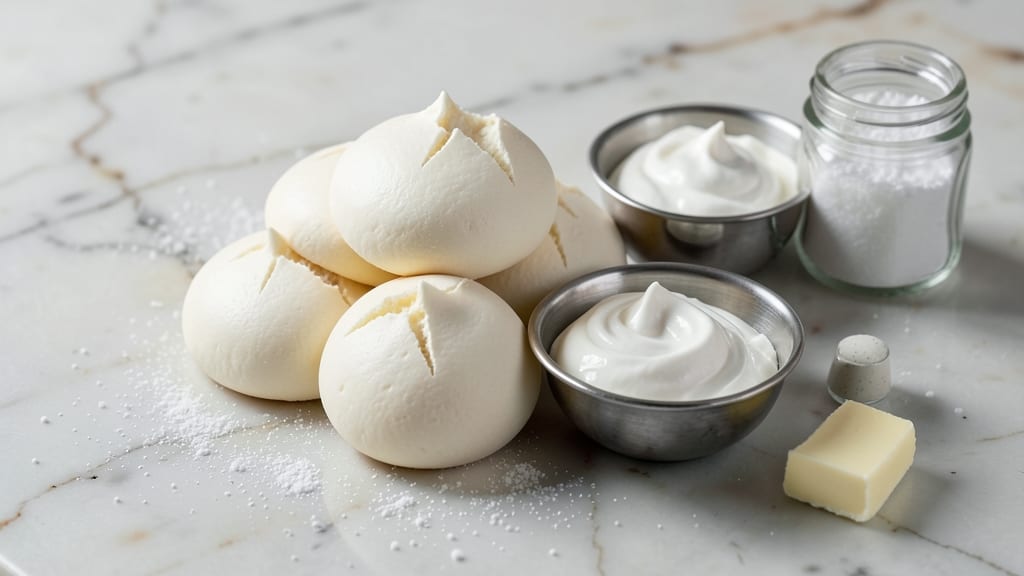
This basic meringue cookie recipe delivers the perfect balance of crispy shells and pillowy centers that vanish in your mouth. 💛 The secret lies in properly whipped egg whites and precise baking—no fancy equipment needed, just patience and a clean mixing bowl.
I've perfected this technique after years of trial and error, ensuring every batch turns out light, airy, and irresistibly tender.
What makes these meringue cookies truly special is their versatility—they can be baked into delicate clouds or transformed into crispy shells with just a few adjustments. The recipe uses simple ingredients you likely already have on hand, and the process is straightforward once you master the egg white whipping stage.
Trust me, the results are worth every minute of careful preparation.
By the time you pull them from the oven, you'll have cookies that are crisp at the edges yet soft and melt-in-your-mouth inside, with just the right amount of chewiness.
The texture is so satisfying that even picky eaters will ask for seconds. These cookies also freeze beautifully, making them perfect for holiday gifting or meal prep.
Ready to elevate your dessert game? This recipe is your foundation for creating everything from classic meringue cookies to chocolate-dipped variations. Let's get started—your taste buds will thank you.
Ingredients for basic meringue cookie
Nine simple ingredients transform into pillowy clouds with crisp edges—no fancy tools needed.
| Ingredient | Amount | Notes |
|---|---|---|
| Large Egg Whites 🥚 | 5 whole | Room temperature, no yolks |
| Granulated Sugar 🍚 | 1 ¼ cups | Superfine preferred for smoothness |
| Cornstarch 🌾 | ½ tsp | Stabilizes meringue |
| Cream of Tartar 🧂 | ¼ tsp | Enhances egg white stability |
| Vanilla Extract 🌸 | ½ tsp | Pure vanilla for authentic flavor |
| Unsalted Butter 🧈 | ½ cup | Cold, cubed for crisp shells |
| Powdered Sugar 🍚 | 1 cup | For dusting finished cookies |
| Salt 🧂 | ⅛ tsp | Fine sea salt preferred |
| Lemon Juice 🍋 | ¼ tsp | Brightens meringue flavor |
The egg whites are your secret weapon—room temperature is key, so take them out 30 minutes before starting. Kirkland brand or Organic Valley eggs from the grocery store work perfectly. Superfine sugar dissolves faster, but regular granulated works if you pulse it in a food processor. The cornstarch and cream of tartar might be hiding in your spice drawer—Bob's Red Mill sells them in bulk if you don't have them. Pro tip: use a clean, grease-free bowl for whipping, or you'll end up with deflated meringue. I always grab extra egg whites when I'm at Costco—they're cheaper in bulk.
No cream of tartar? Lemon juice works at double the amount. Want extra crisp shells? Add 0.25 cup crushed cornflakes to the butter mixture. The vanilla extract can be imitation if that's what you've got—just know it won't taste as rich. If you're short on powdered sugar, superfine sugar works in a pinch. For the butter, Earth Balance vegan butter works perfectly if you want to keep it vegetarian. The lemon juice? Fresh is best, but bottled works too—just check there's no added sugar.
These cookies keep for 1 week in an airtight container, but honestly they're best eaten fresh. For crispy shells, bake at 250°F for 1.5 hours. For soft centers, 200°F works better. I always make a double batch—they freeze beautifully for 3 months if you wrap them tightly in plastic. Perfect for holiday gifting! Store powdered sugar in a sealed container to keep it from clumping.
Why You'll Love This Recipe
- No Mixer Needed: I’ve made these by hand more times than I can count—just a whisk and my arm. The cream of tartar does the heavy lifting, stabilizing the egg whites so they hold their shape without a trace of grease. (Yes, even when I rush.)
- Crispy-Creamy Magic: That snap when you break one open? Pure satisfaction. The sugar caramelizes just enough at the edges while the center stays light and pillowy—like biting into a cloud that somehow knows how to be crispy. Vanilla ties it all together without overpowering.
- Party in a Box: Between us, these are my go-to for last-minute gatherings. They keep for weeks in an airtight container (if they last that long), and I’ve used them for everything from holiday cookie platters to impromptu dessert buffets. Zero stress, all reward.
- Pantry Staples Only: Honestly, you’re already stocked. Egg whites, sugar, cornstarch—these are ingredients I grab for everything from pancakes to pie fillings. No specialty items, no markup. The only splurge is vanilla, and even then, a little goes a long way.
Step-by-step instructions for perfect meringue cookies
Here's how to make light-as-air meringues with crisp shells and pillowy centers—every time.
👨🍳 Step 1: Prepare the Egg Whites for Maximum Volume
Start by separating the 5 whole Large Egg Whites into a completely grease-free mixing bowl. I use a glass bowl because it won't retain any oils that could prevent proper whipping. Add 0.25 tsp Cream of Tartar and 0.125 tsp Salt to the egg whites—these ingredients stabilize the meringue and help create that signature crisp shell.
Place the bowl in the refrigerator for 15 minutes to chill the egg whites. This step is crucial because cold egg whites whip up faster and hold their volume better. While they're chilling, measure out 1.25 cups Granulated Sugar and 0.5 tsp Cornstarch—I like to use superfine sugar if available, as it dissolves more easily and creates smoother meringues.
🍳 Step 2: Whip to Stiff Peak Stage
Once the egg whites are cold, whip them on medium speed until soft peaks form. You'll know it's time when the peaks hold their shape but still bend slightly at the tip. This usually takes about 3-4 minutes. Here's the thing—don't rush this step. The longer you whip at this stage, the more stable your meringue will be.
Gradually add the 1.25 cups Granulated Sugar and 0.5 tsp Cornstarch while continuing to whip on high speed. Add about 1 tablespoon at a time, waiting 30 seconds between additions. This slow incorporation prevents sugar from forming grainy crystals in your meringue. When all the sugar is incorporated, whip for another 5-7 minutes until the meringue forms stiff peaks—the peaks should stand straight up when you lift the whisk.
👨🍳 Step 3: Fold in Flavor and Shape the Cookies
In a separate bowl, mix together the 0.5 cup Unsalted Butter (cold and cubed), 0.5 tsp Vanilla Extract, and 0.25 tsp Lemon Juice. Using a spatula, gently fold this mixture into the stiffly whipped meringue in three additions. Be careful not to deflate the meringue—fold just until the butter is fully incorporated. The butter will give your cookies that signature crisp shell while keeping the centers pillowy.
Transfer the meringue to a piping bag fitted with a large star tip (or a zip-top bag with a corner cut off). Pipe 2-inch circles onto a parchment-lined baking sheet, spacing them about 2 inches apart. For a rustic look, you can also drop spoonfuls instead of piping. The key here is to create uniform shapes for even baking.
🔥 Step 4: Bake at Low Heat for Crisp Shells
Preheat your oven to 250°F—this low temperature is crucial for developing those crisp shells without browning. Bake the meringues for 1 hour to 1 hour 15 minutes, rotating the baking sheet halfway through for even cooking. You're looking for cookies that are completely dry to the touch with crisp shells but still soft centers.
Here's the trick: don't open the oven door during baking. The sudden temperature change can cause the meringues to collapse. After baking, turn off the oven and let the meringues cool inside for 15 minutes—this gradual cooling helps set their structure. Then transfer to a wire rack to cool completely.
🥘 Step 5: Dust and Serve for Maximum Wow Factor
Once completely cool, dust the tops of the meringues with 1 cup Powdered Sugar using a fine-mesh sieve. This step adds that classic meringue cookie look and enhances their delicate flavor. For extra flair, you can also add a sprinkle of toasted coconut or crushed pistachios before dusting.
Store in an airtight container at room temperature for up to 5 days, though they're best enjoyed fresh. These meringues are perfect for special occasions—their crisp shells give way to light, airy centers with every bite, and that perfect balance of sweetness from the powdered sugar dusting makes them irresistible.
Pro Tips For Making Basic Meringue Cookie
- Use Room-Temp Egg Whites: I learned this the hard way—cold egg whites from the fridge stubbornly refuse to whip properly. Let them sit in a bowl for at least 30 minutes before starting, or even better, microwave them for 10 seconds in a heatproof bowl. Warmth helps them incorporate air faster, and you’ll save energy beating them later.
- Stabilize with Cream of Tartar: Skip the cream of tartar at your own risk—it’s the unsung hero that keeps your meringue from collapsing. Use the full ¼ teaspoon for 1 cup of sugar; it mimics acidity and tightens the protein structure. If you’re fresh out, a pinch of white vinegar works in a pinch, but the flavor difference is noticeable.
- Whip Sugar Gradually: Dumping all the sugar at once is a rookie move. Add it in two batches—first half while the egg whites are still soft peaks, then the rest when they’re stiff. This prevents grainy texture and ensures smooth, glossy cookies. I used to rush this, and my cookies always ended up looking like sandpaper.
- Bake Low and Slow: Your oven’s top rack is not your friend. Bake meringues at 250°F (120°C) for 1.5–2 hours—yes, that long. Low heat prevents cracking and ensures even drying. I was skeptical until I tried it; the cookies stay crisp without turning into hockey pucks. A toothpick test works, but look for a dry, pale interior too.
Storing and reheating your leftovers
Room Temperature Storage
Keep your meringue cookies in an airtight container at room temperature for up to 5 days—they're best enjoyed fresh, but they won't lose their signature crisp shells if stored properly.
I use a glass container with a silicone lid (like the OXO Good Grips) to maintain crispness longer than plastic. Place parchment paper between layers to prevent sticking and moisture buildup. 💛
Freezer Preservation
For longer storage, freeze meringues on a parchment-lined tray for 2 hours to set, then transfer to a freezer-safe bag with all air removed. They'll keep for 3 months—just thaw at room temperature for 1-2 hours before serving.
To revive crispness, place them in a 200°F oven for 5 minutes after thawing. I always double-wrap them in plastic wrap before bagging for extra protection.
Reheating Crisp Shells
If your meringues lose their crispness, don't worry! Pop them in a 200°F oven for 3-5 minutes to restore that satisfying crunch. For a quick fix, I also place them on a wire rack over a low heat burner for 2 minutes—this method works surprisingly well for small batches.
Avoid high heat, which can dry them out completely.
Reviving Soft Centers
The pillowy centers sometimes firm up during storage. To soften them, place the cookies in a single layer on a baking sheet and microwave for 10-15 seconds on 50% power.
This gentle heat reactivates their delicate texture without overcooking. For even distribution, I cover them lightly with a damp paper towel during reheating.
Gift-Wrapping Tips
When packaging meringues as gifts, use clear cellophane bags tied with ribbon for a professional look. Place a desiccant packet inside to absorb moisture and keep them crisp.
I like to add a handwritten note about storage instructions ("Best enjoyed within 3 days of opening") to ensure recipients get the full experience. The powdered sugar dusting stays intact if you wrap them carefully with parchment between layers.
Texture Troubleshooting
If your cookies develop a sticky center after storage, they likely absorbed moisture. Return them to a 200°F oven for 5 minutes to restore crispness. For overly dry cookies, brush them lightly with simple syrup (equal parts water and sugar) before serving—this adds moisture without making them soggy.
The key is always to store them in a cool, dry place away from humidity.
Nutrition facts
Frequently asked questions
Why do my meringues collapse after baking?
Collapsed meringues usually mean the egg whites weren't whipped enough or the bowl wasn't completely grease-free. Make sure you reach stiff peaks (peaks that stand straight up) and use a clean, dry bowl. Also, avoid opening the oven door during baking—the temperature drop can cause them to sink.
Can I make these meringues without cream of tartar?
Yes! Replace the 0.25 tsp cream of tartar with 0.5 tsp lemon juice or white vinegar. These acids help stabilize the egg whites just as well. Just be sure to use fresh lemon juice for the best flavor.
How do I get extra crisp shells?
For maximum crispness, bake at 250°F for 1.5 hours instead of the standard 1 hour. You can also add 0.25 cup crushed cornflakes to the butter mixture before folding—this creates an even crunchier texture.
Can I add chocolate or other flavors?
For chocolate meringues, melt 0.5 cup dark chocolate and fold it into the meringue after adding the butter. You can also add 1 tsp citrus zest (like lemon or orange) for a bright twist, or 0.5 tsp almond extract for a nutty flavor.
Why do my meringues taste bland?
Meringues can taste flat if they lack acidity or flavor. Boost the taste by adding 0.5 tsp vanilla extract (or more if you love vanilla) and a pinch of salt. The lemon juice in the recipe also brightens the flavor—don't skip it!