
Desserts
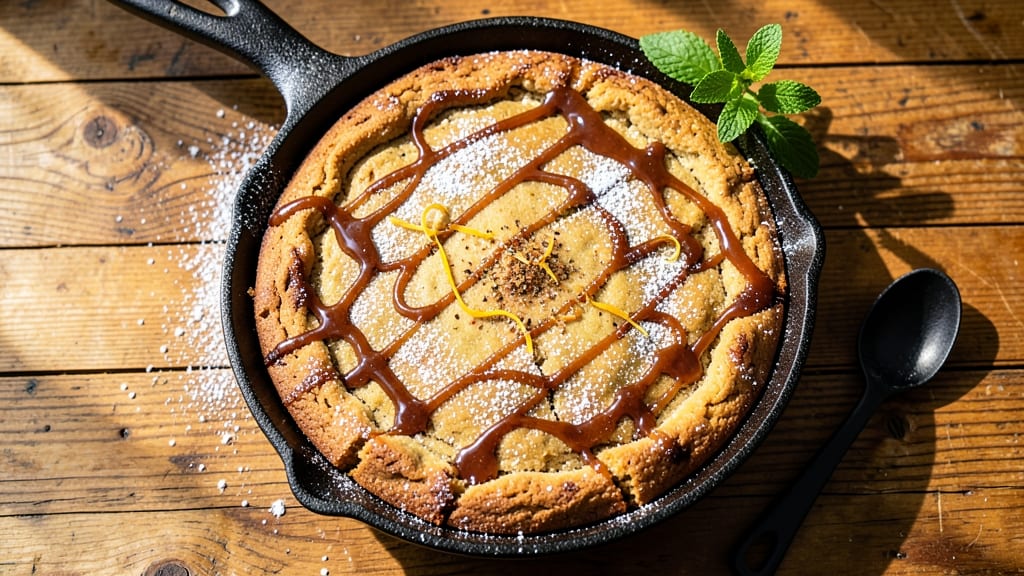
This cast iron skillet cookie cake recipe delivers the perfect balance of crispy edges and warm, gooey centers—all in one versatile pan. The skillet's even heat distribution ensures golden-brown crusts while keeping the inside tender, and the vanilla swirl adds a luxurious touch that makes it feel like a bakery treat. I perfected this recipe after years of experimenting with skillet desserts, and it's now my go-to for gatherings or a special dessert moment.
The beauty of this method lies in its simplicity: just a handful of pantry staples, a single bowl, and 20 minutes of active time before popping it into a 350°F oven for 25-30 minutes.
The cast iron retains heat beautifully, creating those coveted crispy edges while the center stays soft and moist. Plus, the skillet's natural non-stick properties mean you won't need to grease it excessively—just a light dusting of flour to prevent sticking.
What you'll end up with is a cookie cake that's rich, buttery, and perfectly portioned—ideal for serving slices without needing to cut through a whole cake. The vanilla swirl adds a subtle sweetness that complements the chocolatey cookie base, creating a dessert that's both elegant and comforting.
It's the kind of treat that feels indulgent but doesn't require hours in the kitchen.
Serve it warm with a scoop of vanilla ice cream or a dollop of whipped cream for the full experience. The skillet's residual heat keeps it warm for serving, and any leftovers (if there are any!) reheat beautifully in the oven or microwave.
Here's how to make it—your taste buds will thank you.
Ingredients for cast iron skillet cookie cake
Rich butter, warm vanilla, and a touch of chocolate—just what you need for this skillet dessert.
| Ingredient | Amount | Notes |
|---|---|---|
| Unsalted Butter 🧈 | ¾ cup | Softened but not melted |
| Granulated Sugar 🍚 | 1 cup | Light brown or white |
| Vanilla Extract 💧 | 1 tbsp | Pure, high-quality extract |
| Large Eggs 🥚 | 2 whole | Room temperature preferred |
| All-Purpose Flour 🌾 | 1 ½ cups | Spooned and leveled |
| Baking Soda 🧂 | ½ tsp | Not baking powder |
| Salt 🧂 | ½ tsp | Fine sea salt |
| Vanilla Bean Paste 🌿 | 1 tbsp | For swirl, optional but recommended |
| Powdered Sugar 🍚 | ¼ cup | For dusting |
| Dark Chocolate Chips 🍫 | ½ cup | Semi-sweet, 60% cocoa |
| Cast Iron Skillet 🔥 | 1 whole | 8-10 inch, seasoned |
| All-Purpose Flour 🌾 | 2 tbsp | For dusting skillet |
The butter is non-negotiable here—European-style unsalted melts beautifully and adds that restaurant-quality richness. Plugrá or Kerrygold are my go-tos, but any good brand works. For the vanilla, Madagascar bourbon extract is ideal, but Tahitian or pure vanilla bean paste both work too. The chocolate chips? Ghirardelli or Guittard are worth the splurge—they melt smoother and taste better. If you're using vanilla bean paste for the swirl, grab a high-quality vanilla bean from Trader Joe's or Williams Sonoma—it makes all the difference.
No vanilla extract? Vanilla bean paste or seeds scraped from a pod work perfectly—they're more expensive but add real depth. Running short on powdered sugar? Confectioners' sugar from the bulk section is cheaper and lasts forever. The chocolate chips can be swapped for chopped chocolate bars—just chop them yourself for better texture. For a nutty twist, fold in chopped walnuts or pecans at the end. And if you're gluten-free, substitute the all-purpose flour with a 1:1 gluten-free blend—just don't forget the xanthan gum if your blend needs it.
This keeps best at room temperature for 2 days if covered loosely with parchment, but honestly, it's best eaten fresh. For leftovers, wrap tightly in foil and store at room temperature—it reheats beautifully in the oven at 300°F for 10 minutes. The skillet itself? Clean it immediately after baking—hot water and a stiff brush work wonders. Store it in a dry place to keep the seasoning intact. I always make a double batch—one for immediate serving, one to freeze for later. Wrap it tightly in plastic and freeze for up to 3 months.
Why You'll Love This Recipe
- One-Pan Magic: I swear by this recipe when I’m too tired to pull out a dozen bowls. Just melt butter in that trusty cast iron, mix in sugar and eggs until it’s smooth, fold in flour—boom—done. The skillet does all the work while you scrape the edges (which, let’s be honest, are the best part).
- Buttery-Good Crunch: That first bite? The outside gets this perfect caramelized crust from the cast iron, while the inside stays soft and chewy—like a cookie and cake had a baby. Honestly, the vanilla and butter combo makes it taste like you slaved over it for hours (but you didn’t).
- Party in a Skillet: Between us, this is my go-to for potlucks, birthday cakes, or even a lazy Sunday dessert. Cut it into wedges, add ice cream, or serve it whole—no one will guess it took 20 minutes. (Yes, even on a Tuesday night.)
- Zero-Waste Leftovers: Make the whole cake, then save half for tomorrow’s lunch. Slice it up, pack it in a container, and it stays fresh for days. Plus, the cost? A fraction of a bakery cake. My wallet and I both win.
Step-by-step instructions for cast iron skillet cookie cake
Here’s how to make a cookie cake with crispy edges and a gooey center—perfect for sharing.
Prep the Skillet and Mix Wet Ingredients
Preheat your oven to 350°F. Lightly dust the cast iron skillet with 2 tablespoons all-purpose flour, tapping out any excess. This creates a barrier so the cake doesn’t stick. In a large mixing bowl, combine the 0.75 cup unsalted butter and 1 cup granulated sugar, beating until light and fluffy—about 3-4 minutes with an electric mixer. You’ll see the mixture nearly double in volume and turn pale.
Add the 2 whole large eggs, one at a time, mixing well after each. Then stir in the 1 tablespoon vanilla extract and 1 tablespoon vanilla bean paste. The paste adds a rich, swirled flavor that makes this cake special. Mix until fully incorporated—this ensures even distribution of the vanilla flavor throughout the batter.
Combine Dry Ingredients and Fold in Chocolate
In a separate bowl, whisk together the 1.5 cups all-purpose flour, 0.5 teaspoon baking soda, and 0.5 teaspoon salt. Sift the mixture directly into the wet ingredients to avoid clumps. Mix on low speed just until combined—you should still see a few flour streaks. Overmixing develops gluten, which can make the cake dense instead of tender.
Gently fold in the 0.5 cup dark chocolate chips using a spatula. Be careful not to overmix—just distribute them evenly. The chocolate will melt into pockets of gooey goodness as it bakes, giving you those classic cookie cake surprises. Set the batter aside while you prepare the powdered sugar topping.
Bake the Cake and Create the Swirl
Pour the batter into the prepared skillet and spread it evenly. Sprinkle the 0.25 cup powdered sugar over the top, then use a knife to gently swirl it into the batter. This creates those beautiful vanilla streaks that make this cake look (and taste) like a professional bakery creation. Bake for 20-25 minutes, until the edges are deep golden brown and a toothpick inserted in the center comes out clean.
Here’s the key: Don’t open the oven during baking. The sudden temperature drop can cause the cake to sink. If the top browns too quickly, tent the skillet loosely with foil. You want crispy edges but a slightly underbaked center—this ensures that gooey texture we all love in cookie cake.
Cool and Serve for Perfect Texture
Remove the skillet from the oven and let the cake cool in the pan for 5 minutes. This step is crucial—it allows the cake to set slightly so it holds its shape when you transfer it. Run a thin knife around the edges to loosen it, then invert the cake onto a serving plate. Tap the bottom gently to release any air pockets.
Serve the cake warm for the best experience—it’ll be crispy around the edges with a soft, chewy center. The vanilla swirls will be visible and delicious, and the chocolate chips will be perfectly melted. Slice into wedges and enjoy with a glass of milk or coffee. Leftovers? Store in an airtight container at room temperature for up to 3 days, or freeze for up to 1 month.
Pro Tips For Making Cast Iron Skillet Cookie Cake
- Preheat Skillet First: Your cast iron should be screaming hot—like, you-can-see-the-slight-smoke-when-you-touch-it hot—before adding the batter. I learned this the hard way: a lukewarm skillet means a dense, sad cookie cake that clings like glue. Crank the heat to medium-high and let it sit for 5 minutes with a little butter melting in it first.
- Cream Butter and Sugar Properly: Don’t just mix—beat that butter and sugar until it’s light, fluffy, and nearly pale. Use a wooden spoon or spatula to scrape the bowl every 30 seconds; I used to skip this and ended up with a cookie cake that tasted more like cookie dough than baked good. If you’re in a rush, use an electric mixer, but don’t overdo it—just until the sugar dissolves and the mixture thickens slightly.
- Don’t Overmix the Batter: Once you add the flour, stop mixing the second it comes together. Overworking it introduces too much gluten, and your cookie cake will turn out tough instead of tender. Fold in the flour with a spatula in a gentle "J" motion—just until no dry spots remain. I’ve ruined batches by treating this like a cake batter, and it’s a crime.
- Bake Until Golden, Not Just Set: Pull the cookie cake out when the edges are deep golden brown, not when it looks done. The center will still jiggle slightly, but that’s okay—it firms up as it cools. I used to take it out too soon, and it’d end up gummy. A toothpick with a few moist crumbs is fine; wait for that golden crust to form.
Flavor customization for these flavors
Sweet Swirl Variations
For a caramel twist, replace the vanilla bean paste with ½ cup caramel sauce (store-bought or homemade) and swirl it into the batter before baking. The heat will soften the caramel beautifully, creating pockets of buttery sweetness.
I like Trader Joe’s caramel sauce for its rich, smooth texture—just warm it slightly before using. 🍯
Craving citrus brightness? Add 1 teaspoon lemon zest to the dry ingredients and replace 1 tablespoon of the vanilla extract with lemon extract. Top the baked cake with a glaze made from ½ cup powdered sugar + 1 tablespoon lemon juice for a tangy-sweet finish.
The zest adds a subtle floral note that cuts through the richness.
Spiced Cookie Cake
Warm spices like cinnamon, nutmeg, and cardamom transform this into a cozy fall dessert. Add 1 teaspoon ground cinnamon and ½ teaspoon each of nutmeg and cardamom to the dry ingredients. For extra decadence, fold in ½ cup chopped toasted pecans and a pinch of cayenne for a subtle kick.
The spices deepen the vanilla flavor, making it taste like a hug in cake form. ✨
Nutty Chocolate Crunch
Swap the chocolate chips for ½ cup chopped hazelnuts and ½ cup dark chocolate chunks (or chopped dark chocolate bars). Toast the hazelnuts in the skillet for 3 minutes before adding them to the batter—this enhances their nutty flavor.
For a praline twist, spread a thin layer of caramelized sugar (mix 2 tbsp sugar + 1 tsp water, cook until golden) over the batter before baking. The contrast of crunchy nuts and gooey chocolate is pure magic. 🌰
Frosted Vanilla Dream
Skip the powdered sugar swirl and top the baked cake with a simple vanilla frosting. Mix ½ cup softened butter, 1 cup powdered sugar, 1 teaspoon vanilla extract, and 1 tablespoon milk until smooth.
Spread it over the warm cake and let it melt slightly into the edges. For extra flair, dust with matcha powder or crushed freeze-dried raspberries—the tartness balances the sweetness perfectly. 🍰
Seasonal Adaptations
For summer, add fresh berries (raspberries or blueberries) to the batter and top with a white chocolate drizzle after baking. The berries add a juicy contrast to the crispy edges. In winter, fold in chopped crystallized ginger or candied orange peel for a festive touch.
The skillet’s even heat ensures the cake stays moist despite the added moisture from fresh fruit. 🍓
Nutrition facts
Frequently asked questions
Can I use a different-sized skillet for this recipe?
Yes, but adjust the baking time slightly. An 8-inch skillet will yield a thicker cake (bake 25-30 minutes) while a 10-inch skillet will be thinner (bake 20-25 minutes). The key is golden-brown edges—use a toothpick test to check doneness. For extra crispiness, increase oven temp to 375°F for the last 5 minutes of baking.
Why did my cookie cake crack on top?
Overmixing the batter or opening the oven door too early are the most common causes. Mix just until combined (flour streaks should remain), and avoid opening the oven during baking. If it cracks, brush with simple syrup (equal parts sugar + water) after baking to restore moisture. For next time, try reducing the baking soda by ¼ teaspoon—it can make cakes too leaveny.
Can I make this recipe gluten-free?
Replace the all-purpose flour with a 1:1 gluten-free baking blend (like Bob's Red Mill) and add ½ teaspoon xanthan gum if your blend doesn't include it. Use the same measurements, but expect a slightly denser texture. The cast iron's even heat helps compensate—just bake 2-3 minutes longer and check with a toothpick.
How do I store leftovers to keep them fresh?
Cool completely, then wrap tightly in plastic wrap or foil. Store at room temperature for up to 3 days in an airtight container, or freeze for 1 month. To reheat, warm slices in a 300°F oven for 5-7 minutes or 15 seconds in the microwave (cover with damp paper towel). The skillet's residual heat helps maintain crispiness—just avoid reheating multiple times.
What's the best way to serve this cookie cake?
Warm slices pair perfectly with vanilla ice cream, whipped cream, or caramel sauce. For a make-ahead option, slice and freeze individual portions on parchment paper—reheat in the oven for 3-4 minutes at 350°F. The crispy edges soften slightly but maintain their texture. Pro tip: Dust with powdered sugar right before serving to keep it looking fresh.