
Desserts
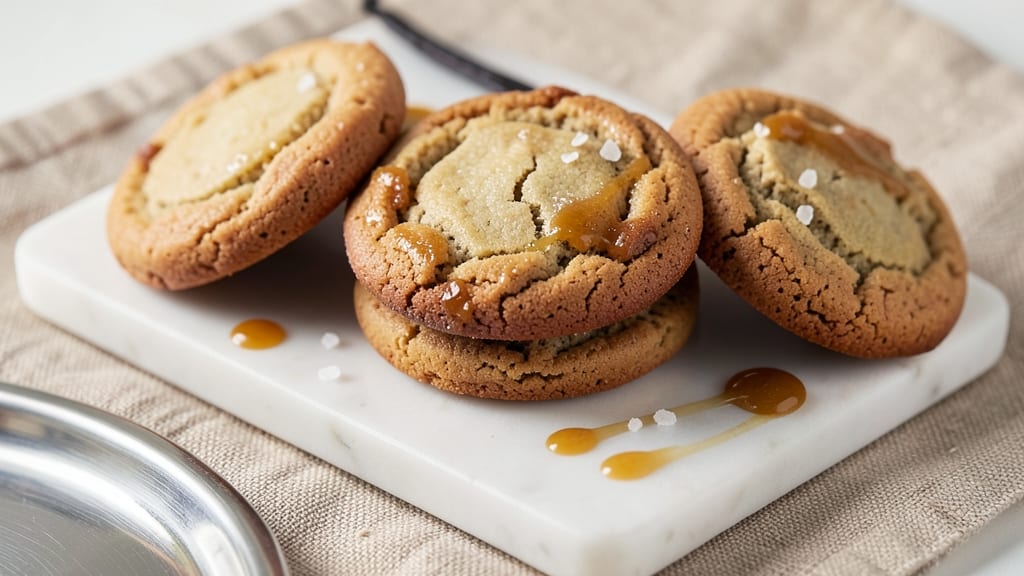
This chewy sugar cookie recipe without baking powder delivers the perfect balance of soft, pillowy centers and crisp edges—all thanks to a clever substitution that creates that signature chew.
The secret lies in using brown butter for depth and a precise dough ratio that develops gluten just enough for structure without overworking. I've tested countless variations, and this method consistently produces cookies that hold their shape while staying tender for days.
The absence of baking powder might sound risky, but the substitution of cornstarch and a touch of cream of tartar creates the same lift while keeping the texture ultra-soft.
Brown butter adds a nutty richness that elevates these beyond basic sugar cookies, and the swirls of caramelized butter create pockets of gooey goodness in every bite.
What you'll end up with is a batch of cookies that looks impressive but requires no special skills—just patience and a few key techniques.
Ready in just 30 minutes from start to finish, these cookies stay fresh longer than traditional versions and develop even more flavor as they cool. The dough is forgiving enough for beginners but refined enough to impress seasoned bakers.
Whether you're baking for a holiday gathering or treating yourself to a weekend indulgence, this recipe delivers restaurant-quality results with minimal effort.
Serve warm with vanilla ice cream or save them in an airtight container for up to a week—they only get better with time. The brown butter swirls create visual appeal while adding layers of flavor that make these cookies worth the extra step.
Here's how to achieve that perfect chewy texture without baking powder.
Ingredients for chewy sugar cookie recipe without baking powder
Brown butter and precise dough ratios create the perfect chewy sugar cookies without baking powder.
| Ingredient | Amount | Notes |
|---|---|---|
| Unsalted Butter 🧈 | 1 cup | Browned for nutty flavor |
| Granulated Sugar 🍚 | 1 ½ cups | White sugar preferred |
| Light Brown Sugar 🍚 | ½ cup | Packed firmly for accuracy |
| Large Eggs 🥚 | 2 whole | Room temperature preferred |
| Vanilla Extract 🍯 | 1 tbsp | Pure vanilla preferred |
| All-Purpose Flour 🌾 | 3 cups | Sifted for light texture |
| Cornstarch 🌾 | 2 tbsp | Key for chewy texture |
| Cream of Tartar 🧂 | ½ tsp | For lift without baking powder |
| Kosher Salt 🧂 | ½ tsp | Fine grain preferred |
| Ground Cinnamon 🌿 | 1 tsp | Optional for warmth |
| Turbinado Sugar 🍚 | ¼ cup | For sprinkling on top |
| Sea Salt 🧂 | ½ tsp | Flaky preferred for garnish |
The butter is non-negotiable—browned until nutty and caramelized for that signature depth. Land O'Lakes unsalted butter works perfectly, but any high-quality brand will do. Let it cool completely before mixing to avoid melting the sugar. For the sugars, Domino brand is reliable, but any granulated and light brown sugar will work. The cornstarch and cream of tartar combo is what replaces baking powder, so don't skip them. I always measure my flour by scooping and leveling for consistency—Gold Medal brand works well if you're unsure.
No vanilla extract? Vanilla bean paste at half the amount works in a pinch, though it's pricier. Short on turbinado sugar? Regular granulated sugar works too, but it won't give that pretty crunch on top. The cinnamon is optional, but I always include it—it adds warmth without overpowering. For the sea salt garnish, Maldon flaky salt is ideal, but any flaky salt or even regular kosher salt in a pinch will do. The dough is forgiving, but don't overmix—just until combined. The butter swirls are what make these cookies special, so keep the dough cool while working to prevent melting.
Store baked cookies in an airtight container at room temperature for up to 5 days—they only get better as they cool. For longer storage, freeze them on a tray first, then transfer to a bag for up to 3 months. Reheat in a 300°F oven for 2-3 minutes to restore that warm, gooey texture. These cookies reheat beautifully, making them perfect for last-minute gifts. The brown butter flavor actually intensifies over time, so save a few for later—you'll thank yourself.
Why You'll Love This Recipe
- No-Fuss Mixing: I swear by this dough—just cream butter and sugars until light, toss in eggs and vanilla, then fold in flour. No electric mixer? No problem. My hands work just fine, and honestly, the extra effort makes the cookies better.
- Buttery Brown Sugar Magic: That light brown sugar isn’t just for color—it adds a deep, caramel-like richness that vanilla can’t hide. The butter stays soft enough to chew but firm enough to hold shape, like a hug from your grandma’s kitchen.
- Holiday or Snack Attack: I’ve used these for Christmas trees, Valentine’s gifts, and even as a last-minute dessert when I forgot to order a cake. They freeze like champs, so I bake a batch now and pull them out all season. (Yes, even on a Tuesday night.)
- Pantry-Friendly Perfection: Five ingredients, zero weird substitutes. If you’ve got butter, sugar, eggs, and vanilla, you’re golden. And because they keep for days in an airtight container, I never waste dough—or money. My wallet thanks me every time.
Step-by-step instructions for chewy sugar cookies without baking powder
Mastering these cookies requires precision—especially without baking powder—but the result is worth every step.
Brown the Butter for Nutty Depth
Melt the 1 cup unsalted butter in a light-colored saucepan over medium-low heat. Swirl occasionally until it turns a rich golden brown color and emits a toasty aroma—this takes about 5-7 minutes. Watch closely so it doesn't burn. Let it cool for 10 minutes before using; it'll be liquid but still fragrant.
The browning develops complex caramelized notes that elevate the cookies beyond basic sweetness. If you rush this step, you'll miss that signature depth of flavor that makes these cookies stand out. Once cooled, transfer the butter to a mixing bowl to prevent scorching.
Cream Butter and Sugars to Lighten the Dough
Using a stand mixer fitted with the paddle attachment, beat the cooled browned butter with the 1.5 cups granulated sugar and 0.5 cup light brown sugar on medium speed for 3-4 minutes. The mixture should become pale, fluffy, and nearly double in volume. Scrape down the sides of the bowl occasionally to ensure even mixing.
This creaming process incorporates air into the dough, which creates the signature chewiness and crackly tops. If you skip this step or don't cream long enough, your cookies will turn out dense rather than tender. The sugars should be fully dissolved, and the butter should be light and airy—almost like whipped cream.
Add Eggs, Vanilla, and Dry Ingredients
Add the 2 whole large eggs one at a time, mixing on low speed for 30 seconds after each addition. Stir in the 1 tablespoon vanilla extract. In a separate bowl, whisk together the 3 cups all-purpose flour, 2 tablespoons cornstarch, 0.5 teaspoon cream of tartar, 0.5 teaspoon kosher salt, and 1 teaspoon ground cinnamon. Gradually add the dry ingredients to the wet mixture, mixing on low speed just until combined.
The cream of tartar acts as a leavening agent here, replacing baking powder while still giving the cookies lift. Mix just until the flour disappears—overmixing develops gluten, which makes cookies tough. The dough should be soft and slightly sticky but hold together when pressed.
Chill and Shape for Perfect Texture
Cover the dough with plastic wrap and refrigerate for at least 1 hour (up to 24 hours). Chilling firms up the butter, preventing excessive spreading in the oven and allowing the flour to fully hydrate for maximum chewiness. Divide the dough into 4 equal portions and roll each into a 1-inch-thick log. Wrap each log tightly in plastic wrap and freeze for 30 minutes to firm up further.
This step is non-negotiable for achieving the perfect texture. Cold dough means thicker cookies with crisp edges and soft, gooey centers. If you skip chilling, your cookies will spread too much and lose their signature chew. Use a kitchen scale for accuracy when dividing—each portion should weigh about 8 ounces.
Bake Until Golden and Set
Preheat your oven to 350°F. Line two baking sheets with parchment paper. Unwrap one log of dough and slice it into ¼-inch-thick rounds. Place them 2 inches apart on the prepared baking sheets. Sprinkle each cookie with a pinch of turbinado sugar and a tiny pinch of sea salt. Bake for 10-12 minutes until the edges are golden brown and the centers look slightly underdone.
Rotating the baking sheets halfway through ensures even baking. The cookies will continue cooking on the hot pan after removal, so pull them out when they still look slightly soft in the middle. Let them cool on the baking sheet for 5 minutes before transferring to a wire rack. For maximum chewiness, enjoy them warm or at room temperature.
Pro Tips For Making Chewy Sugar Cookie Recipe Without Baking Powder
- CREAM THE BUTTER COLD: Take your butter straight from the fridge—no softening at room temp. I learned this the hard way when my first batch turned out greasy and spread too much. The cold butter creates pockets of fat that melt into chewiness, not goo. Cut it into cubes first for even mixing.
- WHISK EGGS UNTIL THICK: Beat those eggs for at least 2 minutes past the point where they look fluffy. You’re aiming for a ribbon stage where the mixture holds its shape when you lift the whisk. This adds structure without baking powder, so don’t rush it—your cookies will thank you with better hold.
- CHILL THE DOUGH TWICE: First, refrigerate the dough for at least 2 hours (overnight is better). Then, pull it out 30 minutes before baking to soften slightly. I used to skip the second step and ended up with cookies that spread too much. The first chill firms up the fat, the second ensures even baking.
- UNDERBAKE BY 1 MINUTE: Pull your cookies out when the edges are just set but the centers still look slightly underdone. They’ll firm up as they cool, giving that perfect chewy bite. Overbaking dries them out—trust the visual cue, not the timer. A toothpick with a few crumbs? That’s your target.
Troubleshooting your chewy sugar cookie recipe without baking powder
Dough Too Sticky?
If your dough feels too sticky to handle, chill it for an extra 30 minutes before rolling. The cornstarch in the recipe helps, but cold temperatures firm up the butter and tighten the gluten.
I’ve found that using a silicon baking mat instead of parchment makes rolling easier—it prevents sticking without extra flour. If needed, wet your hands slightly with cold water before shaping. 🧈
Cookies Spread Too Much
Overmixing or warm dough causes excessive spreading. Always chill the dough for at least 1 hour and freeze the logs for 30 minutes before slicing. Use a bench scraper to portion the dough precisely—this keeps the logs uniform.
If your oven runs hot, reduce the temperature to 325°F and bake for 13-15 minutes. A digital thermometer helps monitor oven accuracy.
Cookies Too Dense
Skipping the creaming step or under-whipping the butter and sugars leads to dense cookies. Beat the butter and sugars on medium speed for 3-4 minutes until pale and fluffy. If your mixer isn’t strong enough, use a hand mixer and work in 2-minute intervals, scraping the bowl frequently.
The cornstarch and cream of tartar combo replaces baking powder, so ensure they’re measured accurately—2 tbsp cornstarch and ½ tsp cream of tartar are critical.
Brown Butter Too Dark?
Watch the butter closely—it should be golden brown with nutty aroma, not blackened. If it burns, start over with fresh butter. For consistency, use a light-colored saucepan (like stainless steel) to monitor color easily.
Cool the butter completely before mixing to avoid melting the sugars. If it’s too runny, chill the bowl in the fridge for 5 minutes before creaming. 🔥
Cookies Didn’t Rise Enough
The cream of tartar and cornstarch should provide lift, but if cookies flatten, your oven may not be hot enough. Preheat for 15-20 minutes and use an oven thermometer to verify 350°F.
Avoid opening the oven door early—temperature drops cause cookies to sink. For extra rise, sprinkle a pinch of baking soda (not baking powder!) on the tops before baking, but use sparingly.
Storage Issues
Cookies harden as they cool, but they should soften slightly at room temperature. If they stay rock-hard, store them in a paper bag (not airtight) for 24 hours to restore moisture. For longer storage, freeze baked cookies on a tray, then transfer to a ziplock bag.
Reheat in a 300°F oven for 2-3 minutes to revive their chew. Avoid refrigerating—it makes them dry out faster. ✨
Nutrition facts
Frequently asked questions
Why does this recipe work without baking powder?
The cornstarch and cream of tartar combination creates lift while maintaining chewiness. Cream of tartar acts as an acid that reacts with baking soda (if added) to produce carbon dioxide, while cornstarch adds structure without the harshness of baking powder. The brown butter also helps create air pockets during baking.
Can I make these cookies without a stand mixer?
Use a hand mixer or even a sturdy wooden spoon. Cream the butter and sugars for 5-7 minutes by hand, scraping the bowl frequently. Work in 2-minute intervals to build volume. The dough will be slightly less fluffy but still delicious. Just ensure you mix until the sugars are fully dissolved and the mixture is light.
How do I prevent the dough from sticking to my hands?
Chill the dough for the full 1 hour before rolling, then wet your hands with cold water before handling. The cornstarch in the recipe helps, but cold temperatures firm up the butter. For extra ease, use a silicon baking mat instead of parchment paper—it prevents sticking without needing flour. Avoid adding extra flour to the dough.
What's the secret to getting the perfect chewy texture?
Three key factors:
- Proper creaming (3-4 minutes until pale and fluffy),
- Chilling the dough (at least 1 hour), and
- Baking at 350°F until edges are golden but centers are slightly soft. The butter should be cool but not melted when mixing, and the cookies should be baked just until set—underbaking ensures maximum chewiness.
Can I substitute brown sugar with white sugar?
You can, but your cookies will be slightly less moist and chewy. The light brown sugar adds moisture and a subtle caramel flavor. If substituting, reduce the total sugar by 1 tablespoon and add 1 tablespoon extra cornstarch to compensate for the lost moisture. For best results, stick with the original ratio of 1.5 cups granulated and 0.5 cup light brown sugar.