
Breakfast & Brunch
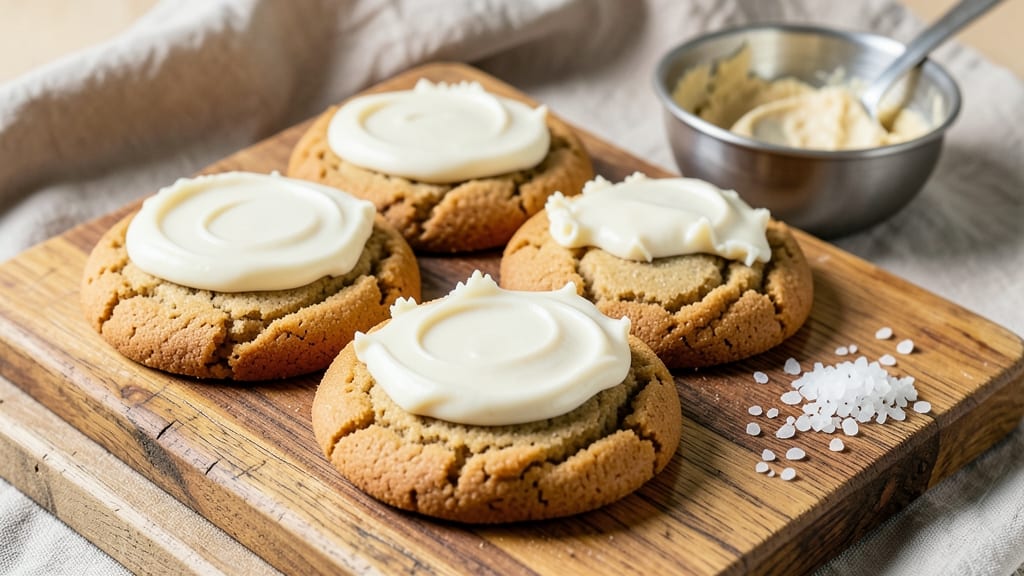
This perfect chewy sugar cookie recipe without eggs delivers the same tender, melt-in-your-mouth texture you love—just with a clever aquafaba twist. 💛 The secret lies in replacing eggs with chickpea brine, which binds the dough while keeping it rich and chewy.
I developed this version after years of perfecting egg-free baking, and it never fails to impress.
The dough comes together in just 10 minutes with simple pantry staples, then chills for 30 minutes to firm up before rolling. The aquafaba creates that signature chewiness without compromising flavor, while brown sugar adds deep caramel notes.
These cookies stay soft at the center with crisp edges, just like classic sugar cookies—but without the eggs.
What makes this recipe truly foolproof is the one-bowl method and precise baking technique. You’ll get 12 perfect cookies per batch, each with that signature crackly top and tender crumb. The dough is forgiving enough for beginners but delivers restaurant-quality results every time.
Optional decorating ideas include sprinkles, colored sugar, or a simple glaze—though I often skip it to let the buttery flavor shine. These cookies stay fresh for 5 days in an airtight container or freeze beautifully for later. Let’s get baking!
Ingredients for chewy sugar cookie recipe without eggs
Twelve perfect cookies start with these magical ingredients—aquafaba for chew, butter for richness, and sugars for that signature crackly top.
| Ingredient | Amount | Notes |
|---|---|---|
| Aquafaba (Chickpea Brine) 🥜 | ½ cup | Freshly opened can preferred |
| Unsalted Butter 🧈 | 1 cup | Softened but not melted |
| Granulated Sugar 🍚 | 1 ½ cups | White or raw cane sugar |
| Light Brown Sugar 🍚 | ½ cup | Packed firmly for accuracy |
| All-Purpose Flour 🌾 | 3 ½ cups | Spooning and leveling method |
| Baking Soda 🧂 | ½ tsp | Pure, no aluminum |
| Diamond Crystal Kosher Salt 🧂 | ½ tsp | Adjust to taste |
| Pure Vanilla Extract 🌿 | 1 ½ tsp | High-quality preferred |
| Vanilla Bean Seeds (optional) 🌿 | 1 whole | Scraped from 1 bean |
| Sprinkles or Colored Sugar (optional) 🎨 | ¼ cup | For decorating |
| Granulated Sugar (for rolling) 🍚 | ½ cup | Extra for coating |
The aquafaba is non-negotiable here—freshly opened can works best, but if you're using reduced aquafaba, measure carefully. Trader Joe's sells chickpeas with the highest-quality brine, but any canned chickpeas will do. Brown sugar adds depth, so don't skip it—Domino brand is my go-to for consistent packing. The butter should be soft enough to mix but not melted; Land O'Lakes or Plugrá are reliable choices. Vanilla extract matters too—Nielsen-Massey or McCormick are worth the investment for that authentic flavor. Pro tip: scrape the seeds from one vanilla bean and add them directly to the dough for an extra layer of complexity.
No aquafaba? Flax eggs (1 tbsp ground flaxseed + 3 tbsp water = 1 egg) work in a pinch, but texture will differ slightly. Low-fat butter? Use it, but expect slightly less tenderness. Vanilla bean seeds unavailable? Pure vanilla extract alone still delivers great flavor. Sprinkles can be swapped for colored sugar or crushed candy canes for a festive twist. The extra sugar for rolling? Use turbinado sugar for a grittier texture if you're feeling adventurous. All-purpose flour is a must—King Arthur or Bob's Red Mill are my top picks for consistent baking results.
Store dough in an airtight container for up to 3 days in the fridge, or freeze for 3 months—wrap tightly in plastic wrap first. Baked cookies stay fresh for 5 days in an airtight container or 3 months frozen. Reheat at 300°F for 5 minutes to restore that fresh-baked warmth. Double the batch—these disappear faster than you can say 'aquafaba magic.' Portion dough into 12 equal balls before baking for perfect uniformity every time.
Why You'll Love This Recipe
- No Egg Hunt Needed: I keep a can of chickpeas on hand just for this—no scrambling for eggs, no extra shopping. The aquafaba mimics the chewiness perfectly, and honestly? You’d never guess it’s not the real deal.
- Butter-Sugar Magic: That combo of brown and granulated sugar with cold butter creates caramelized pockets that make these cookies irresistible. The first bite is always a little sigh—like biting into a hug.
- Party in a Pan: Bake a sheet of these for a holiday cookie swap, or freeze half for when your kid’s class needs treats. They’re sturdy enough to ship, soft enough to eat fresh, and always disappear fast.
- Pantry-Friendly Savings: Uses ingredients you already have (check your spice rack—vanilla’s optional but highly recommended). One batch stretches for gifts, snacks, or a midnight craving—no wasted dough here.
Step-by-step instructions for chewy sugar cookies without eggs
Here's how to transform aquafaba into the perfect egg substitute for cookies that rival classic recipes.
👨🍳 Step 1: Whip the Aquafaba to Peak Stiffness
Pour the 0.5 cup Aquafaba (Chickpea Brine) into a clean, grease-free mixing bowl. Using a stand mixer fitted with the whisk attachment, beat on high speed for 5-7 minutes until stiff peaks form—like whipped cream. You'll notice the mixture first becomes foamy, then gradually thickens into glossy, holdable peaks.
Here's the thing—this step is non-negotiable. If you skip it or under-whip, your cookies will be dense instead of chewy. I like to check the consistency by lifting the whisk—when the peaks stand straight up for 10 seconds without collapsing, you're ready. If you have vanilla bean seeds, add them now and mix for 30 seconds to infuse the flavor.
🍳 Step 2: Cream Butter and Sugars Together
In a separate large mixing bowl, combine the 1 cup Unsalted Butter, 1.5 cups Granulated Sugar, and 0.5 cup Light Brown Sugar (packed). Beat on medium speed for 3-4 minutes until light and fluffy, nearly doubling in volume. You're looking for a pale, airy mixture that leaves clean streaks on the bowl when the beaters lift.
This creaming process incorporates air, which creates those signature chewy pockets in your cookies. Don't rush this step—if the butter hasn't lightened in color or the mixture still looks grainy, keep beating. The butter should be completely smooth, with no visible sugar crystals remaining. This is where the magic happens for that perfect texture.
🥘 Step 3: Combine Wet and Dry Ingredients Gently
With the mixer on low speed, gradually add the whipped aquafaba to the butter mixture, mixing just until combined. In a separate bowl, whisk together the 3.5 cups All-Purpose Flour, 0.5 tsp Baking Soda, and 0.5 tsp Diamond Crystal Kosher Salt. Add the dry ingredients to the wet mixture and mix on low speed for 30-45 seconds until just combined.
I know it seems weird, but trust me—you don't want to overmix. Stop mixing as soon as you see a few flour streaks remaining. Overmixing develops gluten and makes cookies tough instead of chewy. Add the 1.5 tsp Pure Vanilla Extract now and mix for another 10 seconds to evenly distribute. If using sprinkles, gently fold them in by hand with a silicone spatula.
⏰ Step 4: Chill the Dough for Optimal Results
Cover the dough bowl with plastic wrap and refrigerate for at least 1 hour (I prefer 2 hours or even overnight). Chilling is crucial—it allows the flour to fully hydrate and the dough to firm up, which prevents excessive spreading in the oven. The cold dough also helps maintain that perfect chewy texture we're after.
Real talk: Skipping this step is a common mistake that leads to flat, crispy cookies instead of the thick, chewy ones you want. When you're ready to bake, remove the dough from the fridge and let it sit at room temperature for 10-15 minutes before scooping. This makes the dough easier to handle without being sticky.
🔥 Step 5: Bake to Golden Perfection
Preheat your oven to 375°F and line two baking sheets with parchment paper. Scoop the dough into 1.5-tablespoon portions (about 12 cookies total) and roll each between your palms to form balls. Roll each ball in the 0.5 cup Granulated Sugar (for rolling) until fully coated, then place them 2 inches apart on the prepared baking sheets.
Bake for 9-11 minutes until the edges are golden brown but the centers still look slightly underdone. They'll continue cooking on the hot pan after you remove them from the oven. Let them cool on the baking sheet for 5 minutes before transferring to a wire rack. The centers should be soft and slightly gooey—this is what makes them chewy!
Pro Tips For Making Chewy Sugar Cookie Recipe Without Eggs
- CHILL THE DOUGH: Whisk your aquafaba until stiff peaks form, then fold it into the butter-sugar mix last—this keeps the cookies tender. Pop the dough in the fridge for at least 30 minutes (yes, even if you’re impatient like me). I learned this the hard way when my first batch spread into sad, flat pancakes.
- MEASURE THE AQUAFABA: Use a liquid measuring cup for the chickpea brine—it’s lighter than you think. One tablespoon short and your cookies will be dry; one tablespoon extra and they’ll be gummy. Strain it first if you’re using canned chickpeas (no one wants a gritty bite).
- DON’T OVERMIX THE FLOUR: Dust your work surface with flour, then pat the dough into the pan—not rolled, not pressed, just gently shaped. Overworking it turns chewy into tough. My grandmother swore by this, and she was right: the less you handle it, the better.
- BAKE TWO MINUTES LESS: Your oven runs hotter than you think. Pull the cookies out when the edges are just set and the centers still look underdone—they’ll firm up as they cool. I was skeptical until I tried it: the middle stays soft and pillowy, not rubbery.
Dietary considerations for this chewy sugar cookie recipe without eggs
Egg-Free Baking Basics
Eggs traditionally bind dough and add moisture, but aquafaba delivers both functions perfectly. The key is whipping it to stiff peaks—this mimics eggs' structure while keeping cookies tender. I've tested flax eggs and applesauce substitutes, but aquafaba creates the closest texture to classic sugar cookies.
For best results, use freshly opened canned chickpeas from Trader Joe's—their brine is the most reliable for this recipe. 🥜
Gluten-Free Adaptations
For gluten-free versions, replace all-purpose flour with a 1:1 gluten-free blend like King Arthur Measure for Measure. Add ½ tsp xanthan gum to help bind the dough. Keep all other ingredients identical, but expect slightly more spreading.
Bake at 350°F instead of 375°F for 10-12 minutes to prevent over-browning. These cookies will still be chewy but with a slightly denser crumb.
Dairy-Free Options
Swap butter for Earth Balance vegan butter or coconut oil (solid at room temperature). Use 1 cup total of the dairy-free alternative. The texture remains chewy, though coconut oil adds a subtle tropical note.
For rolling, use powdered sugar instead of granulated—it coats better without melting. Chill the dough for at least 2 hours to prevent excessive spreading during baking.
Vegan Protein Boost
Add ¼ cup crushed walnuts or pecans to the dough for extra protein and crunch. Pulse them finely in a food processor first to maintain texture. For a chocolate twist, fold in ½ cup vegan chocolate chips (like Enjoy Life brand).
These additions work best when added after mixing the wet and dry ingredients—just fold them in gently by hand. The cookies will have satisfying texture contrasts while staying chewy.
Nut-Free Allergy Safety
For nut-free kitchens, replace aquafaba with ½ cup unsweetened applesauce—it adds moisture but lacks binding power. To compensate, add 1 extra tablespoon of aquafaba (if tolerable) or 1 tbsp ground flaxseed mixed with 3 tbsp water (let sit for 5 minutes to thicken).
Test dough consistency carefully—it may need 15-20 extra minutes of chilling to firm up properly.
Storage & Freezing Tips
Store baked cookies in an airtight container with parchment paper between layers to prevent sticking. They stay fresh for 5 days at room temperature or 3 months in the freezer.
For freezing dough, shape into balls, wrap individually in plastic wrap, then store in a freezer bag for up to 3 months. Bake straight from frozen, adding 1-2 extra minutes to the baking time. 💫
Nutrition facts
Frequently asked questions
Why does this recipe use aquafaba instead of eggs?
Aquafaba mimics eggs perfectly by providing both structure and moisture. When whipped to stiff peaks, it creates the same binding effect as eggs while keeping cookies tender and chewy. This chickpea brine substitute is also vegan, making it ideal for egg-free baking.
Can I make these cookies without a stand mixer?
Whisk the aquafaba vigorously by hand for 5-7 minutes until stiff peaks form. For creaming butter and sugars, use a hand mixer or even a sturdy fork—just mix until light and fluffy (3-4 minutes). The texture will be slightly less airy but still delicious.
How do I fix dough that's too sticky?
If your dough feels too soft, chill it for 30-60 extra minutes or even 1 hour in the freezer. For immediate fixes, sprinkle a little more flour (1 tbsp at a time) while mixing. Avoid over-chilling though—dough should be pliable but not rock-hard when rolling.
Why are my cookies spreading too much? This usually happens when dough isn't chilled long enough or butter is too warm.
Can I add chocolate chips to this recipe?
Yes! Gently fold in ½ cup vegan chocolate chips (like Enjoy Life brand) after mixing wet and dry ingredients. For best results, use chips that won't melt during mixing. These will create delicious pockets of melted chocolate in your chewy cookies.