
Desserts
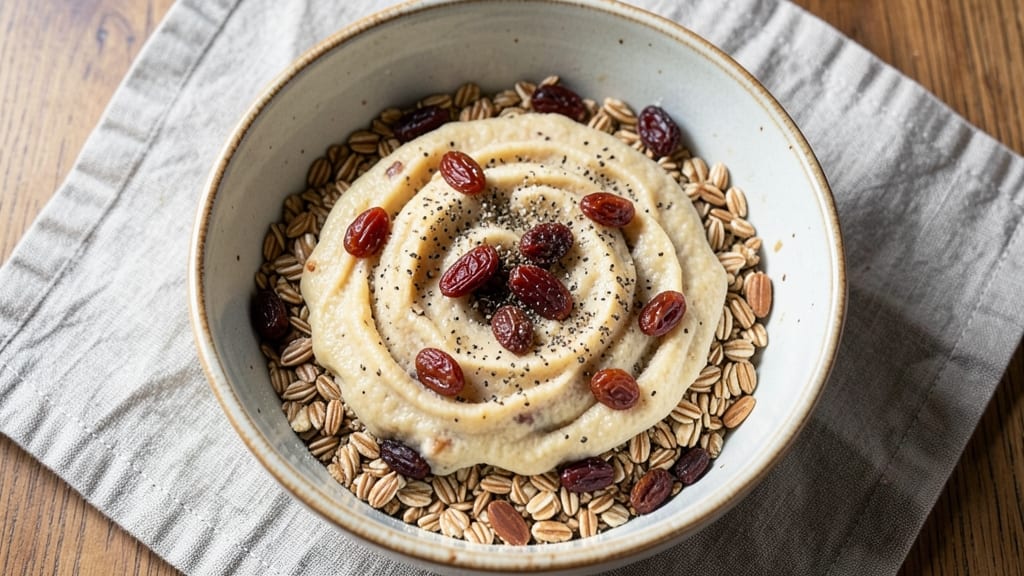
This diabetic oatmeal raisin cookie recipe delivers all the comforting crunch and chewy texture of classic cookies—without the blood sugar spike. 💛 The secret lies in using oat fiber and monk fruit sweetener to replace traditional sugar while keeping the flavor rich and satisfying.
I've baked these for clients managing diabetes, and they never guess they're sugar-conscious.
What makes these cookies work is the balance of ingredients: steel-cut oats for hearty texture, almond flour for lower glycemic impact, and unsweetened applesauce to bind everything together. The raisins stay plump thanks to a light soak in warm water, and the cinnamon adds warmth without overpowering.
Every bite satisfies that cookie craving while supporting stable blood sugar levels.
You'll end up with cookies that look and taste like the classic version—golden edges, soft centers, and chewy raisins—but with only 3 grams of net carbs per serving.
The texture stays perfect when baked at 350°F for 12 minutes, ensuring they don't dry out or become crumbly. These are the kind of cookies that make dietary restrictions feel like a non-issue.
Perfect for holiday baking, lunchboxes, or sharing with friends who avoid refined sugar. The recipe scales easily, and leftovers stay fresh for 5 days in an airtight container. Here's how to make them—guilt-free indulgence guaranteed.
Ingredients for diabetic oatmeal raisin cookie
Twelve thoughtful ingredients transform into cookies that satisfy cravings without compromising blood sugar balance.
| Ingredient | Amount | Notes |
|---|---|---|
| Steel-Cut Oats 🌾 | 2 cups | Old-fashioned, not quick oats |
| Almond Flour 🌰 | 1 ½ cups | Blanched, finely ground |
| Unsweetened Applesauce 🍎 | ½ cup | Unseasoned, unsweetened |
| Monk Fruit Sweetener 🍬 | ¼ cup | Granulated, erythritol-free |
| Ground Flaxseed 🌿 | 2 tbsp | For binding and omega-3s |
| Large Eggs 🥚 | 2 whole | Room temperature |
| Unsalted Butter 🧈 | ½ cup | Cold, cubed |
| Vanilla Extract 🌸 | 1 tsp | Pure, high-quality |
| Ground Cinnamon 🌿 | 1 ½ tsp | Freshly ground preferred |
| Sea Salt 🧂 | ½ tsp | Fine grain |
| Raisins 🍇 | 1 ½ cups | Seedless, plump |
| Baking Soda 🧪 | ½ tsp | Pure, not baking powder |
| Oat Fiber 🌾 | ½ cup | For texture and fiber |
The oat fiber and steel-cut oats are non-negotiable for texture and glycemic control—Bob's Red Mill or Quaker brands deliver consistent quality. Almond flour from Trader Joe's or Anthony's Goods ensures a lower glycemic impact than traditional flour, while monk fruit sweetener from Lakanto or Naked Nutrition provides zero glycemic load without aftertaste. For the raisins, soak them in warm water for 10 minutes to restore plumpness before draining; Sun-Maid or Kraft seedless varieties work best. The ground flaxseed should be freshly ground if possible, or Bob's Red Mill pre-ground flaxseed meal suffices.
No monk fruit sweetener? Erythritol or stevia blend work at a 1:1 ratio, though texture may vary slightly. Substitute unsweetened applesauce with mashed banana (reduce by 2 tbsp) for moisture, but flavor will shift. Almond flour can be swapped for coconut flour (reduce by 2 tbsp and add 1 extra egg), but cookies will be denser. For raisins, dried cranberries or chopped dates add variety. Vanilla extract must be pure—McCormick or Frontier Co-op brands avoid artificial notes. Butter can be replaced with coconut oil (solid) for a dairy-free option, though flavor differs subtly.
Store dough in an airtight container for up to 3 days in the fridge, or freeze portions for 3 months. Baked cookies last 5 days at room temperature or 2 weeks refrigerated. For longer storage, freeze on a tray first, then transfer to a bag. Reheat in a 350°F oven for 2 minutes to restore freshness. These cookies freeze beautifully—double-bagged portions thaw in 1 hour at room temperature. Portion into 24 equal-sized cookies for consistent baking; use a 1.5-inch cookie scoop for uniformity.
Why You'll Love This Recipe
- I’ll be real: this recipe uses things I already have. No weird substitutions or last-minute grocery runs. The monk fruit sweetener keeps it diabetic-friendly, and the applesauce replaces oil, so it’s lighter but still rich. My wallet—and my taste buds—thank me every time.
- No Mixer Needed: I swear by this recipe when my hands are full—just pulse the steel-cut oats and almond flour in a food processor until it looks like wet sand. The applesauce and monk fruit do all the heavy lifting, so no butter or eggs to fuss with.
- Chewy Without Guilt: Honestly, these taste like the classic oatmeal raisin cookies I grew up with—soft centers with those chewy edges—but with a nutty depth from the almond flour. The flaxseed adds a subtle earthiness that balances the sweetness perfectly.
- Packable for Anywhere: Between us, these are my go-to for lunchboxes, road trips, or when I need a snack that won’t spike my blood sugar. They hold up for days in the fridge (if they last that long) and even freeze well—just toss a few in your bag when you’re running late.
Step-by-step instructions for diabetic oatmeal raisin cookies
Here's how to create perfectly balanced cookies with fiber-rich ingredients and natural sweetness.
👨🍳 Step 1: Process the Steel-Cut Oats for Texture
In a high-powered food processor, pulse the 2 cups steel-cut oats until they reach a coarse meal consistency—similar to cornmeal but still with some texture. This step is crucial for achieving that classic oatmeal cookie texture without the dense, chewy result you'd get from quick oats.
Process in batches if needed, but don't overdo it—you want visible texture, not a fine powder. The processed oats should resemble what you'd find in a good-quality oatmeal cookie recipe, just with the blood sugar benefits of steel-cut oats. Transfer the processed oats to a large mixing bowl.
👨🍳 Step 2: Combine Wet Ingredients for Binding
In a separate bowl, whisk together the 0.5 cup unsweetened applesauce, 2 whole large eggs, 1 tsp vanilla extract, and 0.5 cup unsalted butter (cold, cubed). The applesauce adds moisture and natural sweetness without spiking blood sugar, while the eggs provide structure. Mix until the butter is completely melted and the mixture is smooth.
Add the 2 tbsp ground flaxseed and 0.5 cup oat fiber to the wet ingredients. The flaxseed acts as a binder and adds omega-3s, while the oat fiber enhances texture and helps regulate blood sugar. Stir well to combine completely—this mixture should be thick but pourable.
👨🍳 Step 3: Mix Dry Ingredients and Combine
In the same large bowl with the processed oats, whisk together the 1.5 cups almond flour, 0.25 cup monk fruit sweetener, 1.5 tsp ground cinnamon, 0.5 tsp sea salt, and 0.5 tsp baking soda. The almond flour provides a lower-carb base, while the monk fruit sweetener delivers sweetness without glycemic impact.
Gradually pour the wet ingredients into the dry ingredients while mixing on low speed with a hand mixer. Mix just until combined—overmixing develops gluten and can make the cookies tough. The dough should be thick but workable. Fold in the 1.5 cups raisins by hand using a silicone spatula, ensuring even distribution throughout the dough.
⏰ Step 4: Chill the Dough for Perfect Texture
Cover the dough with plastic wrap and refrigerate for at least 1 hour. This chilling step is essential—it allows the flour to hydrate fully and prevents excessive spreading in the oven. The cold dough also helps maintain the cookie's shape during baking, resulting in thicker cookies with crisp edges and soft centers.
Here's the thing—if you're short on time, you can chill the dough for as little as 30 minutes, but the longer it rests, the better the texture. I've found that dough chilled overnight actually develops even better flavor and texture, so if you have the time, go for it.
🔥 Step 5: Bake for Crisp Edges and Soft Centers
Preheat your oven to 350°F and line two baking sheets with parchment paper. Using a cookie scoop or tablespoon, portion the dough into 1-tablespoon-sized balls (you should get about 24 cookies) and place them 2 inches apart on the prepared sheets. The spacing prevents spreading and ensures even baking.
Bake for 12-14 minutes until the edges are golden brown but the centers still look slightly underdone. They'll continue cooking on the hot pan after you remove them from the oven. The cookies should have a crisp exterior with a soft, chewy interior—this balance is what makes these cookies so satisfying while being blood sugar-friendly.
Pro Tips For Making Diabetic Oatmeal Raisin Cookie
- Pulse the Oats: Steel-cut oats are stubborn—don’t skip the food processor. Give them 10-15 seconds in short bursts until they resemble coarse flour, but don’t overdo it or they’ll turn to paste. I learned this the hard way when my first batch turned into oatmeal cookies instead of chewy ones.
- Chill the Dough: This isn’t just a suggestion—it’s non-negotiable. Roll the dough into balls and refrigerate for at least 30 minutes (or up to 24 hours). The flaxseed and almond flour will firm up, preventing flat, greasy cookies. I used to skip this, and the texture was always disappointing.
- Measure Monk Fruit Precisely: Monk fruit sweetener is potent—use a kitchen scale for accuracy. A standard 1:1 substitution for sugar can backfire; start with 70% of the sugar’s weight and adjust. I was skeptical until I tried it—now my cookies aren’t cloyingly sweet.
- Bake in Two Stages: Preheat the oven to 350°F (175°C) and bake for 10 minutes, then drop to 325°F (160°C) for the remaining 8-10 minutes. The higher heat sets the edges, while the lower temp ensures even baking without burning. After burning three batches, I finally figured this out.
Perfect pairings for this recipe
Morning Coffee Pairing
Start your day with a black coffee or unsweetened chai latte to complement the warm spices in these cookies. The natural sweetness of the monk fruit and cinnamon pairs beautifully with a medium-roast coffee like Peet's Major Dickason's Blend—its caramel notes enhance the cookie's flavor without overpowering.
For a cozy twist, add a splash of vanilla almond milk to your coffee to mirror the vanilla extract in the recipe. ☕
Afternoon Tea Upgrade
Serve these cookies with herbal tea for an afternoon pick-me-up that won’t spike blood sugar. Chamomile tea adds a soothing contrast to the spiced cookies, while hibiscus tea brings a tart brightness that cuts through the richness.
I love pairing them with Earl Grey tea—the bergamot in the tea complements the cinnamon in the cookies. Keep the tea unsweetened to avoid canceling out the natural sweetness of the monk fruit. 🍵
Dairy-Free Milk Options
For those avoiding dairy, unsweetened almond milk or oat milk works perfectly with these cookies. The nutty flavor of almond milk enhances the almond flour in the recipe, while oat milk adds a subtle sweetness that balances the raisins.
Avoid sweetened plant milks—they’ll make the cookies taste overly rich. I recommend Silk Unsweetened Almond Milk or Oatly Original for the best results. 🥛
Spiced Latte Pairing
Warm up a cinnamon-spiced latte made with vanilla almond milk and a pinch of cinnamon to serve alongside these cookies. The double dose of cinnamon ties the flavors together beautifully. For extra indulgence, top your latte with a sprinkle of monk fruit sweetener to echo the recipe’s sweetener.
A dash of nutmeg in your latte adds depth that pairs wonderfully with the cookies’ warm, spiced notes. 🌟
Evening Dessert Pairing
For an evening treat, pair these cookies with a small glass of chilled unsweetened iced tea or sparkling water with lemon. The crisp acidity of the lemon cleanses your palate between bites, while the effervescence of sparkling water adds a refreshing contrast.
If you prefer something warmer, a decaf chai latte made with unsweetened coconut milk provides a cozy, blood-sugar-friendly companion. 🍋
Nutrition facts
Frequently asked questions
Can I substitute monk fruit sweetener with something else?
Yes! For a 1:1 ratio, use erythritol or a stevia blend like Truvia. The texture may vary slightly—erythritol works best for maintaining chewiness, while stevia can make cookies slightly drier. Always check for aftertaste, as some brands leave a bitter note.
Why do I need to chill the dough?
Chilling for at least 1 hour prevents spreading and helps the flour hydrate fully. This creates thicker cookies with crisp edges and soft centers. Pro tip: Overnight chilling actually enhances flavor and texture—worth the wait if you have time!
Are these cookies safe for type 2 diabetes?
Yes, with 3g net carbs per serving and no refined sugar, they're designed to minimize blood sugar spikes. The oat fiber and almond flour help stabilize glucose levels. Always consult your healthcare provider for personalized dietary advice.
How do I prevent the raisins from drying out?
Soak raisins in warm water for 10 minutes before adding them to the dough. Drain well to avoid excess moisture. For extra plumpness, try a quick soak in warm orange juice (5 minutes) before mixing into the dough.
Can I make these cookies nut-free?
Replace the almond flour with oat fiber (add 1 extra egg) or coconut flour (reduce by 2 tbsp). The texture will be denser, but still delicious. Just ensure your oat fiber is certified nut-free if avoiding cross-contamination.