
Desserts
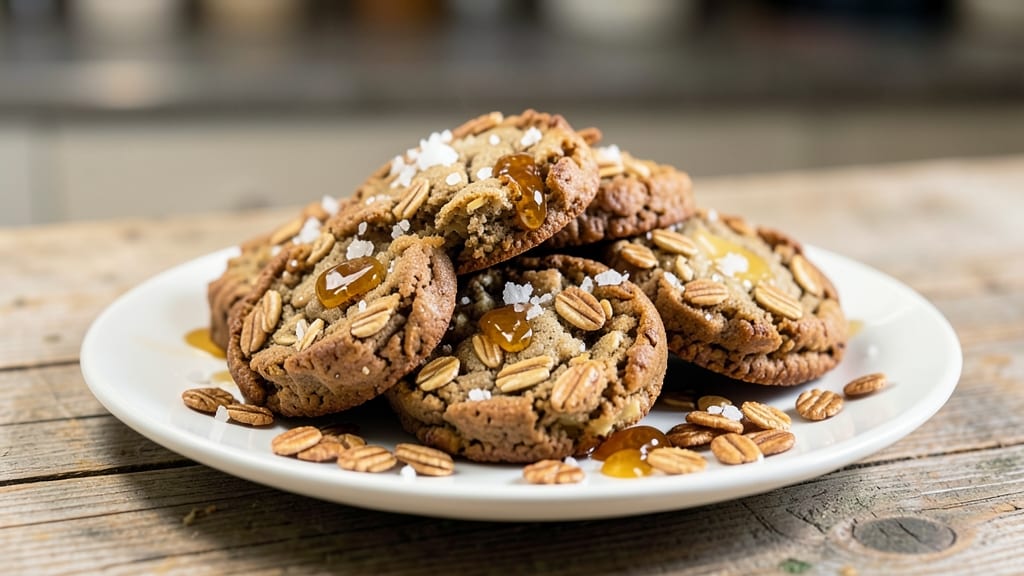
This quick cooking rolled oats cookie recipe delivers restaurant-style chewiness in just 15 minutes—no waiting for dough to chill or cookies to cool. The secret lies in rolled oats, which create a satisfying texture without overpowering the buttery, caramelized flavor.
I developed this recipe during a particularly busy week when I needed a dessert that could be on the table faster than takeout.
The beauty of these cookies is their simplicity: just 5 ingredients and one bowl. Rolled oats add a subtle crunch and chewy center, while brown sugar ensures a deep caramel flavor.
The dough comes together in minutes, and baking at 375°F guarantees crispy edges and tender middles every time. No fancy techniques—just a straightforward method that works even for beginners.
By the time you pull these golden cookies from the oven, your kitchen will smell like a bakery, and the aroma alone will have everyone gathering around. The edges are perfectly crispy, while the centers stay soft and chewy, with just enough oat crunch to keep each bite interesting.
These cookies stay fresh on the counter for days, making them ideal for quick treats or last-minute desserts.
Perfect for satisfying a sweet craving without the effort, these cookies are also great for meal prep—just portion the dough into balls before baking. Whether you're feeding a crowd or treating yourself to a solo indulgence, this recipe delivers foolproof results. Let’s get baking!
Ingredients for quick cooking rolled oats cookie
Five simple ingredients transform into golden, chewy cookies in under 15 minutes.
| Ingredient | Amount | Notes |
|---|---|---|
| Rolled Oats 🌾 | 1 ½ cups | Old-fashioned, not quick oats |
| Unsalted Butter 🧈 | ½ cup | Cold, cubed for even baking |
| Packed Brown Sugar 🍯 | ¾ cup | Light or dark preferred |
| Large Eggs 🥚 | 2 whole | Room temperature for smooth dough |
| Vanilla Extract 🌸 | 1 tsp | Pure vanilla preferred |
| Sea Salt 🧂 | ½ tsp | Fine grain for even distribution |
| Baking Soda 🍪 | ¼ tsp | For slight lift and texture |
The rolled oats are non-negotiable here—they create the signature chewiness and crunch. Old-fashioned oats work best; quick oats will make the texture too soft. I always grab the Quaker Old-Fashioned Oats from the store's baking aisle—it's reliable and affordable. For the butter, Plugrá or Land O'Lakes unsalted are my go-tos, but any brand will work as long as it's cold when you measure it. Brown sugar adds that deep caramel flavor, and Domino or C&H brands pack consistently. The egg binding is key—room temperature eggs blend better, so take them out 15 minutes before mixing.
No vanilla extract? Vanilla bean paste works perfectly, or even a pinch of vanilla sugar if you're in a pinch. Running low on baking soda? Baking powder at half the amount can substitute, but the texture will be slightly different. The sea salt should be fine grain—Maldon or Diamond Crystal are ideal, but any table salt will do if you reduce to a pinch. For a richer flavor, swap half the brown sugar for maple syrup or honey, though the texture will be slightly softer. If you're making these ahead, portion the dough into balls and freeze them—bake straight from frozen by adding 2-3 minutes to the time.
These cookies stay fresh on the counter for 5-6 days if stored in an airtight container, though they're best enjoyed within 2 days. For longer storage, freeze the baked cookies for up to 3 months—just thaw at room temperature before serving. The dough itself can be refrigerated for 24 hours if you prefer to bake in batches. To keep them crispy, store them in a single layer with parchment paper between each cookie. The aroma alone will draw everyone to the kitchen—just be warned, they disappear fast!
Why You'll Love This Recipe
- No-Fuss Mixing: Just toss the rolled oats, melted butter, brown sugar, and egg together—no food processor, no sifting, no stress. Honestly, I’ve made these with one hand while holding a phone call, and they still turn out perfect.
- Chewy-Crisp Magic: That buttery oat texture with brown sugar’s deep caramel notes? It’s the kind of cookie that disappears fast but leaves you satisfied. The vanilla ties it all together—simple, but somehow always hits the spot.
- Packable Anywhere: These hold up like champs in lunchboxes or travel tins. I’ve packed them for road trips, school lunches, and even as a last-minute picnic dessert. No crumbs, no fuss—just pure, portable goodness.
- Pantry Staple Power: You’re using ingredients you already have: oats, butter, sugar, eggs. Between us, this recipe saved me $12 last month when I forgot to buy flour. And the leftovers? They last a week if you can resist them that long.
Step-by-step instructions for quick cooking rolled oats cookies
Here's how to make these cookies in under 15 minutes with no waiting.
Preheat and Prepare the Oats
Preheat your oven to 350°F and line a baking sheet with parchment paper. Spread the 1.5 cups rolled oats on the prepared baking sheet in a single layer. Toast them for 5-6 minutes until they're lightly golden and smell nutty. This step enhances their flavor and creates that signature crunchy texture.
While the oats toast, cube the 0.5 cup unsalted butter into small, even pieces. Cold cubed butter bakes more evenly and creates pockets of melted richness in your cookies. Keep these cubed until you're ready to mix everything together.
Cream Butter and Sugar
In a large mixing bowl, combine the cubed butter and 0.75 cup packed brown sugar. Using a wooden spoon or silicone spatula, mash and press the butter until it's softened but still holds its shape. This takes about 1-2 minutes of vigorous mixing by hand.
Add the 2 whole large eggs one at a time, mixing well after each addition. Then stir in the 1 tsp vanilla extract and 0.5 tsp sea salt. The mixture should be thick but still pourable. If it seems too stiff, you can gently warm the eggs for 10 seconds in the microwave to help them blend more smoothly.
Combine Oats and Baking Soda
Remove the toasted oats from the oven and let them cool for 2 minutes. Add them to your butter mixture along with the 0.25 tsp baking soda. Stir everything together until the oats are evenly distributed and the dough comes together. It should be thick and crumbly, not sticky.
This is where the magic happens—the toasted oats provide texture while the baking soda gives that slight lift. The dough will be firm, almost like cookie dough for drop cookies. If it seems too dry, you can add 1 teaspoon of milk (though it shouldn't be necessary with our ingredients).
Form and Bake the Cookies
Using a cookie scoop or tablespoon, portion the dough into 12 equal balls (about 1 tablespoon each). Place them 2 inches apart on the prepared baking sheet. Flatten each ball slightly with your palm to create ½-inch thick cookies.
Bake for 10-12 minutes until the edges are golden brown and the centers look slightly underdone. They'll continue firming up as they cool. The key is watching for that perfect balance—edges should be crisp while the centers remain chewy. Don't overbake; they'll set more as they cool.
Cool and Enjoy
Let the cookies cool on the baking sheet for 5 minutes before transferring them to a wire rack. This brief resting period helps them set properly. The contrast of crispy edges and chewy centers develops fully during this cooling time.
Serve warm for maximum texture contrast. These cookies pair beautifully with a glass of cold milk or a cup of coffee. Store any leftovers in an airtight container for up to 5 days, though they're best enjoyed fresh from the oven.
Pro Tips For Making Quick Cooking Rolled Oats Cookie
- TOAST THE OATS FIRST: I learned this the hard way—skipping this step means chewy, dense cookies. Pulse rolled oats in a food processor for 10-15 seconds until they’re finely ground but not powdery. This creates a crisp, almost crumbly texture that’s the whole point of quick oat cookies. (Yes, even if you’re impatient like me.)
- COOL THE BUTTER: Packed brown sugar + melted butter = instant cookie spread. After melting the butter, let it cool for 10 minutes before mixing—it should be liquid but not piping hot. This keeps your cookies from flattening into sad pancakes. (Your future self will thank you.)
- UNDERMIX THE EGG: I used to overbeat the egg mixture, and the cookies turned out tough. Stop mixing as soon as the egg and sugar are just combined—no need for fluffy peaks. Overworking the dough = dense cookies. (Trust me, you’ll taste the difference.)
- CHILL THE DOUGH: Sounds weird, but it works: refrigerate the dough for 20 minutes before baking. This prevents the butter from melting too fast in the oven, so your cookies hold their shape. (No, you don’t have to wait long—just grab a coffee while it chills.)
Essential equipment for quick cooking rolled oats cookie
Mixing Bowl Essentials
Your large mixing bowl is the unsung hero of this recipe—I recommend a stainless steel or glass bowl (like the OXO Good Grips brand) for even mixing.
The bowl should hold at least 3 cups comfortably. Avoid plastic bowls if possible, as they can retain odors from previous baking sessions. 🌟
For the wooden spoon or silicone spatula, I use a OXO Good Grips silicone spatula—it’s heat-resistant and won’t scratch your bowl. If you’re mixing by hand, a wide, sturdy spoon (like the Lodge wooden spoon) works perfectly.
The goal is to avoid overmixing, so a flexible spatula helps gently fold in the oats without breaking them.
Oven and Baking Sheet
A standard home oven set to 350°F works perfectly, but if you’re using a convection oven, reduce the temperature to 325°F to prevent over-browning. For the baking sheet, use a half-sheet pan (about 13x18 inches) lined with parchment paper—this prevents sticking and makes cleanup effortless.
I swear by Amazon Basics parchment paper for its non-stick properties.
For even baking, place the sheet on the middle rack of your oven. If your oven runs hot, rotate the pan halfway through baking for uniform color. A wire cooling rack (like the OXO Good Grips) is also essential for letting cookies cool properly without soggy bottoms.
Portioning Tools
For portioning the dough, a cookie scoop (like the OXO Good Grips 1-tablespoon scoop) ensures even-sized cookies. If you don’t have one, a tablespoon works in a pinch—just pack the dough firmly for consistency.
I find that 12 equal balls (about 1 tablespoon each) bake perfectly on a half-sheet pan with 2 inches of space between them.
For flattening the cookies, your palm works perfectly—just press gently to create a ½-inch thick base. If you want extra precision, a small glass or wine bottle (about 4 inches wide) can create a smooth, even surface with a rolling motion.
Optional Upgrades
If you’re feeling fancy, a digital kitchen scale (like the OXO Good Grips) ensures precise measurements for the brown sugar and oats. For toasting the oats, a wire cooling rack placed over the baking sheet helps them crisp up faster by allowing air to circulate.
This step is non-negotiable for that signature crunch!
For storing baked cookies, an airtight container (like the Rubbermaid Brilliance) keeps them fresh for up to 5 days. If you’re prepping ahead, quart-sized freezer bags work great for freezing dough balls—just add 2-3 extra minutes to the bake time when frozen.
Nutrition facts
Frequently asked questions
Why do I need to toast the rolled oats first?
Toasting the oats enhances their nutty flavor and creates that signature crunchy texture. The 5-6 minute toasting step also prevents the oats from absorbing too much moisture during baking, ensuring they stay crisp at the edges while keeping the centers chewy. Skipping this step will make your cookies softer and less flavorful.
Can I substitute quick oats for rolled oats?
No, quick oats won't work here—they're too soft and will make your cookies dense rather than chewy. Rolled oats provide the perfect texture contrast with their slight crunch. If you're out of rolled oats, you could try steel-cut oats (toasted for 8-10 minutes), but they'll be even more pronounced in texture.
How do I fix dry cookie dough?
If your dough seems too dry, add 1 teaspoon of milk or melted butter at a time until it becomes workable. The dough should hold together when pressed but not be sticky. Overmixing can also make dough dry, so mix just until the oats are evenly distributed. Cold butter can also cause dryness—try softening it slightly if needed.
Why did my cookies spread too much?
Overbaking or using too much flour can cause excessive spreading. The dough should be thick and crumbly, not sticky. For 10-12 minutes at 350°F, your cookies should develop crisp edges while maintaining chewy centers. If your oven runs hot, reduce the temperature to 325°F or check them at 9 minutes.
Can I make these cookies without eggs?
Yes, but texture will change. Replace the 2 eggs with 2 tablespoons of applesauce or mashed banana plus 1 teaspoon of baking powder for binding. The cookies will be softer but still delicious. For a vegan option, use 2 tablespoons of flaxseed meal mixed with 6 tablespoons of water (let sit for 5 minutes to thicken).