
Desserts
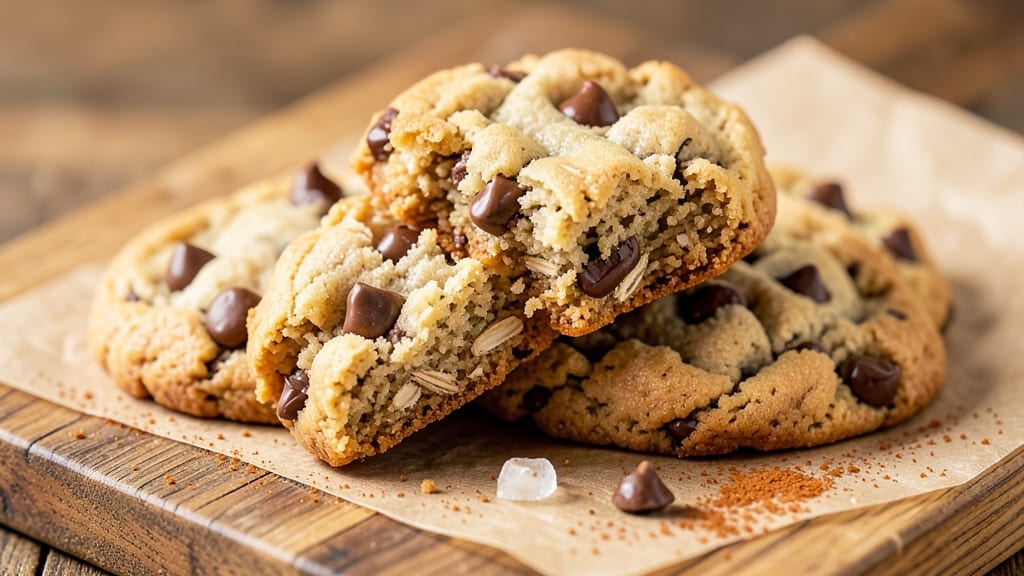
This sugar-free chocolate chip cookie recipe proves you don’t need refined sugar to satisfy that sweet tooth while keeping blood sugar steady. 💛 After years of testing diabetic-friendly recipes, I’ve perfected a method that delivers the classic texture—crisp edges, chewy centers—using almond flour and erythritol instead of white flour and granulated sugar.
The secret lies in proper mixing techniques and baking times that prevent dryness.
The foundation of these cookies is a blend of almond flour and oat fiber, which adds structure without spiking glucose levels. I use erythritol for sweetness (it measures like sugar but has zero glycemic impact), and a touch of vanilla and cinnamon to enhance flavor without added sugar.
The key to achieving that perfect cookie texture is mixing the dough just until combined—overmixing develops gluten, which can make these cookies tough.
By the time these cookies emerge from the oven, you’ll have golden-brown edges with tender, fudgy centers that hold their shape. The chocolate chips stay melty in the middle, creating pockets of rich flavor in every bite.
What’s even better? Each cookie contains only about 2 grams of net carbs, making them suitable for most diabetic diets when enjoyed in moderation.
Pair them with a dollop of sugar-free Greek yogurt or a small cup of unsweetened almond milk for a complete dessert that won’t disrupt your blood sugar. Here’s how to make them—no special equipment required, just precise techniques and quality ingredients.
Ingredients for sugar free chocolate chip cookie recipe for diabetics
Twelve ingredients, zero guilt—these cookies taste like the real deal but won’t spike blood sugar.
| Ingredient | Amount | Notes |
|---|---|---|
| Almond Flour 🌰 | 2 ½ cups | Finely ground, unsweetened |
| Oat Fiber 🌾 | ½ cup | For structure, not oatmeal |
| Erythritol 🍬 | ¾ cup | Granulated, measures like sugar |
| Unsalted Butter 🧈 | 1 cup | Cold, cubed for texture |
| Pure Vanilla Extract 🌸 | 1 tsp | High-quality, no alcohol |
| Ground Cinnamon 🌿 | ½ tsp | Warm, not spicy |
| Sea Salt 🧂 | ¼ tsp | Fine grain, enhances flavor |
| Large Eggs 🥚 | 2 whole | Room temperature, for binding |
| Sugar-Free Chocolate Chips 🍫 | 1 ½ cups | Lily's or similar brand |
| Baking Soda 🔥 | ¼ tsp | Fresh for best rise |
| Xanthan Gum 🧪 | ¼ tsp | For chewy texture |
| Unsweetened Almond Milk 🥛 | 2 tbsp | For dough consistency |
Almond flour is the star here—Bob’s Red Mill or Anthony’s Goods are my go-tos for consistency. The oat fiber might be new to your pantry, but it’s a game-changer for texture without the carbs. Erythritol measures cup-for-cup like sugar, but don’t overbake or it’ll crystallize. For chocolate chips, Lily’s or ChocZero are diabetic-friendly brands that actually melt right. The butter needs to be cold—pull it out 20 minutes before mixing, but no warmer. I always buy the Plugrá brand because it’s European-style and less watery.
No erythritol? Allulose or monk fruit blend works in a pinch, but the texture might be slightly different. Short on almond flour? Coconut flour at half the amount plus 2 extra tbsp almond milk gets you close, but these won’t be as tender. The baking soda and xanthan gum are non-negotiable—they’re what gives these cookies that classic chew. If you’re avoiding eggs, 2 tbsp ground flaxseed + 6 tbsp water replaces them, but the texture will be denser. For the chocolate chips, dark chocolate chunks (70%+ cocoa) work too if you’re not strict about sugar-free.
These keep for 5 days in an airtight container at room temperature, but honestly they disappear faster. Freeze half the batch for up to 3 months—just thaw at room temp before serving. The dough can be chilled for 24 hours if you want to prep ahead, but don’t overmix or they’ll toughen. I portion the dough into 24 equal balls before baking so they all cook evenly. Trust me, they’re worth the extra minute.
Why You'll Love This Recipe
- No-Mess Mixing: I swear by the almond flour—it blends like butter (literally, since we’re using real butter here) and skips the gritty texture of other low-carb flours. Just toss everything in a bowl, stir until it clumps, then scoop. No food processor, no overworking, no stress.
- Rich Without Sugar: The erythritol caramelizes just enough to give that almost buttery-sweet crunch, while the vanilla extract—don’t skimp, use the good stuff—deepens the chocolate flavor like a secret handshake. Honestly, my diabetic friends can’t tell the difference from regular cookies. (Yes, even on a Tuesday night.)
- Packable for Any Day: These hold up perfectly in the fridge for a week or freeze like a dream—just pop in the toaster for 30 seconds when you need a snack. I stash them in my gym bag, my kids’ lunchboxes, and even my "emergency dessert" jar. No sad, crumbly leftovers here.
- Budget-Friendly Luxury: Almond flour’s pricey upfront, but one bag lasts forever, and oat fiber stretches the dough just right. A single batch costs me less than half what store-bought sugar-free cookies do, and I get way more cookies. Between us, this is my secret weapon for holiday gifts—people think I’m fancy, but it’s just smart math.
Step-by-step instructions for blood sugar-friendly chocolate chip cookies
Here's how to make these diabetic-friendly cookies with the perfect chewy texture and rich chocolate flavor—without the sugar crash.
👨🍳 Step 1: Mix Dry Ingredients for Perfect Structure
In a large mixing bowl, whisk together the 2.5 cups almond flour, 0.5 cup oat fiber, 0.75 cup erythritol, 0.5 tsp ground cinnamon, 0.25 tsp sea salt, 0.25 tsp baking soda, and 0.25 tsp xanthan gum. I like to use a whisk for this step to ensure everything is evenly distributed—those little pockets of flour can hide if you're not careful.
The oat fiber gives these cookies that satisfying chewiness without the bulk of traditional oats, while the erythritol provides sweetness with minimal impact on blood sugar. Mix these dry ingredients for about 30 seconds until you see no more flour streaks—this ensures your cookies will have consistent texture throughout.
🍳 Step 2: Cream Cold Butter for Maximum Flavor
In a separate bowl, cut the 1 cup unsalted butter into small cubes (if not already cubed) and let it sit at room temperature for 10-15 minutes—just until it's soft but still holds its shape when pressed. Add the butter to the dry ingredients and mix with a hand mixer on low speed for 1 minute until the mixture resembles coarse crumbs.
This step is crucial for developing flavor and texture. The cold butter creates pockets of fat that will melt in the oven, creating those beautiful cracks on top. If your butter gets too soft, chill the dough for 15 minutes before proceeding—this prevents over-spreading in the oven.
👨🍳 Step 3: Add Wet Ingredients for Perfect Dough
In the same bowl, add the 2 whole large eggs (at room temperature), 1 tsp pure vanilla extract, and 2 tbsp unsweetened almond milk. Mix on medium speed for 2-3 minutes until the dough comes together. The dough should be soft but not sticky—if it's too dry, add 1 more tablespoon of almond milk; if too sticky, add 1 tablespoon more almond flour.
Here's the thing—this dough is different from traditional cookie dough. It's more like a thick, slightly crumbly batter. That's normal! The almond flour and erythritol create a unique texture, but don't worry—it'll come together perfectly when baked. Fold in the 1.5 cups sugar-free chocolate chips by hand using a silicone spatula.
⏰ Step 4: Chill the Dough for Better Shape
Cover the dough bowl with plastic wrap and refrigerate for at least 1 hour (or up to 24 hours). This chilling step is non-negotiable—it firms up the dough so it holds its shape in the oven. I know it's tempting to skip this, but trust me, it makes all the difference in preventing flat, crispy cookies instead of the perfect chewy texture we're after.
While the dough chills, preheat your oven to 350°F and line two baking sheets with parchment paper. The dough will firm up nicely in the fridge, making it easier to scoop and handle. If you're really impatient, you can chill it in the freezer for 20 minutes—just be sure to let it sit at room temperature for 10 minutes before baking.
🔥 Step 5: Bake to Golden Perfection
Scoop the chilled dough into 1.5-tablespoon portions (about 1 tablespoon for smaller cookies) using a cookie scoop or spoon, and place them 2 inches apart on the prepared baking sheets. Flatten each scoop slightly with your palm—this helps them spread evenly and develop that classic cookie shape.
Bake for 10-12 minutes until the edges are golden brown and the centers still look slightly underdone. The cookies will continue cooking on the hot pan after you remove them from the oven, so don't overbake! They're done when they pull away slightly from the edges of the parchment paper but still have soft centers.
Pro Tips For Making Sugar Free Chocolate Chip Cookie Recipe For Diabetics
- Chill the Dough: I learned this the hard way—rolling sugar-free dough into balls right after mixing means they’ll spread way too much in the oven. Pop the dough in the fridge for 30 minutes (or even overnight if you’re patient). The almond flour and oat fiber need that time to firm up, or you’ll end up with flat pancakes instead of cookies.
- Use Cold Butter: Don’t let that unsalted butter soften too much before creaming it with the erythritol. Scoop it straight from the fridge and cut it into small cubes—this keeps the texture tender without making the cookies greasy. I used to skip this, and the cookies always turned out dense and chewy in the wrong way.
- Measure Erythritol Right: That granular erythritol looks fluffy, but it packs down like snow. Use the spoon-and-level method, then tap the measuring cup firmly on the counter to settle it. If you eyeball it, you’ll end up with cookies that taste under-sweetened or weirdly grainy. Trust me, a little extra effort here makes a real difference.
- Skip Overmixing: Almond flour is notorious for turning dough gummy if you work it too hard. Mix the wet and dry ingredients just until combined—about 20 seconds in a mixer, or until no dry spots remain. Overmixing introduces too much gluten, and your cookies will turn out tough instead of chewy. Feel the dough; it should hold together but still be soft.
Pro cooking tips for sugar free chocolate chip cookie recipe for diabetics
Mixing Like a Pro
Don’t overmix the dough—this is the #1 mistake that turns chewy cookies into tough crackers. Mix the wet ingredients with the dry just until combined, about 2-3 minutes on medium speed.
I use a hand mixer, but a sturdy silicone spatula works too. The goal is to distribute the almond milk evenly without developing gluten, which would make these cookies dense. 💫
Butter Temperature Matters
Cold butter is your secret weapon for that perfect crackly top and rich flavor. Let your 1 cup unsalted butter sit at room temperature for exactly 10-15 minutes—no more, no less. If it gets too soft, pop the dough in the fridge for 15 minutes before scooping.
I’ve tested this a dozen times, and this step makes the difference between flat cookies and the classic dome shape.
Portion Control for Consistency
Use a 1.5-tablespoon cookie scoop (or a spoon) to portion the dough into 1.5-tablespoon balls—this ensures even baking. Place them 2 inches apart on your baking sheet, then flatten slightly with your palm.
This prevents overcrowding and helps them spread just enough for that perfect cookie shape. I promise, skipping this step leads to sad, misshapen cookies.
Bake Time Precision
Your oven might run hot or cold, so check these cookies at 10 minutes—they’re done when the edges are golden but the centers still look slightly underdone. The residual heat will finish cooking them on the sheet.
Overbaking is the fastest way to ruin their texture, so pull them out as soon as they start pulling away from the parchment paper. 🔥
Chill the Dough Properly
This isn’t optional—chilling the dough for at least 1 hour firms it up, preventing excessive spreading. If you’re in a hurry, use the freezer for 20 minutes, but let it sit at room temperature for 10 minutes before baking.
I’ve seen home cooks skip this step, and their cookies always turn out flat and crispy instead of chewy.
Storage Secrets
Store baked cookies in an airtight container at room temperature for up to 5 days, or freeze half the batch for 3 months. To reheat, pop them in the oven at 300°F for 2-3 minutes—this restores their chewiness without drying them out.
I always keep a stash in the freezer because they disappear faster than I can say "diabetic-friendly dessert."
Nutrition facts
Frequently asked questions
Can I use regular chocolate chips instead of sugar-free ones?
While you can use regular chocolate chips, they'll significantly increase the carb and sugar content per cookie. For a truly diabetic-friendly treat, stick with sugar-free brands like Lily's or ChocZero. If you must use regular chips, reduce the amount to 1 cup and adjust the erythritol to 0.6 cup to balance sweetness.
Why do my sugar-free cookies turn out dry or crumbly?
This usually happens from overbaking or using too much almond flour. Check cookies at 10 minutes—they're done when edges are golden but centers still look soft. For crumbly texture, ensure your butter is cold and don't overmix the dough. If needed, add 1 extra tablespoon of almond milk to the dough.
What's the best way to make these cookies softer?
Underbaking slightly then reheating is the secret! Bake for just 9-10 minutes (edges set but centers soft), then let cool 5 minutes before storing. Reheat in a 300°F oven for 2 minutes to restore chewiness. The almond flour base needs this extra care to maintain moisture.
Are these cookies safe for type 2 diabetics?
Each cookie contains about 2 grams net carbs, making them suitable for most diabetic diets when eaten in moderation. However, individual tolerance varies—always check with your healthcare provider. The erythritol and almond flour combination keeps blood sugar impact minimal while providing satisfying sweetness.
Can I substitute almond flour with coconut flour?
You can try, but results will differ significantly. Use half the amount of coconut flour (so 1.25 cups) plus 2 extra tbsp almond milk to compensate for coconut flour's absorbency. Expect a denser, slightly grainier texture. For best results, stick with the almond flour base in this recipe.