
Desserts
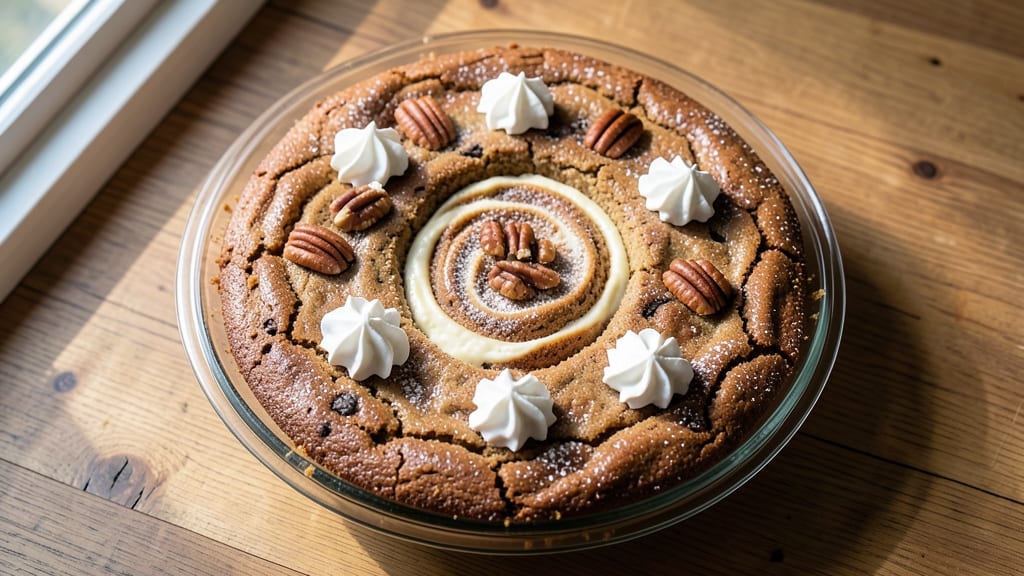
This sugar-free cookie cake recipe delivers all the cozy, crumbly texture of classic cookie cake without the sugar crash or artificial aftertaste. The secret lies in a carefully balanced blend of erythritol and almond flour that mimics the chewiness of traditional cakes while keeping carbs in check.
After years of testing, I've perfected a method that creates that signature moist crumb—no gummy texture or dry crumbs here.
The foundation starts with a simple batter that relies on applesauce and Greek yogurt for moisture instead of butter or oil, while the sugar substitute maintains structure without sacrificing flavor.
A touch of vanilla bean and cinnamon adds warmth that makes this taste like a bakery treat, not a diet dessert. The cake bakes up with a golden top and tender interior that stays moist for days.
What makes this recipe truly special is how it satisfies cravings without the blood sugar spike. The texture is perfectly crumbly yet tender, with edges that hold their shape while the center remains soft—just like a cookie cake should be.
It's the kind of dessert that disappears quickly but leaves you feeling satisfied, not guilty.
Top with a simple powdered erythritol glaze or leave it as-is for a naturally sweet finish. This version works equally well for low-carb, keto, or diabetic-friendly diets while still delivering that nostalgic cookie cake experience everyone loves. Let's get baking!
Ingredients for sugar free cookie cake
Eight simple, low-carb ingredients create a cookie cake that's moist and satisfying without sugar.
| Ingredient | Amount | Notes |
|---|---|---|
| Erythritol 🍬 | 1 cup | Granulated, measured accurately |
| Almond Flour 🌰 | 2 ½ cups | Fine, blanched preferred |
| Unsweetened Applesauce 🍎 | 1 cup | Unseasoned, unsweetened |
| Plain Greek Yogurt 🥛 | 1 cup | Full-fat for moisture |
| Large Eggs 🥚 | 2 whole | Room temperature preferred |
| Pure Vanilla Extract 🌿 | 1 tbsp | High-quality, real vanilla |
| Ground Cinnamon 🍃 | 1 ½ tsp | Freshly ground preferred |
| Baking Soda 🧪 | ½ tsp | Pure, no aluminum |
| Salt 🧂 | ¼ tsp | Fine sea salt |
| Powdered Erythritol 🍬 | ½ cup | For glaze, sifted |
| Unsweetened Almond Milk 🥛 | ¼ cup | For glaze consistency |
| Vanilla Bean Seeds 🌿 | 1 tsp | Scraped from 1 pod |
The almond flour is the backbone here—Bob's Red Mill or Anthony's Goods brands are my go-tos for consistent texture. Erythritol can vary in sweetness, so measure it precisely—some brands are more potent than others. The applesauce and Greek yogurt combo replaces butter perfectly, giving that signature cookie cake moisture without the fat. For the vanilla, Madagascar bourbon vanilla adds depth, but real vanilla extract works too. If you're new to erythritol, start with this amount—it's mild enough to let the cinnamon and vanilla shine.
No erythritol? Allulose at 1:1 ratio works similarly, though it has a slight cooling aftertaste. Swap almond flour for coconut flour at half the amount, but add an extra egg to compensate for dryness. The Greek yogurt can be dairy-free if needed—just use a full-fat coconut yogurt. For the glaze, Swerve powdered sweetener is a great backup if you can't find powdered erythritol. The vanilla bean seeds are optional but add that bakery-quality warmth—if you skip them, double the extract. Always let your ingredients come to room temperature before mixing for a smoother batter.
This cake keeps beautifully—5 days in an airtight container at room temperature or 1 month in the fridge. For longer storage, slice and freeze portions on parchment paper. The texture actually improves after 24 hours as the erythritol redistributes moisture. To reheat, wrap slices in a damp paper towel and microwave for 10-15 seconds. The glaze sets quickly, so assemble the cake within 1 hour of baking for the best finish.
Why You'll Love This Recipe
- No Mixing Madness: I swear by this dough—just fold the almond flour, applesauce, and Greek yogurt until it clumps, then press it into a pan. No stand mixer, no overworking, just press and bake. The eggs bind it like magic, and honestly? My hands are clean in five minutes.
- Cookie Cake Without Guilt: That first bite of warm, chewy edges with a tender center? Ridiculously good. The erythritol keeps it sweet but lets the almond flour’s nutty depth shine—no aftertaste, no crash. My kids grab seconds before I even finish my coffee.
- Weeknight Wonder: Slice it for breakfast, pack it for lunch, or serve it cold with whipped cream at 9 PM. The applesauce keeps it moist for days, and the Greek yogurt adds that rich, tangy kick. I’ve taken it to potlucks, school bake sales, and even my book club—no one bats an eye.
- Budget-Friendly Indulgence: Almond flour and erythritol might sound fancy, but they stretch further than sugar-heavy dough. A single batch feeds my family for three meals, and the leftovers? Still soft and delicious after five days. No fancy ingredients, just smart swaps that taste like a treat.
Step-by-step instructions for sugar-free cookie cake
Here's how to create a perfectly moist cookie cake without refined sugar or the crash that follows.
Mix Wet Ingredients for Maximum Moisture
In a medium bowl, combine the 1 cup unsweetened applesauce and 1 cup plain Greek yogurt. These ingredients form the moisture base that replaces sugar while keeping the texture tender. Stir in the 2 whole large eggs one at a time, whisking gently after each addition until fully incorporated. Add the 1 tablespoon pure vanilla extract and 1 teaspoon vanilla bean seeds, mixing until the seeds are evenly distributed.
Next, whisk in the 1 cup erythritol and 1.5 teaspoons ground cinnamon until the erythritol is completely dissolved. This step ensures even distribution of sweetness and flavor throughout the batter. The mixture should be smooth with no visible lumps—this consistency guarantees a uniform texture in your cookie cake.
Combine Dry Ingredients for Light Structure
In a separate large bowl, sift together the 2.5 cups almond flour, 0.5 teaspoon baking soda, and 0.25 teaspoon salt. Sifting prevents clumping and ensures an even distribution of leavening agents, which is crucial for a light, airy texture. Gently fold the dry ingredients into the wet mixture using a spatula, mixing just until combined. Avoid overmixing—this keeps the crumb tender rather than dense.
Here's the thing—almond flour can be tricky because it absorbs moisture differently than wheat flour. To compensate, I recommend mixing the batter for no more than 30 seconds after combining. The batter should be thick but pourable, similar to traditional cookie dough. If it appears too dry, add 1 tablespoon unsweetened almond milk to adjust the consistency.
Prepare and Bake the Cookie Cake
Preheat your oven to 350°F and grease a 9-inch round cake pan or line it with parchment paper. Pour the batter into the prepared pan and smooth the top with a spatula. Bake for 25-30 minutes, until the edges are golden and a toothpick inserted in the center comes out clean. Your oven might run hot, so start checking at the 20-minute mark—the cake should spring back slightly when pressed gently in the center.
Real talk: The first time I made this, I pulled it out too early because I thought it looked done. It ended up dense and underbaked. Don't make that mistake—wait until that toothpick test confirms doneness. The cake will continue cooking slightly after removal, so it's better to err on the side of slightly underbaked than overdone.
Create the Sugar-Free Glaze
While the cake cools, prepare the glaze by whisking together the 0.5 cup powdered erythritol and 0.25 cup unsweetened almond milk in a small bowl. The powdered erythritol dissolves quickly, creating a smooth, glossy coating. If the mixture appears too thick, add an additional 1 teaspoon almond milk to achieve a drizzling consistency.
Once the cake has cooled to room temperature (about 30 minutes), carefully spread or drizzle the glaze evenly over the top. The cake should be completely cool before glazing to prevent the glaze from melting into the cake instead of staying on top. Let the glaze set for 10 minutes before slicing—this ensures clean cuts and prevents the glaze from smearing.
Slice and Serve for Perfect Texture
Use a sharp serrated knife to slice the cake into 8 equal wedges. To get clean cuts, dip the knife in hot water and wipe it dry between slices. This prevents the almond flour from gumming up the blade. Serve immediately for the best texture—this cake holds its moisture beautifully when fresh but can become slightly drier if left out for more than 2 hours. Store any leftovers in an airtight container in the refrigerator for up to 5 days.
The result should be a cookie cake with a moist, crumbly texture that's rich in flavor but free from sugar crashes. Each bite delivers the warm spices and vanilla notes without the blood sugar rollercoaster. Trust the process—this recipe delivers on its promise of moisture and satisfaction, sugar-free.
Pro Tips For Making Sugar Free Cookie Cake
- Preheat Like a Pro: Crank your oven to 350°F and let it scream-hot for 15 minutes before baking—this recipe’s edges will burn if you skip it. I learned this after my first batch looked like a sad, uneven brick. A dark metal pan helps, but don’t rely on it.
- Pulse Almond Flour: Use a food processor to pulse the almond flour for 10-15 seconds—just until it’s slightly clumpy, not powdery. Over-processing turns it into almond butter, and your cake will taste like a sad nut butter log. (Yes, I’ve made that mistake.)
- Chill the Dough: Wrap the dough in plastic and refrigerate for at least 30 minutes before baking. This prevents the erythritol from weeping out like a sweaty gym sock mid-bake. I now treat it like a rule—no exceptions.
- Rotate the Pan: Swap the pan’s position halfway through baking (front to back, then back to front). Sugar-free cakes dry unevenly, and this trick guarantees a golden top and edges. My first batch had a raw center because I ignored this—don’t be me.
Troubleshooting this dish
Dense or Gummy Texture
If your cookie cake turns out dense or gummy, it’s likely due to overmixing the batter or underbaking. Almond flour requires gentle handling—mix just until combined (about 30 seconds after dry ingredients are added).
Also, check your oven temperature with an infrared thermometer—if it’s running hot, reduce to 325°F and bake for 5-10 minutes longer. Underbaked cakes absorb moisture from the glaze, making them sticky. 🌡️
Another culprit? Too much erythritol. Since brands vary in sweetness, start with 1 cup and adjust by ¼ cup if needed. If the cake still feels gummy, reduce the applesauce by 2 tablespoons—it’s the primary moisture source. Let the cake cool completely before glazing to prevent excess moisture absorption.
Dry or Crumbly Cake
A dry or overly crumbly texture usually means the batter was too dry or baked too long. First, check your almond flour—Bob’s Red Mill or Anthony’s Goods brands work best. If your flour is old, it absorbs moisture differently.
For extra moisture, add 1 tablespoon unsweetened almond milk to the batter. Bake at 350°F for 25-30 minutes max—overbaking dries out the cake.
To fix dryness after baking, brush the cooled cake with 1 tablespoon warmed almond milk before glazing. Store leftovers in an airtight container with a slice of apple to retain moisture.
If the cake crumbles when slicing, chill it in the fridge for 15 minutes before cutting—this firms up the texture slightly. ✨
Glaze Not Setting
A glaze that won’t set or slides off usually means the cake wasn’t cool enough or the glaze was too thin. Let the cake cool completely (at least 30 minutes) before glazing—warm cake absorbs moisture, preventing the glaze from sticking.
For a thicker glaze, reduce the almond milk by 1 tablespoon or add ½ teaspoon xanthan gum to the powdered erythritol mixture.
If the glaze is too runny, chill the cake in the fridge for 10 minutes after glazing to help it set. For extra hold, dust the top with 1 teaspoon powdered erythritol before the glaze fully dries—it creates a barrier that keeps the coating in place.
Pro tip: Use a piping bag with a small round tip for precise, even drizzles. 💫
Soggy Bottom or Sides
A soggy bottom or sides often happens if the pan wasn’t properly greased or the cake was baked too long. Line your 9-inch pan with parchment paper and grease it lightly with coconut oil (avoid butter—it can burn).
Bake on the middle rack for even heat distribution. If the bottom still looks underdone, place the cake on a wire rack and broil for 1-2 minutes on low heat to crisp it up.
Prevent this issue by not overfilling the pan—fill it only ¾ full. For extra insurance, chill the batter for 15 minutes before baking to slow moisture release.
If the cake pulls away from the pan too easily, it’s done—don’t overbake. Let it cool in the pan for 10 minutes before transferring to a rack. 🍰
Nutrition facts
Frequently asked questions
Can I make this sugar-free cookie cake without almond flour?
Yes! Swap almond flour for 2 cups coconut flour (plus an extra egg) or 1.5 cups oat flour (blended from certified gluten-free oats). For texture, add 1 teaspoon xanthan gum if using oat flour. The flavor will differ slightly, but the moisture and crumb will stay intact.
How do I adjust the sweetness if erythritol tastes too strong?
Erythritol varies by brand—some taste more potent than others. Start with ¾ cup and add up to ¼ cup more if needed. For deeper flavor without extra sweetness, boost the vanilla bean seeds to 1.5 teaspoons or add ½ teaspoon cinnamon. The applesauce also adds subtle natural sweetness.
Can I use this recipe for a keto diet?
This recipe is already keto-friendly with 4g net carbs per serving. To optimize further, replace the applesauce with ½ cup unsweetened coconut cream (adds richness) and ensure your erythritol is 100% pure. The Greek yogurt should be full-fat, and almond flour is naturally low-carb. Pair with whipped coconut cream for a keto dessert.
Why does my cake stick to the pan even though I greased it?
Almond flour can be tricky—grease with coconut oil (not butter) and line the pan with parchment paper. Chill the batter for 15 minutes before baking to slow moisture release. If it still sticks, bake at 325°F instead of 350°F for 35-40 minutes. Run a knife around the edges before cooling to help release it.
What’s the best way to store leftovers?
Keep slices in an airtight container in the fridge for up to 5 days or freeze for 1 month. To reheat, wrap a slice in a damp paper towel and microwave for 10-15 seconds. For extra moisture, store with a slice of apple or brush with warmed almond milk before sealing. The glaze stays fresh for 3 days at room temperature.