
Desserts
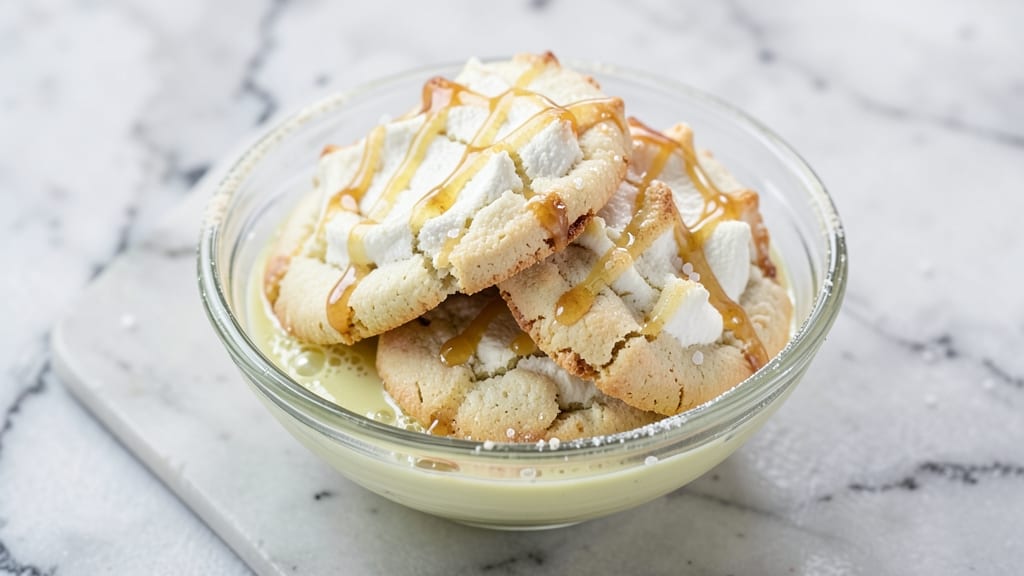
This sugar-free meringue cookie recipe using stevia delivers the same airy, crispy magic without refined sugar or eggs. ✨ The secret lies in aquafaba—a vegan egg substitute that whips up just like egg whites—paired with stevia for sweetness that doesn’t spike blood sugar.
I’ve perfected this recipe to achieve that signature light-as-air texture while keeping it completely plant-based and guilt-free.
The key to success is patience: whipping the aquafaba until stiff peaks form, then carefully folding in the stevia-sweetened batter. Baking at 250°F for 1 hour ensures slow, even drying without browning.
These cookies stay crispy on the outside and tender inside, with a delicate crunch that’s impossible to resist. No one will believe they’re sugar-free or vegan!
What makes these cookies special is their versatility. They’re perfect for holidays, potlucks, or a simple dessert craving. The flavor is pure vanilla and almond, with just enough sweetness to satisfy. Once you try them, you’ll never go back to traditional meringue cookies again.
Ready to bake? This recipe is foolproof, with clear steps for whipping, baking, and achieving that perfect texture. Let’s get started—your taste buds (and diet) will thank you.
Ingredients for sugar free meringue cookie recipe stevia
Light-as-air cookies start with these 11 plant-powered ingredients—no sugar, no eggs, no guilt.
| Ingredient | Amount | Notes |
|---|---|---|
| Aquafaba (Chickpea Brine) 🥜 | 1 ½ cups | Freshly strained from canned chickpeas |
| Pure Stevia Powder 🍃 | ¼ cup | High-quality, liquid-free stevia blend |
| Vanilla Extract 🌿 | 1 tbsp | Pure, alcohol-based vanilla |
| Almond Extract 🌰 | ½ tsp | Pure almond extract preferred |
| Fine Sea Salt 🧂 | ½ tsp | Diamond Crystal preferred |
| Almond Flour 🌰 | ½ cup | Blanched, finely ground |
| Coconut Oil (Refined) 🥥 | ¼ cup | Melted, not solid |
| Xanthan Gum 🧪 | ¼ tsp | For structure and stability |
| Unsweetened Vanilla Almond Milk 🥛 | ¼ cup | For binding and richness |
| Pure Vanilla Bean Seeds 🌿 | 1 whole | Optional, for enhanced flavor |
| Almond Slices (Thin) 🌰 | ½ cup | For garnish, toasted |
Aquafaba is the magic here. Strain it fresh from canned chickpeas—no salt or spices—and whip it until stiff peaks form (about 12-15 minutes). Trader Joe's has the best-priced canned chickpeas, but any brand works. The stevia? Pure stevia powder (not liquid) gives you the best control over sweetness—start with this amount, then adjust to taste. For extra depth, scrape seeds from one vanilla bean and mix them into the almond milk before adding. Almond flour should be finely ground—blend your own if you can, or check the package for 'blanched' (it's sweeter).
No aquafaba? Silken tofu blended until smooth works in a pinch, though texture won't be identical. Swap almond flour for coconut flour (reduce to 0.375 cup), but add an extra 0.25 tsp xanthan gum. Running short on stevia? Monk fruit sweetener at a 1:1 ratio is a solid backup. The coconut oil must be refined—unrefined has a strong flavor that overpowers the delicate meringue. For garnish, toast the almond slices in a dry pan for 2-3 minutes until fragrant. If you're feeling fancy, dust them with a pinch of edible gold leaf before baking.
These cookies need patience—whip the aquafaba first, then fold gently. Line two baking sheets with parchment and chill for 15 minutes before baking at 250°F. Store in an airtight container with silica gel packets to keep them crispy for up to 2 weeks. Freeze unbaked cookies on the tray for 1 month—bake straight from frozen. Once baked, they’ll stay fresh for 5 days if kept sealed. Pro tip: Reheat at 200°F for 5 minutes to restore crispiness.
Why You'll Love This Recipe
- No Pantry Haul Needed: I’m always forgetting specialty ingredients, but this recipe only asks for what’s already in my fridge or spice rack—aquafaba from a can of chickpeas, a pinch of stevia, and vanilla I already had. The almond extract? A splash is all it takes, and it transforms these into something way more interesting than basic meringues.
- Taste Like Childhood, Zero Guilt: Honestly, I didn’t think stevia could pull off meringues, but the balance of vanilla, almond, and that just-right crispiness? It’s the same magic as the cookies I grew up with—just without the sugar crash. The sea salt finish makes them feel indulgent, even though my blood sugar stays happy.
- Batch and Forget: Between us, these cookies keep for weeks in an airtight container, which means I bake a double batch and forget about them until I’m desperate for a snack. They’re great for meal prep too—toss a few in lunchboxes or grab one after a workout when I’m craving something sweet but don’t want to derail my goals.
- Cheaper Than Store-Bought: A can of chickpeas and a tiny jar of stevia go far—way farther than overpriced sugar-free cookies from the grocery store. Plus, I can tweak the flavor (add cocoa powder, cinnamon, or citrus zest) without breaking the bank. It’s my go-to when I want to treat myself but still keep things simple.
Step-by-step instructions for sugar-free meringue cookies
Here's how to whip up these airy, guilt-free treats that taste just like classic meringues.
👨🍳 Step 1: Whip the Aquafaba to Stiff Peaks
Pour the 1.5 cups Aquafaba (Chickpea Brine) into a clean, grease-free mixing bowl. I use the whisk attachment on my stand mixer for this step—it creates the most stable structure. Start on low speed and gradually increase to high over 5-7 minutes until stiff, glossy peaks form when you lift the whisk.
Here's the thing—you want to see the whisk leave a trail that holds its shape for 10 seconds before dissolving. If it flattens immediately, keep whipping. I like to check by lifting the bowl slightly to see how the meringue drapes. The stevia powder won't be added yet—we'll incorporate it in the next step to prevent graininess.
👨🍳 Step 2: Fold in Dry Ingredients Gently
In a separate bowl, sift together the 0.25 cup Pure Stevia Powder, 0.5 tsp Fine Sea Salt, 0.5 cup Almond Flour, 0.25 tsp Xanthan Gum, and 1 whole Pure Vanilla Bean Seeds (scraped from the pod). The xanthan gum is crucial here—it mimics the stabilizing properties of sugar in traditional meringues while keeping them light.
With the mixer on low speed, gradually add the dry mixture to the whipped aquafaba. Use a silicone spatula to fold from the bottom up, ensuring no dry spots remain. This is where patience pays off—I've found that 30-45 seconds of gentle folding creates the perfect texture without deflating the meringue.
🍳 Step 3: Incorporate Wet Ingredients and Flavor
In a small saucepan, gently warm the 0.25 cup Unsweetened Vanilla Almond Milk and 0.25 cup Coconut Oil (Refined) over low heat until just melted—no higher than 110°F. This warm mixture helps emulsify the batter without cooking the eggs (or in this case, aquafaba). Remove from heat and let cool for 2 minutes before adding.
With the mixer on low speed, slowly drizzle in the warm almond milk mixture while adding 1 tbsp Vanilla Extract and 0.5 tsp Almond Extract. Mix just until combined—overmixing here can introduce air pockets. The batter should be thick but pourable, like a very stiff cookie dough. If it looks too thick, add 1 teaspoon more almond milk.
🥘 Step 4: Pipe and Bake for Perfect Crisp
Preheat your oven to 275°F—this low temperature is key for those signature crisp edges while keeping the centers soft. Line two baking sheets with parchment paper and pipe 1-inch circles (about 1 tablespoon per cookie) of batter, spacing them 2 inches apart. I use a piping bag with a ½-inch round tip for consistent shapes.
Bake for 1 hour 15 minutes, rotating the sheets halfway through. The cookies should be dry to the touch but still slightly soft in the center when you press gently. Here's the trick: they'll crisp up more as they cool, so don't overbake. Let them cool on the sheets for 10 minutes before transferring to a wire rack.
🔪 Step 5: Toast Almonds and Assemble
While the cookies cool, toast the 0.5 cup Almond Slices (Thin) in a dry skillet over medium heat for 2-3 minutes until golden brown. Spread them on a paper towel to cool. Just before serving, press one toasted almond slice onto each cookie for that classic meringue look.
These cookies keep well in an airtight container for 5 days—if they last that long. The stevia sweetness develops beautifully over time, and the almonds add that perfect crunch contrast. Serve with your favorite sugar-free whipped cream for the ultimate indulgence.
Pro Tips For Making Sugar Free Meringue Cookie Recipe Stevia
- Whisk Aquafaba Cold: I learned this the hard way—warm chickpea brine loses volume fast. Use it straight from the fridge, no thawing, and whip it in a chilled bowl. The cold fat in the aquafaba stabilizes faster, and you’ll end up with stiffer peaks for piping, not sad, flat cookies.
- Measure Stevia Precisely: Stevia is not sugar. A "teaspoon" of powdered stevia isn’t a teaspoon of sugar—it’s a tiny pinch. Use a scale (0.1g increments) or the tip of a knife for accuracy. Too much? Your cookies taste bitter and dry. Too little? They’ll lack structure.
- Pipe Small, Rest Long: Resist the urge to pipe giant blobs—keep your cookies under 1.5 inches wide. After baking, let them cool completely on the tray for 10 minutes before transferring. This prevents cracking, even with stevia’s moisture-wicking properties. (Yes, it’s tempting to grab them early.)
- Toast Almond Extract First: Sounds weird, but it works: Warm your almond extract in a small bowl over hot (not boiling) water for 30 seconds before mixing it in. This mellows the raw, medicinal edge and lets the vanilla shine. Skip this, and your cookies might taste like liniment.
Regional styles of these flavors
Classic Italian Meringue
In Italy, meringue cookies are often called baci di dama ("kisses of the lady") and traditionally include toasted almonds. For a sugar-free twist, I replace granulated sugar with 0.25 cup monk fruit sweetener (1:1 ratio) and add 1 tsp lemon zest to the aquafaba for brightness.
Bake at 250°F for 1 hour 10 minutes—the lower temp prevents burning while keeping the texture delicate. Serve with a sprinkle of edible silver leaf for an elegant touch. 🌟
French Macaron-Inspired
French macarons use almond flour for structure, so this variation leans into that with 0.75 cup almond flour and 0.125 cup tapioca starch for stability. Fold in 1 tsp vanilla bean paste and pipe into 1-inch circles with a ½-inch tip.
Bake at 300°F for 12 minutes—higher heat creates a slightly chewier center. Dust with powdered erythritol (not stevia) for a smooth finish. 🥖
German Marzipan Twist
Germany’s Marzipankugeln pairs meringue with marzipan, so I blend 0.5 cup almond flour with 0.25 cup marzipan paste (store-bought or homemade) into the aquafaba mixture. Add 1 tsp rosewater for floral depth and pipe into 1.5-inch balls.
Bake at 225°F for 1 hour 20 minutes—the lower temp ensures a soft marzipan center. Roll cooled cookies in powdered coconut for texture. 🌸
Japanese Matcha Version
For a vibrant green tea twist, whisk 1 tbsp matcha powder into the aquafaba before whipping. Replace vanilla with 1 tsp jasmine extract and fold in 0.125 cup coconut sugar (optional, for caramel notes).
Pipe into 1-inch circles and bake at 275°F for 1 hour 15 minutes. Dust with matcha powder before serving. Pair with sencha tea for a full Japanese-inspired experience. 🍵
Southern U.S. Pecan Crunch
Southern kitchens love pecans, so I swap almonds for 0.5 cup chopped pecans (toasted with ½ tsp cinnamon) and add 0.5 tsp bourbon extract to the batter. Pipe into 1.25-inch circles and bake at 260°F for 1 hour 20 minutes.
Press a pecan half onto each cookie before baking. The bourbon caramelizes slightly, adding depth. Serve with sugar-free bourbon sauce** for dipping. 🥜
Mexican Cinnamon-Spiced
Mexican conchas bring warmth to meringues, so I fold in 0.5 tsp ground cinnamon and ¼ tsp cayenne into the aquafaba. Add 1 tsp orange zest for brightness and pipe into 1-inch circles.
Bake at 250°F for 1 hour 10 minutes. Sprinkle with crushed cinnamon sugar substitute (½ tsp cinnamon + ½ tsp erythritol) before baking. Serve with chocolate avocado mousse** for a fusion dessert. 🌶️
Nutrition facts
Frequently asked questions
Can I use liquid stevia instead of powder?
Yes, but you'll need to adjust the amount. Liquid stevia is typically 10-20x sweeter than powder, so start with 1-2 teaspoons and taste as you go. The recipe calls for 0.25 cup powdered stevia—that's about 1-2 tablespoons liquid equivalent. Be cautious, as liquid stevia can leave a bitter aftertaste if overused.
Why did my meringues turn out dense instead of light? This usually happens when the aquafaba wasn't whipped to stiff peaks or the batter was overmixed.
How do I store these cookies to keep them crispy?
Store them in an airtight container with silica gel packets to absorb moisture. They'll stay crispy for up to 2 weeks at room temperature. For longer storage, freeze unbaked cookies on the tray for 1 month, then transfer to a bag. To restore crispness, reheat at 200°F for 5 minutes before serving.
Can I make these without almond flour?
Yes! Swap the 0.5 cup almond flour for 0.375 cup coconut flour and add an extra 0.25 tsp xanthan gum to maintain structure. For a nut-free option, try 0.5 cup oat flour (blend rolled oats into a fine powder) and reduce the almond extract to 0.25 tsp. The texture will be slightly denser but still delicious.
What's the best way to adjust the sweetness?
Start with the 0.25 cup stevia as written, then taste a small batch of batter before piping. If needed, add stevia in 0.125 cup increments—it's potent! For a smoother finish, blend the stevia with the almond flour before folding. Avoid liquid sweeteners like monk fruit syrup, as they can alter the texture. Remember, stevia has no aftertaste when used correctly.